



The Hidden Reason Life Feels Shorter Than It Is
Seneca’s Stoic philosophy teaches that a meaningful life comes not from more years but from using time wisely through reflection, purpose, and intentional living.

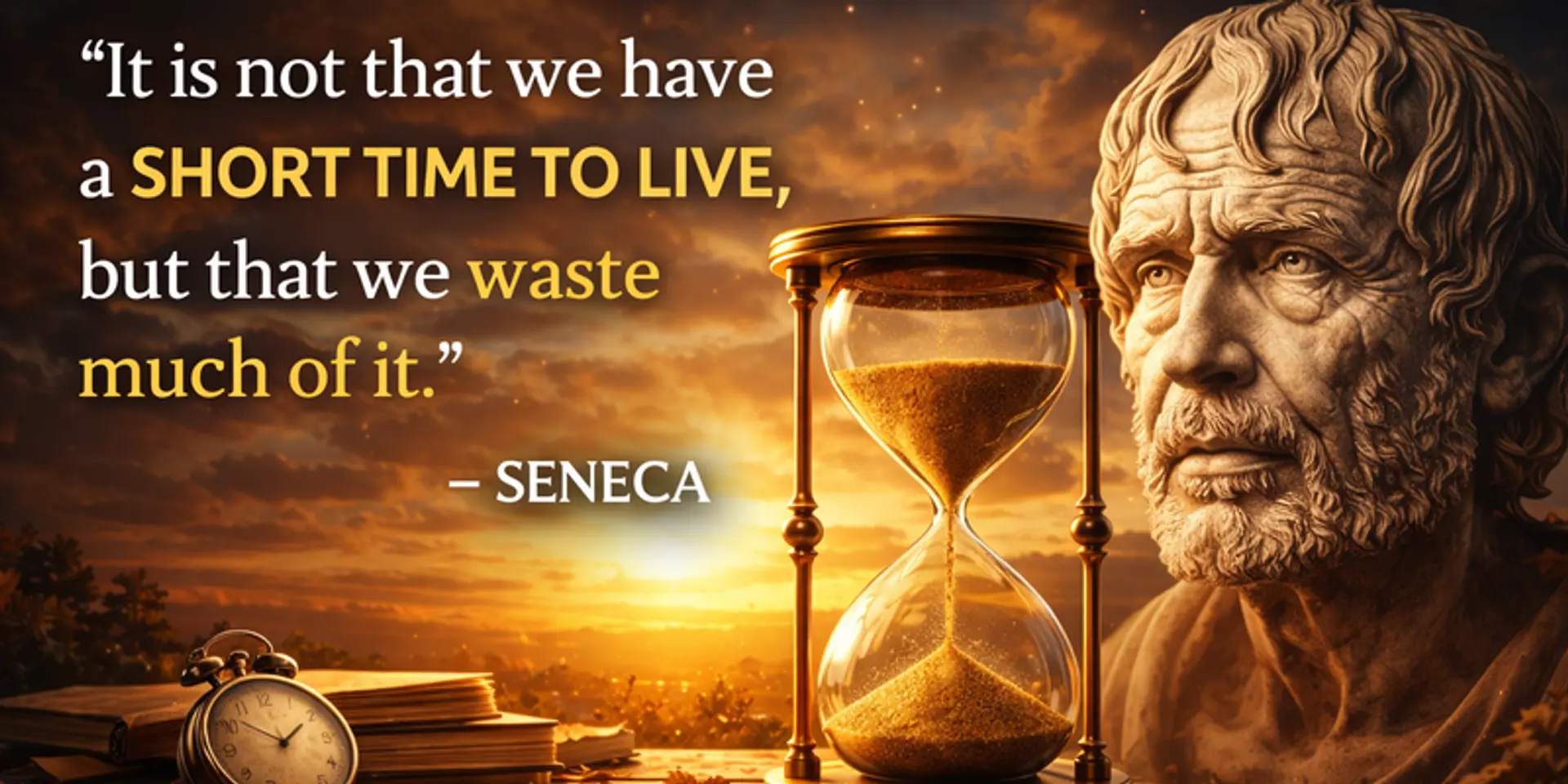

In the first century AD, the Roman philosopher Seneca the Younger wrote a striking observation about human life: “It is not that we have a short time to live, but that we waste much of it.” Though written nearly two thousand years ago, the line remains startlingly relevant today. In an age of constant notifications, endless scrolling, and packed schedules, Seneca’s reflection forces us to confront a difficult truth — the real scarcity in life is not time itself, but how consciously we use it.
Seneca’s insight comes from his Stoic philosophy, which emphasised clarity of mind, discipline, and purposeful living. According to Stoicism, the value of life does not depend on its length but on how wisely it is lived. People often complain that life is too short, yet much of their time disappears in distraction, procrastination, or pursuits that bring little meaning.
Modern life illustrates this paradox clearly. Many individuals feel perpetually busy, yet struggle to recall where their hours actually go. Digital platforms compete for attention, workdays extend into evenings, and leisure time often dissolves into passive consumption. In this environment, time slips away quietly, not through major events but through small, repeated habits of distraction.
Seneca argued that the greatest loss occurs when people postpone meaningful living. Individuals tell themselves they will focus on personal growth, relationships, or passions “later” — after work stabilises, after financial goals are met, or after life becomes less hectic. But this imagined future rarely arrives in the way people expect. Instead, years pass while attention remains fixed on immediate pressures and trivial concerns.
For Seneca, the antidote to this problem lies in awareness. When individuals recognise time as their most valuable resource, they begin to guard it more carefully. Every hour becomes an opportunity for learning, reflection, creation, or connection. In Stoic thinking, the goal is not to fill life with constant activity but to focus on what truly matters.
This perspective challenges modern definitions of productivity. Being busy does not necessarily mean using time well. A day filled with meetings, emails, and minor tasks may feel productive, yet it can leave little room for deeper work or personal growth. Seneca believed that a life well lived requires deliberate choices — choosing meaningful work over endless busyness, thoughtful reflection over mindless distraction, and purposeful action over delay.
The philosopher also emphasised that time is the only possession humans cannot recover. Money can be earned again, opportunities can return, but a moment once lost is permanently gone. This realisation, he suggested, should inspire people to live more intentionally.
Importantly, Seneca did not advocate abandoning responsibilities or withdrawing from society. Rather, he encouraged individuals to approach life with clarity about their priorities. Time spent cultivating knowledge, nurturing relationships, or contributing to society, he believed, is never wasted. The problem arises only when people surrender their time to habits and obligations that offer little value.
In the modern world, Seneca’s message is both a warning and an invitation. Life may appear short because so much of it passes unnoticed. Yet when people choose to use their time with intention — learning, creating, building relationships, and pursuing meaningful goals — even an ordinary life can feel expansive and fulfilling.
Ultimately, Seneca reminds us that the quality of life is not measured in years, but in attention. Time is not truly scarce; our awareness of it often is. The challenge is not to find more hours, but to live the ones we have with purpose.