


Zari-Zardozi of Shahjahanpur: Hand Embroidery Shaping Occasion Wear
In Shahjahanpur, zari-zardozi artisans convert simple fabrics into intricate occasionwear, driven by wedding and festive demand, supported by ODOP initiatives and traditional craftsmanship.

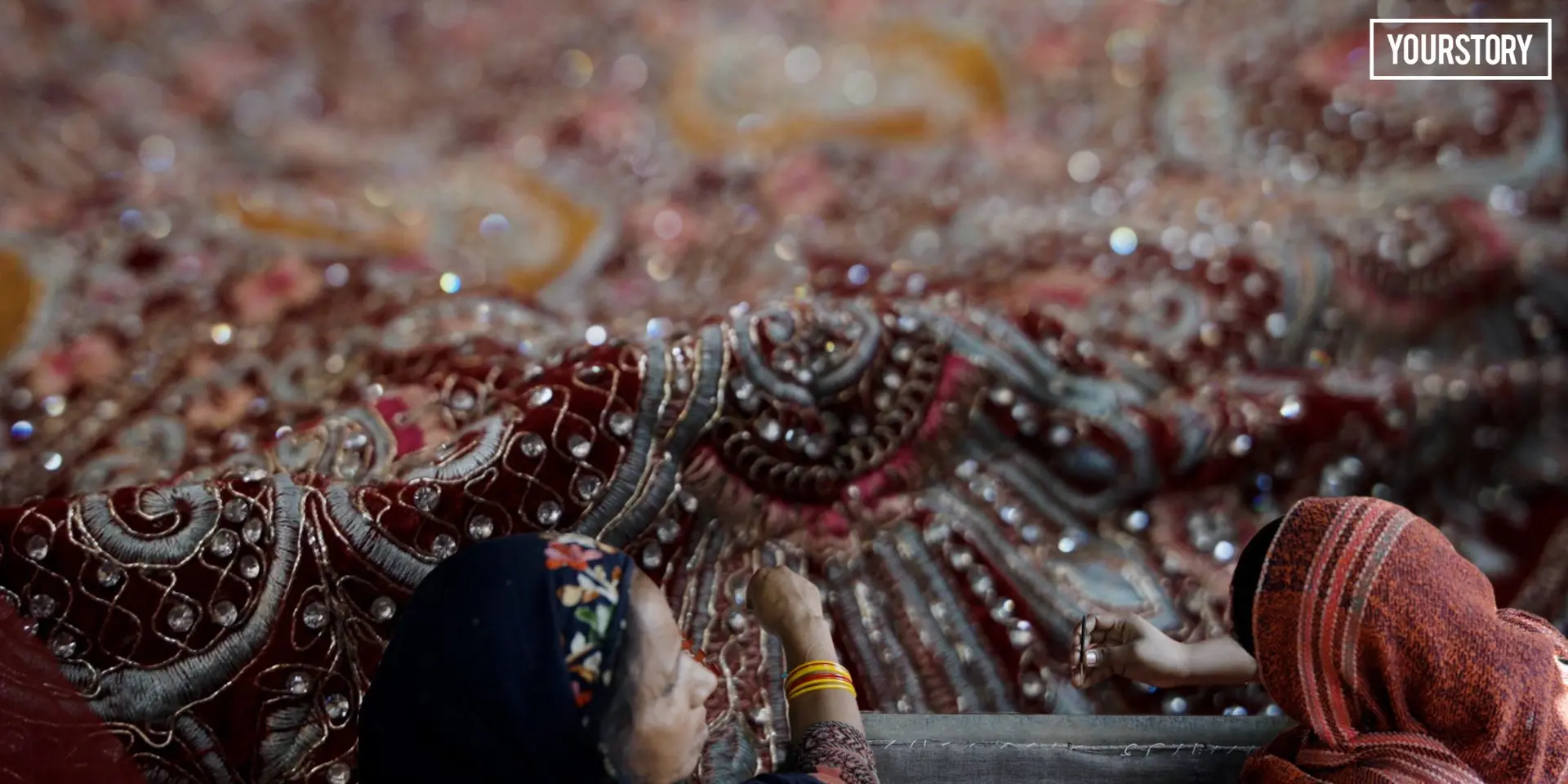

In Uttar Pradesh’s Shahjahanpur district, zari-zardozi work continues to define the local trade in occasion wear. The demand here is closely linked to weddings, festivals, and family functions, where garments such as saris and lehengas are valued for their decorative richness rather than everyday utility. What matters most is not quantity, but how well the embroidery enhances the fabric — creating a finished piece that reflects both effort and detail.
The production ecosystem operates through small shops and artisan-led processes, rather than large-scale manufacturing units. Fabric is sourced from the market, embellishment materials are procured separately, and designs are developed before being executed by skilled karigars through hand embroidery. The strength of this trade lies in its ability to transform simple base fabrics into occasionwear through labour and technique, supported by locally embedded knowledge of styles and materials.
Under the One District One Product (ODOP) programme, artisans in Shahjahanpur have been able to access financial support through bank-linked schemes facilitated by the district industries system. This has helped small units expand their working capacity and sustain production.
Among those engaged in this trade is Mohammad Chand Ahmad, a resident of Rai Khurd village, who runs Chanda Saree Suit Sansar in Subhash Nagar. Although his shop has been operational for nearly two years, his association with zari-zardozi work goes back further, shaped by the environment around him where many were already engaged in similar work.
As he explains, the process begins with sourcing sari fabric from the market. The fabric is then cut and prepared to the required dimensions, after which threads and decorative materials are arranged. Once the design is finalised, karigars begin the embroidery work. Ahmad notes that kardana work is currently in higher demand, with buyers showing consistent interest in this style.
Depending on the complexity of the design, a single sari may take three to four hours to complete. After the embroidery stage, finishing touches are added to ensure the product is ready for sale. The value of the piece lies not just in decoration, but in the precision — how evenly and cleanly the design is executed across the fabric.
Ahmad also places the craft within Shahjahanpur’s long-standing local tradition, noting that zari work has been a visible part of the area’s livelihood for years, with many families involved in both production and trade. Despite gradual changes, the work remains largely hand-driven, with karigars continuing to play a central role.
In Shahjahanpur, zari-zardozi is sustained by the alignment of fabric, design, and skilled handwork. When these elements come together effectively, even a simple sari can be transformed into a detailed and saleable garment through a few hours of dedicated craftsmanship.