


From bank desk to noodle factory: a small business in Sultanpur
In Sultanpur’s Manbhavana village, Anil Yadav runs a small noodle manufacturing unit from his home, supplying nearby markets and building the business with family support.

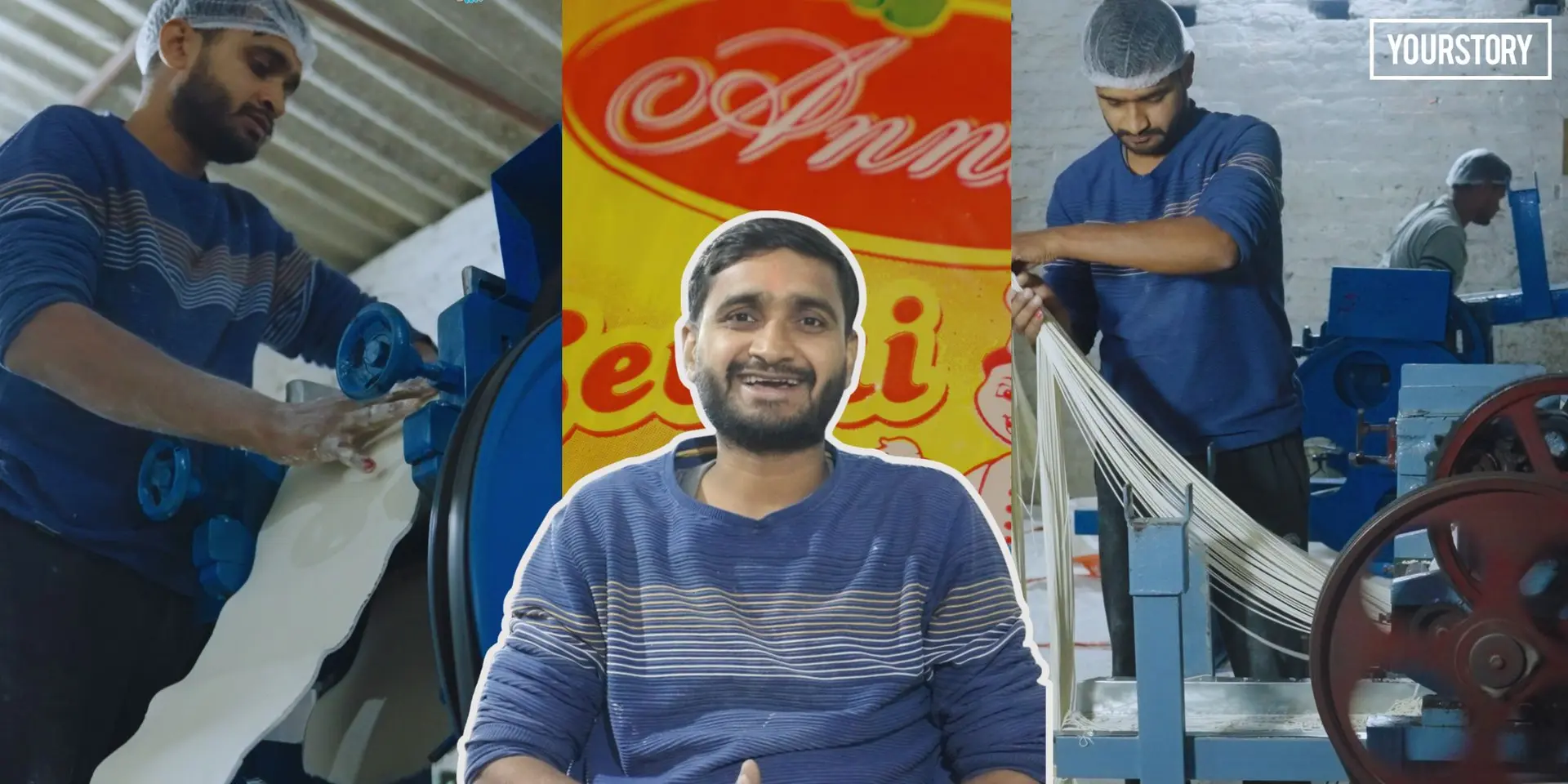

In Manbhavana village of Sultanpur district, a small noodle manufacturing unit now runs from within a family home. The business, operated by Anil Yadav, produces packaged noodles that are supplied to nearby markets and shops. What began as a modest experiment about two years ago has gradually developed into a small-scale manufacturing activity supported by family labour and a handful of workers.
Before starting the unit, Yadav was employed at HDFC Bank in Delhi. The job offered a regular income but also long working hours and increasing pressure. Over time, he began considering the possibility of returning home and starting a business that could be managed with the support of his family.
While observing markets in Delhi, he noticed that noodles were widely sold in shops, small eateries, and at social gatherings. The product’s consistent demand convinced him that a small manufacturing unit might be viable even in a rural setting. He eventually left his job and returned to Sultanpur to begin production from his home using personal savings and small contributions from relatives.
“Business has ups and downs, but if you keep working and learning from mistakes, it gradually improves,” Yadav says.
Early struggles and family effort
The first months were marked by uncertainty. Production began at a very small scale, sometimes only a few kilograms at a time, as Yadav experimented with mixing, rolling, and cutting the noodles. Without hired labour, the work was handled entirely by Yadav and his wife.
The lack of reliable electricity created additional challenges. Much of the manufacturing had to be done late at night when power was available. At times, ingredients would spoil if power cuts interrupted the process midway, forcing them to restart. Despite these difficulties, the family continued production, slowly refining the process.
Yadav recalls that convincing his father to support the decision to leave a stable job was not easy. The family initially worried about the risks involved in starting a business without sufficient capital. Over time, however, they began contributing to the effort, by mixing, rolling, cutting, and packaging the noodles.
Gradually, local shops began placing small orders. As the market expanded, the need for higher production capacity became clear.
Support that helped the business expand
To scale up operations, Yadav later accessed financial assistance through the Mukhyamantri Yuva Udyami Vikas Abhiyan (CM YUVA) Yojana. The loan enabled him to purchase additional machinery and increase production capacity.
Earlier, production took place within a single room of the house. Today, the work is distributed across three separate rooms: one used for cutting, another for packaging, and a third for storing finished products. With improved capacity, the unit now produces larger quantities and supplies markets across a wider radius of nearby towns and villages.
The financial support also allowed Yadav to hire additional workers, easing the burden that the family had carried during the initial phase. Regular production cycles have made it easier to meet orders from retailers, some of whom purchase goods on credit, a common practice in small rural markets.
Two years after leaving his bank job, Yadav’s noodle manufacturing unit remains modest but steady. The business continues to rely on family involvement and local demand, reflecting how small enterprises in rural districts often grow gradually through persistence, community networks, and the willingness to adapt to challenges along the way.
What is CM YUVA Scheme?
Under the leadership of Hon’ble Chief Minister of Uttar Pradesh, Yogi Adityanath Ji, the state government aims to transform youth from job seekers into job creators.
To achieve this vision, the Directorate of Industries and Enterprise Promotion, under the Department of Micro, Small & Medium Enterprises and Export Promotion, is implementing the ‘Mukhyamantri Yuva Udyami Vikas Abhiyan’ (CM YUVA) Yojana.
Under this scheme, young entrepreneurs are provided with up to Rs 5 lakh in 100% interest-free and collateral-free loans to start their industrial or service-based ventures. In addition, beneficiaries also receive a 10% margin money subsidy on the project cost.
CM YUVA is not just a financial assistance scheme; it also provides mentorship, guidance, market access, and essential resources to help youth become self-reliant entrepreneurs and generate employment opportunities for others.
Click here to know more about the CM YUVA Scheme.