



The Thought That Stops People from Achieving Greatness
More than a spiritual teaching, Vivekananda’s message about strength reflects a deeper psychological truth: believing in your potential can shape the direction of your life.

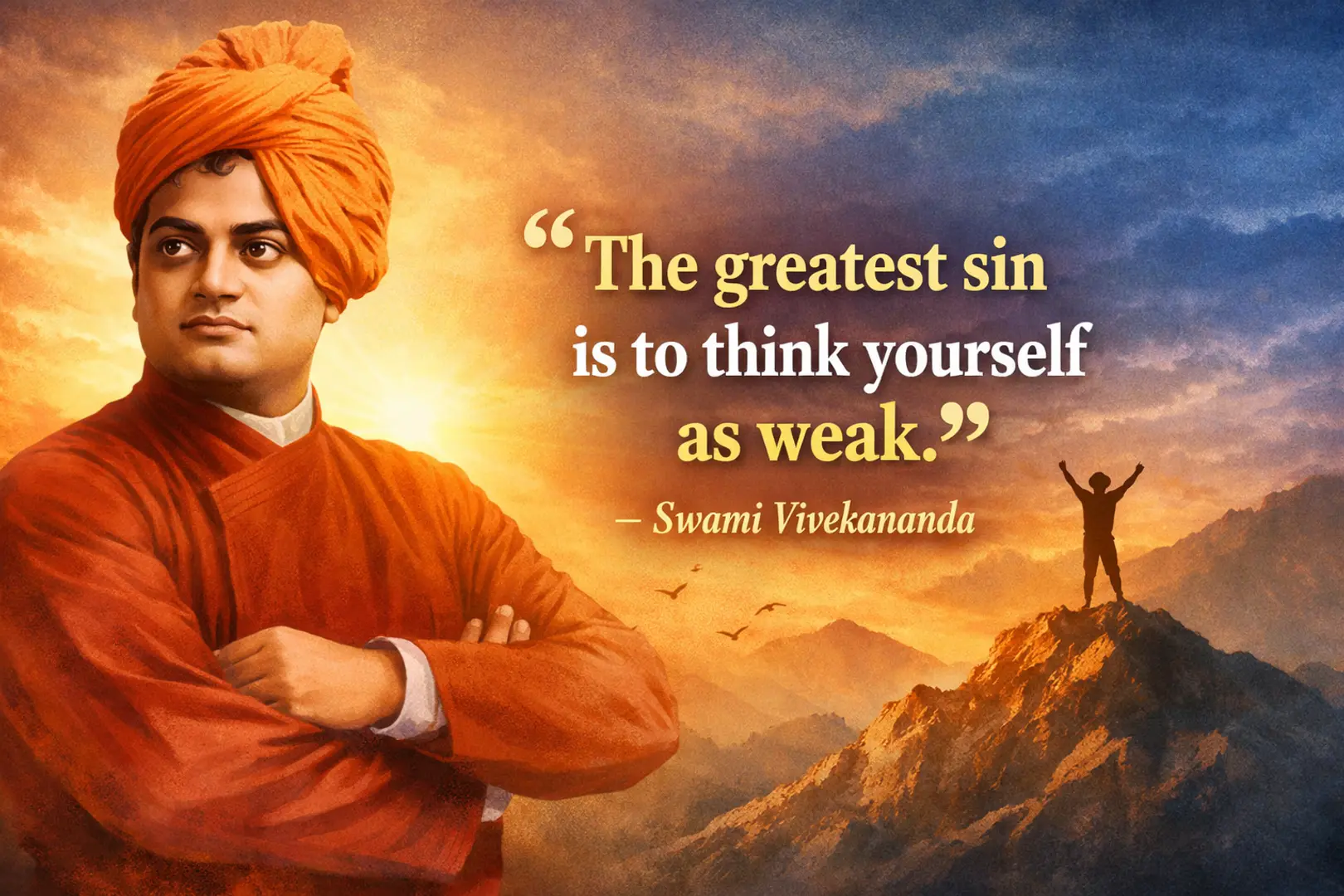

More than a century after his speeches electrified audiences across the world, Swami Vivekananda continues to inspire millions with a powerful and uncompromising message about human potential. Among his most quoted ideas is a striking statement: “The greatest sin is to think yourself as weak.”
For Vivekananda, weakness was not merely a personal limitation; it was the root of fear, hesitation, and stagnation. Strength, on the other hand, was not only physical or social power but an inner conviction about one’s inherent potential. His philosophy continues to resonate in modern society, where self-doubt and comparison often overshadow confidence and self-belief.
A philosophy rooted in inner strength
Vivekananda’s teachings were deeply influenced by the spiritual wisdom of Ramakrishna Paramahamsa and the philosophical foundations of Vedanta. These traditions emphasise the idea that every human being carries divine potential within.
According to Vivekananda, when individuals begin to believe that they are weak or incapable, they unconsciously limit their own growth. Self-doubt becomes a barrier that prevents people from pursuing opportunities, taking risks, or expressing their talents. In contrast, recognising one's strength opens the door to courage and action.
He frequently urged young people to cultivate confidence and self-reliance. For Vivekananda, strength meant standing firmly in one’s beliefs, facing challenges with determination, and refusing to surrender to fear.
The psychological power of belief
Modern psychology echoes many of Vivekananda’s insights. Research on mindset and self-perception shows that individuals who believe in their abilities are more likely to take initiative, persevere through difficulties, and achieve their goals.
Believing oneself to be weak often creates a cycle of hesitation and failure. People may avoid opportunities because they assume they will fail, which ultimately prevents them from gaining experience or growth. Over time, this reinforces the very sense of weakness they fear.
Vivekananda recognised this dynamic long before it became a subject of scientific research. His teachings repeatedly emphasised that the mind is a powerful force capable of shaping one’s destiny.
Relevance in a modern world
In today’s fast-moving and competitive world, Vivekananda’s message feels particularly relevant. Many people struggle with comparison, pressure, and uncertainty about their abilities. Social media, academic competition, and workplace expectations can easily fuel feelings of inadequacy.
Vivekananda’s philosophy offers a powerful counterpoint. Instead of measuring worth through external success, he encouraged individuals to focus on inner strength and self-awareness. By recognising their potential, people could overcome fear and contribute meaningfully to society.
His message also carries broader social implications. Societies that encourage confidence and empowerment tend to foster innovation, leadership, and resilience. Conversely, cultures that reinforce helplessness or dependency often struggle to progress.
A message for future generations
More than a motivational statement, Vivekananda’s idea that “the greatest sin is to think yourself as weak” represents a deeper call to self-realisation. It reminds individuals that limitations are often psychological rather than absolute.
For young people especially, the message remains powerful. Confidence does not mean arrogance, but rather a quiet belief that challenges can be faced and overcome.
In an era defined by rapid change and uncertainty, Vivekananda’s words continue to serve as a reminder that strength begins within. By rejecting the idea of weakness and embracing one’s inner potential, individuals can unlock possibilities that once seemed impossible.