


Zari-zardozi in Unnao: A craft shaped by detail, process, and market rhythm
Rooted in Lucknow’s embroidery heritage, Unnao’s zari-zardozi sector balances intricate craftsmanship with scalable production, serving both premium and high-volume market segments.

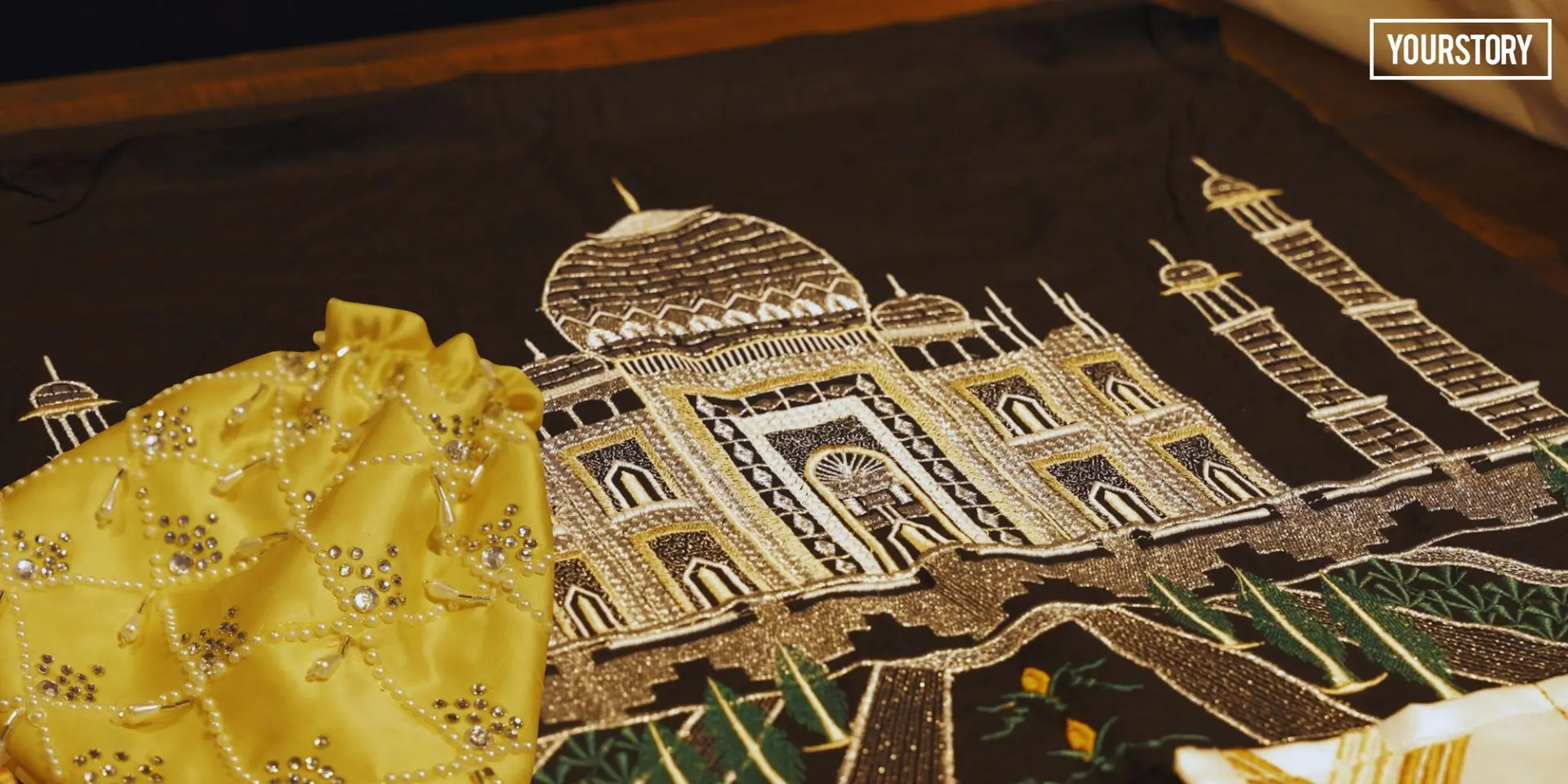

Across wedding garments, occasion wear, and decorative home textiles, zari-zardozi embroidery serves as the stage that transforms plain fabric into a value-added product. Lehengas, suits, sarees, jackets, quilts, and cushion covers all pass through this layer of embellishment, where the density of threadwork, intricacy of patterns, and finishing determine how the product is received in the market.
In Uttar Pradesh’s Unnao district, the craft draws from an older lineage that local practitioners associate with Mohan and the wider embroidery traditions of Lucknow. While its aesthetic vocabulary reflects this history, the present-day ecosystem is organised around a structured workflow that connects design, execution, and trade.
The process begins with fabric sourced from the market, followed by design development and sampling. Once a design is approved, embroidery is carried out, and stitching or finishing is added where required before the product moves into trade channels. Each stage plays a role in shaping the final output, particularly in how consistently designs are executed and how well finishing aligns with buyer expectations.
Under the One District One Product (ODOP) programme, the cluster has gained institutional support through the establishment of a Common Facility Centre (CFC). The centre functions as a shared workspace that enables coordinated production activity, supports training, and allows artisans to work collectively on market-linked orders.
According to Faizi Farooqi, Secretary of the Unnao Zari Zardozi Cluster Utthan Samiti, the CFC allows members to bring in market orders and have them executed within a shared system at government-notified rates. The initiative began in 2016 and received formal approval in 2024. The cluster currently has 35 members, with the broader workforce comprising nearly 60% women and 40% men.
Production begins when fabric arrives with a buyer’s design requirement. Designers interpret the brief into workable patterns, which are first developed into samples. Once approved, the workshop moves into bulk execution, with order sizes typically ranging from 100 to 1,000 pieces. Where required, stitching is integrated after embroidery before dispatch.
Farooqi emphasises that the strength of the cluster lies in its ability to handle both detailed, design-intensive work and larger, repeat orders. Rather than relying on a single format, the craft adapts to different segments of demand while retaining its core emphasis on surface detailing.
The cluster has participated in exhibitions such as Delhi Haat, Goa, Odisha, and Noida, where buyer response varies depending on regional preferences and willingness to pay for finer workmanship.
In Unnao, zari-zardozi production follows a rhythm shaped by design clarity, coordinated execution, and timely delivery. When these elements remain aligned, the cluster is able to serve both scale-driven orders and detail-oriented craft work while maintaining the quality that defines its market value.