



EON Space Labs: India’s satellite optics bet
EON Space Labs builds lightweight EO-IR payloads. Its MIRA telescope flew on PSLV-C62, reducing launch weight and import dependence.

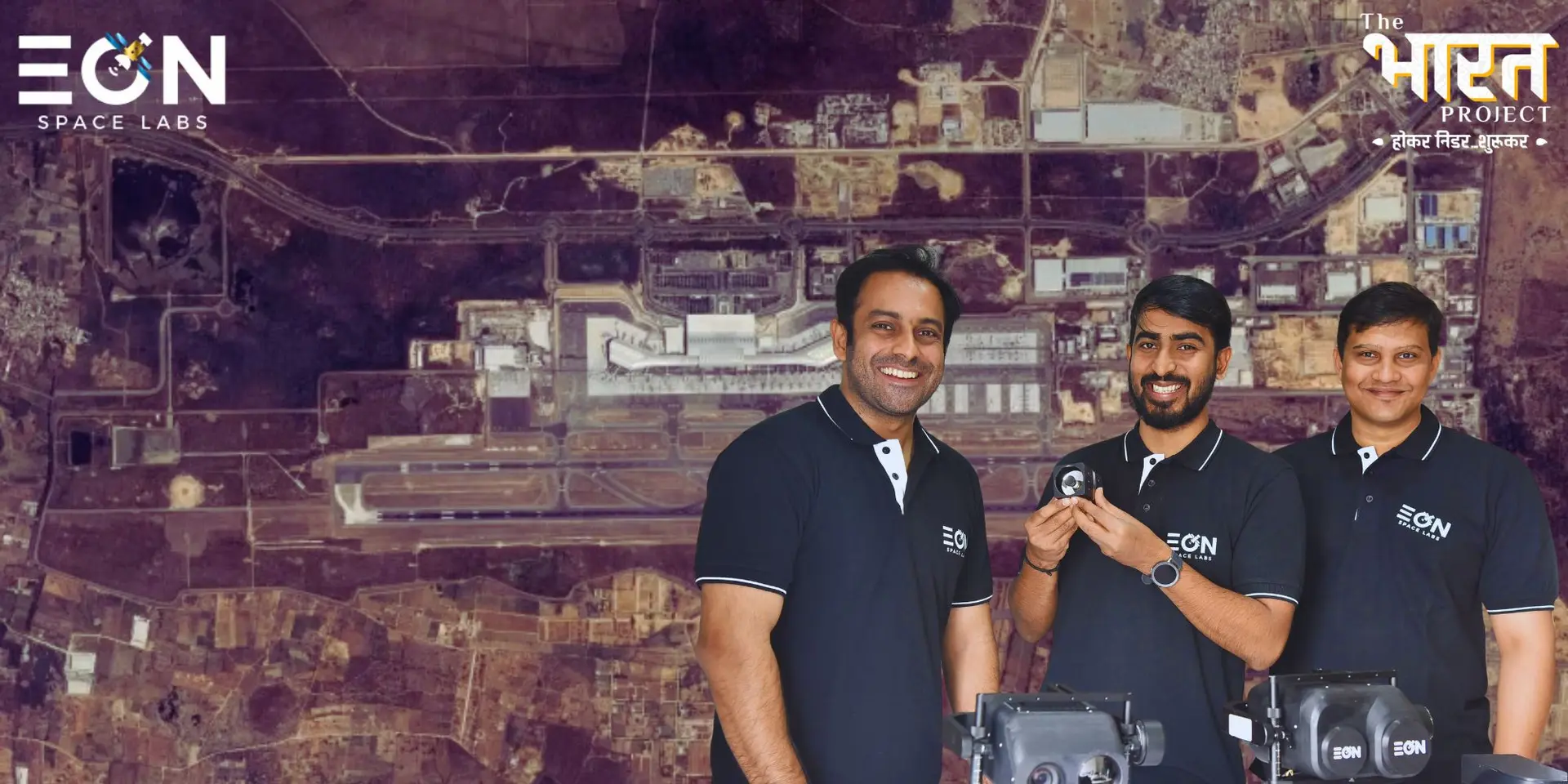

India can put satellites into orbit consistently. The systems that capture images from those satellites have often come from elsewhere. That gap sits inside the optical payload. EON Space Labs, founded in 2022, is working to build these systems from scratch.
The company’s founders arrived at the problem through years spent in precision imaging and manufacturing.
Sanjay Kumar brings over a decade of experience in optical design and imaging. Manoj Gaddam has 14 years of experience in precision manufacturing and opto-mechanical supply chains. Punit Badeka adds eight years in manufacturing operations and cost engineering. Across roles, they kept running into the same constraint: high-performance space optics were not designed in India. They were imported, often with lead times stretching 12 to 18 months.
“What we saw was a paradox,” the founders say. “A country with world-class space ambitions still dependent on external suppliers for the very eyes of its satellites.”
A telescope shaped by weight
At the centre of EON’s work is MIRA, its flagship optical payload. It is built around a constraint that defines mission economics: weight. MIRA weighs 502 grams, making it three to four times lighter than comparable systems globally.
That difference carries a direct cost implication. Every kilogram sent to orbit can cost between $10,000 and $20,000. A lighter payload reduces launch costs at the mission level. MIRA also compresses the capabilities of a longer optical system into a compact structure.
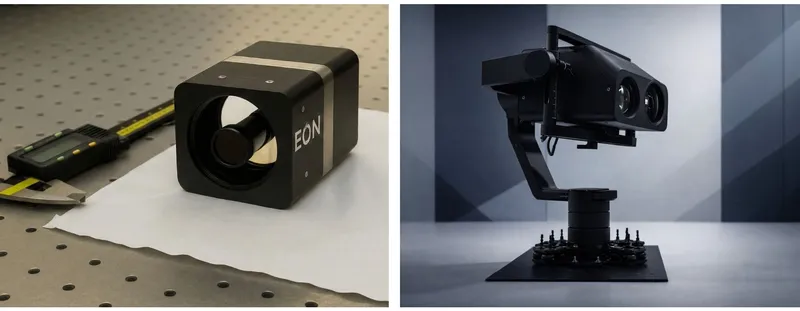
That compaction ratio sits at the core of the company’s design approach. Around it, EON has built a broader product set. In space, systems include ARGUS and AstraView. For aerial platforms such as UAVs, the LUMIRA series is in commercial use. On the ground, BUHO, RAVEN, and Multisight are designed for surveillance and defence applications.
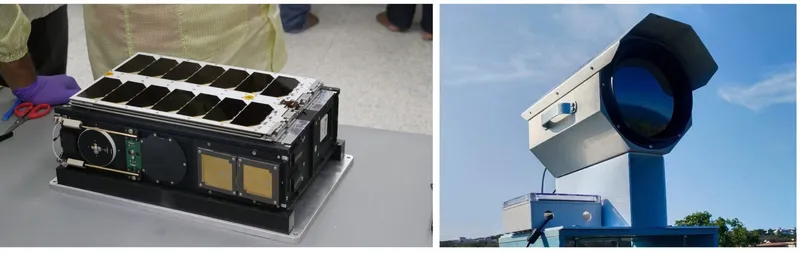
The approach is consistent across categories. Optical design, precision manufacturing, assembly, calibration, and testing are handled in-house. Most domestic players assemble imported components. EON is attempting to control the system end-to-end. That choice drives superior quality at every layer. It defines the company’s position.
When the payload flew
The transition from prototype to validation took time. Early systems worked in testing, but orders were limited. The company faced manufacturing yield issues and a phase where the technology existed without clear commercial traction.
The turning point was flight. In January 2026, the MIRA payload flew on the PSLV-C62 mission. That shifted how the system was evaluated. Flight heritage, being tested and proven in orbit, is a key credibility marker in the space industry.
During a customer integration review, an engineering lead said, “We did not expect this level of MTF performance from an Indian source; we were planning to supplement with imported calibration optics.” He did not need to.
From validation to scale
EON now operates with a 17-person team, with more than 80% focused on technical roles across optical design, manufacturing, and embedded systems.
It serves four segments: satellite manufacturers and Earth observation operators, UAV integrators and defence companies, government agencies including the Ministry of Defence and the Border Security Force, and international customers across Southeast Asia and the Middle East.
Revenue comes from payload sales, along with engineering model contracts and non-recurring engineering work. The company plans to add recurring revenue through maintenance and upgrade contracts over time.
Competition is global. Companies such as Simera Sense, Scanway Space, and Dragonfly Aerospace operate in similar categories.
In India, Kaleideo is one of the few comparable players. Scaling now depends on manufacturing. EON is planning an optical manufacturing facility with an investment of Rs 120 crore, expected to support 50 to 100 payload assemblies annually and reduce sub-assembly costs by 30 to 40%.
This addresses a constraint in precision optical manufacturing, where supplier depth remains limited. The company has raised a Pre-Series A round from 1crowd, MGF Kavachh, and HHV Advanced Technologies, and is working towards a Series A round of around $13 million.
It is also exploring partnerships in Europe with Safran, Thales, and Airbus Defence and Space. These partnerships are under exploration. The broader shift is already visible. The payload is no longer imported. It is built here.