



Perceptyne: AI robots for factory automation
Perceptyne builds AI-driven robots for manufacturing. Its dual-arm systems automate complex tasks with lower cost and flexible deployment.

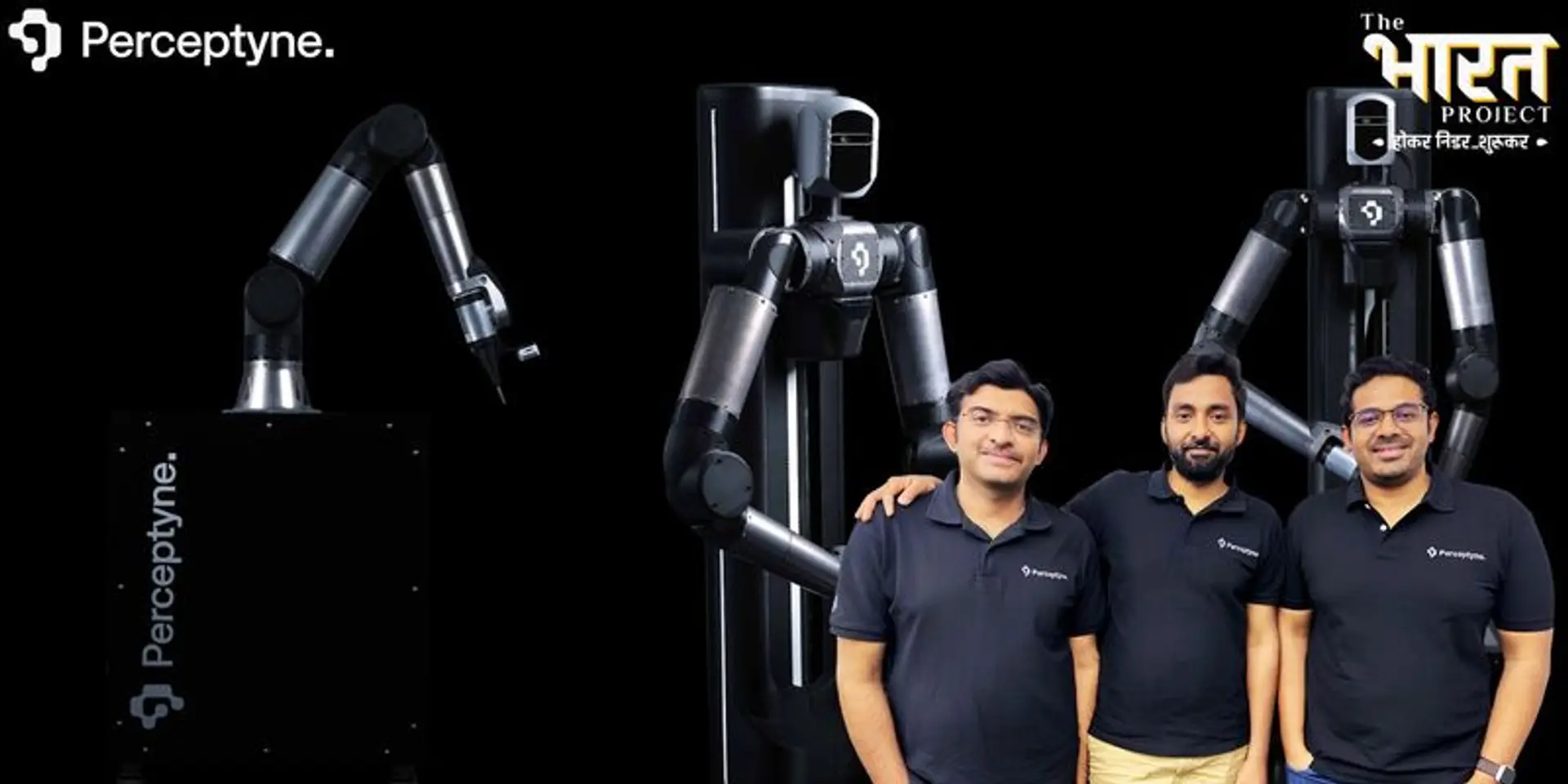

Factories are efficient where work is predictable. Machines repeat tasks with speed and accuracy when every input is controlled. Breakdowns begin when variation enters the system. Parts arrive slightly misaligned. Components differ in shape. Tasks require small adjustments that cannot be pre-programmed. Human labour fills that gap. Perceptyne Robots is building machines for this layer of work.
Where automation slows down
Industrial automation has progressed in stages. Repetitive and structured processes were automated first. Tasks that require dexterity and adaptation have remained harder to address. Perceptyne was founded in 2021 in Hyderabad by Raviteja Chivukula, Jagga Raju Nadimpalli, and Mrutyunjaya Nadiminti to focus on this segment.
The starting point was a simple observation. Many critical manufacturing processes still depend on human workers because they require precision and adaptability together. Traditional robots struggle in such environments and often need changes to factory infrastructure.
Each system required customised hardware to handle different items. Scaling them was difficult. A question followed and stayed. What if a system could identify and handle different objects without being redesigned each time? Perceptyne was built around that question.
Raviteja’s background spans aerospace, defence, and automotive engineering. He previously led the avionics division at Skyroot Aerospace, working on systems for launch vehicles. The idea predates the company. During an internship, he worked on vending machines built around rigid, product-specific mechanisms.
Building robots that adjust
Perceptyne develops AI-driven, semi-humanoid robots designed for industrial environments. Its systems use dual arms, visual sensing, and AI models to handle tasks requiring coordination and adjustment. A key design choice is compatibility with existing factory setups, avoiding large-scale infrastructure changes.
The product portfolio includes PR-DUO, PR-UNO, and PR-OMNI, used for assembly, packaging, inspection, testing, and component insertion. PR-DUO operates with dual arms, multiple degrees of freedom, and five-fingered end effectors.
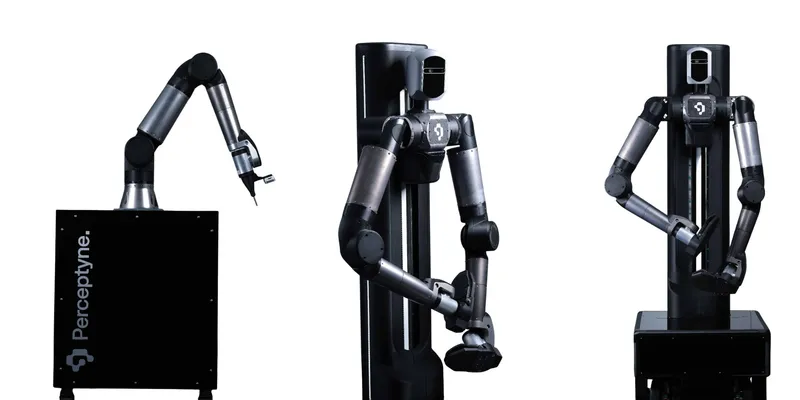
Vision, force sensing, and tactile feedback allow it to function even when objects are not perfectly aligned.
Training happens through teleoperation. Human operators guide the robot through tasks, and the system learns from those interactions. This reduces the need for extensive programming. Deployment becomes faster as a result.
From pilots to production
Perceptyne is in the prototype and pilot stage, working with multinational manufacturers on deployments. Electronics and automotive manufacturing remain the primary focus. Both sectors rely heavily on manual labour for sub-assembly tasks involving clutches, braking systems, laptops, and smartphones.
The company states that its systems can reduce operational costs by up to 40%. Team strength has grown to around 45 members, with two-thirds focused on engineering. Institutional backing from T-Hub and IIIT Hyderabad has supported early development through funding and ecosystem access. Scaling beyond pilot deployments remains the next step.
Competing on flexibility
Perceptyne operates in a global market for advanced manufacturing systems. Competitors include Agile Robots, NEURA Robotics, and Doosan Robotics. Within India, Systemantics is also active in industrial automation.
Most competing systems are built for structured environments or tied to specific hardware ecosystems. Adaptation to variability often requires additional configuration. Perceptyne’s positioning centres on flexibility and cost. Its systems are designed to handle variation in object placement and orientation. Pricing is stated to be around 40% lower than imported alternatives.
Revenue flows through two models. A capital expenditure route where customers purchase systems outright. An operating expenditure route where robots are deployed as a service and priced on usage or performance.
Adoption becomes easier when upfront investment is reduced. Go-to-market efforts focus on integration into existing factory setups. This shortens deployment timelines and avoids large production line changes.
Building for changing factories
Perceptyne has raised around $3 million in seed funding, led by Endiya Partners and Yali Capital, with participation from Whiteboard Capital.
Pilots are underway in India, with plans to expand into the United States and European markets. Demand is being shaped by labour shortages and shifts in manufacturing strategies. Factories are moving towards systems that can handle variability rather than repetition. Perceptyne is building for that shift.