



Chtrbox aims to become the engine behind India's creator economy
From a startup solving influencer chaos to India’s only listed influencer marketing firm at scale, Chtrbox is building the infrastructure brands now need to win online.


India’s Union Budget 2026–27 emphasised on the country’s “Orange Economy”, the fast-growing world of content, creativity, gaming, and media. It is a recognition that ideas, culture and creators are no longer side industries, but serious economic engines.
A Boston Consulting Group report predicts India’s creator economy will top $1 trillion in annual spending by 2030. That shift is visible in influencer marketing: what began as brands experimenting with internet creators has evolved into a structured business with measurable outcomes, rising budgets, and specialised technology.
Few companies illustrate that transition better than Mumbai-based Chtrbox. Founded in 2016 by Pranay Swarup and Rohit Raj, the influencer marketing platform connects brands with over 300,000 creators across India through a data-led system that handles discovery, campaign execution, talent management and live performance tracking.
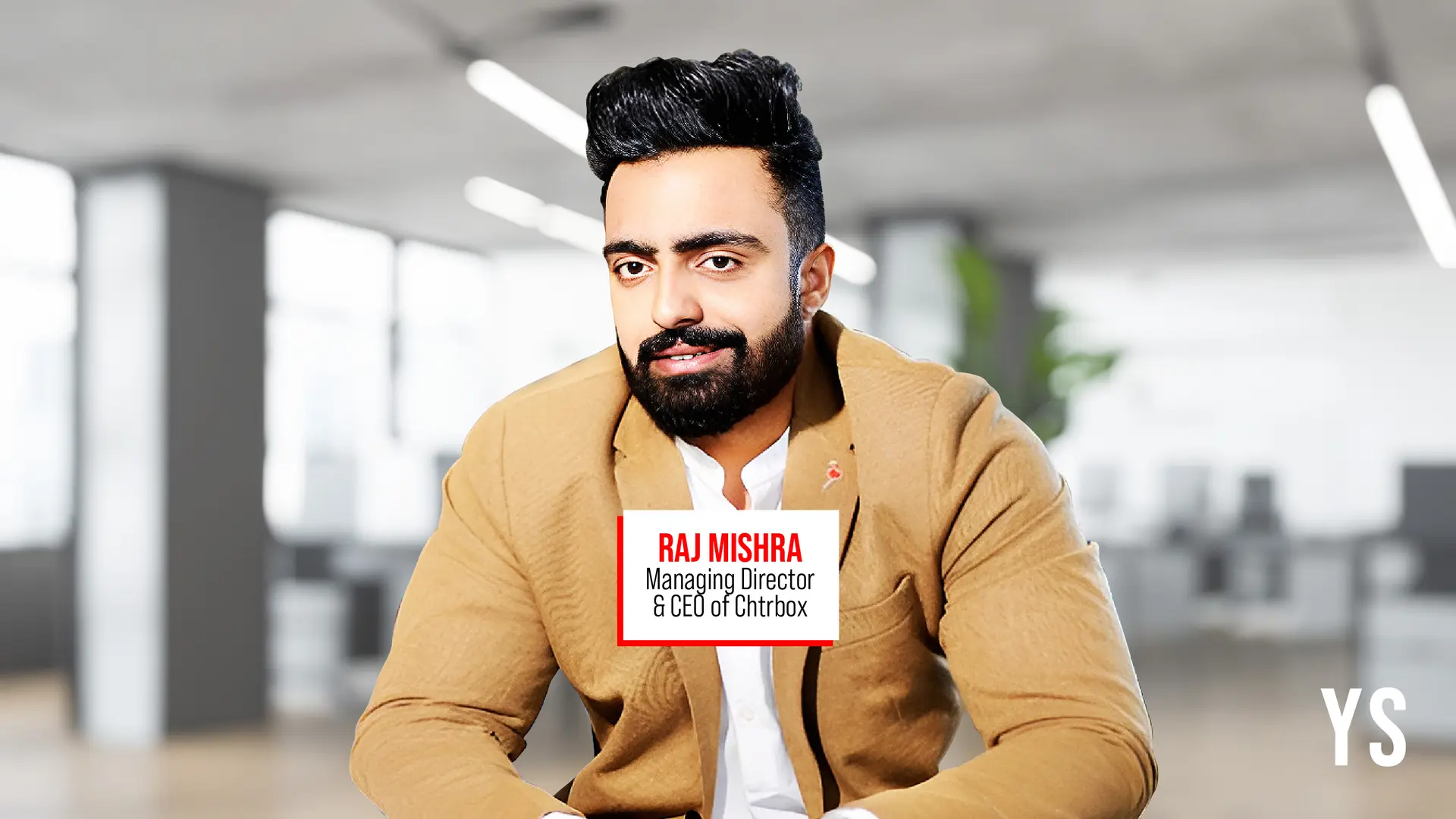
The company was acquired by US-based QYOU Media in 2021, after which founders Pranay Swarup and Rohit Raj exited. QYOU brought on Raj Mishra as a co-owner and strategic backer, and he has since taken on the role of Managing Director and CEO of Chtrbox, alongside serving as India Group CEO of QYOU Media.
“Content and creators offered brands the next big jump for scaling word-of-mouth impact,” Mishra says. “Instead of just another agency or marketplace, our vision was a data-driven organisation putting insights, social listening, and ROI front and centre.”
Fixing a broken system
The creator economy began taking shape in 2016, with platforms such as Musical.ly and TikTok. Suddenly, thousands of creators were building large audiences and shaping trends. Brands quickly saw the opportunity to tap into this influence for more authentic engagement.
But execution was messy. Many relied on manual agencies, spreadsheets, or outdated databases. There was no smart way to scale campaigns, no reliable method to identify the right creators, and little clarity on whether campaigns were actually working.
Brands also struggled to track online conversations around their products, making it harder to predict what kind of content or creator partnerships would resonate. Chtrbox was built to solve that gap.
What it offers
Chtrbox matches brands with creators using three broad filters: reach, relevance, and resonance. Brands can launch campaigns, identify suitable creators, and measure results through a streamlined process.
Its services go beyond matchmaking. Chtrbox supports campaign strategy, creator onboarding, paid media amplification, and performance measurement. It also helps brands brainstorm content ideas aligned with business goals.
For creator selection, the platform looks beyond follower counts. It evaluates audience quality, demographics, engagement behaviour, content style, and category fit.
Campaigns begin with clear alignment on goals: awareness, engagement, or sales. From there, brands and Chtrbox shape the content plan, launch campaigns, and monitor outcomes.
“We track every rupee spent to spot what works and what doesn't, which helps brands understand what's working, what isn't, and how to optimise over time,” Mishra says.
Over time, the company has expanded into adjacent verticals. Chtrbox Represent manages creator careers, including brand deals, personal branding, and OTT opportunities. ChtrSocial focuses on social media growth through customised content and video production, while BharatBox works with regional creators in Tier II and Tier III cities. Youth:ink targets Gen Z through campus programmes, ChtrStudios creates professional video content, and Chtr International is focused on overseas expansion.
How campaigns are built
Chtrbox works across sectors such as FMCG, fintech, lifestyle, and more, serving both legacy brands and digital-first companies.
Every client journey starts by mapping business objectives, target audiences, and success metrics. “Goal setting and alignment are priority zero, right from the start,” Mishra says.
Data is then used to identify creators based on audience fit, engagement rates, content type, and regional relevance, including Tier II and III markets. This shapes not just who is selected, but what message should be communicated, and how it lands with the audience.
“What sets us apart is real-time tracking,” Mishra adds. “Instead of waiting for post-campaign reports, we monitor metrics live as the campaign runs.”
Execution coordinates creators, timelines, and platform rules, with results feeding back instantly to improve outcomes. That creates a feedback loop rather than a one-off campaign cycle. Results from one campaign help improve the next. “The goal is compounding intelligence for brands,” he explains.
Pricing varies by campaign goals, scale, and creator tier. Brands may pay fixed fees per post, performance-linked payouts tied to clicks or views, or hybrid models. Metrics also differ by objective: impressions for awareness, engagement for interaction, and conversions for sales.
From 25 clients to 2,000
Chtrbox started as a traditional influencer agency, connecting brands with creators and managing campaigns. But, as the market matured, it transformed into a platform-first, intelligence-led company.
“Our vision shifted from a service-led model to a platform and intelligence-led business,” Mishra explains. “That meant heavy investment in data and technology, building systems that go far beyond early matchmaking.”
Early tools focused mainly on discovery and coordination, with much of the work handled manually through relationships. As the creator ecosystem scaled, with more creators, platforms, and content, that model became limiting.
Today, technology powers the core business.
The numbers show how far the company has come. In 2018, Chtrbox had a network of 150,000 influencers, had worked with just over 25 brands, including Ray-Ban, Flipkart, Whisper, and Godrej, and generated revenues of Rs 6 crore.
Today, its creator network exceeds 300,000, client count has crossed 2,000, revenues are growing at roughly 40% year on year, and the team stands at 126 people. Its IPO raised Rs 42.86 crore, making it India's only publicly listed influencer marketing firm at this scale. Post-listing, QYOU Media and Mishra together hold a 60.39% promoter stake in the company.
The space is competitive. Chtrbox competes with global platforms like CreatorIQ and Traackr, and regional players such as Collective Artists Network and Gushcloud.
The client roster has evolved, too. International brands such as d'Alba, Celimax, Jetpac, Forever52, and Biodance now work with the platform, alongside household names such as Philips, Amazon, HP, Olay, and Bioderma.
On the creator side, 100 talent partners are now managed exclusively through its talent division, a business vertical that did not exist when the company launched.
What comes next
Chtrbox has plans to deepen its technology stack, expand its creator ecosystem, and enter fast-growing international markets across Asia-Pacific, the Middle East and North Africa (MENA), and Latin America.
“We've recently opened in Dubai and are targeting MENA first, with expansion across emerging markets,” Mishra says. “The challenges we solve - discovery, measurement, and scalability - aren't India-specific. The plan is to take our proven model to new markets while adapting to local culture.”
Edited by Affirunisa Kankudti