



PhysicsWallah FY26 revenue rises 35% to Rs 3,900 Cr as AI, offline profitability stay in focus
PhysicsWallah improved profitability and operating cash flow in FY26, driven by rising paid users, offline expansion and AI-led efficiencies.

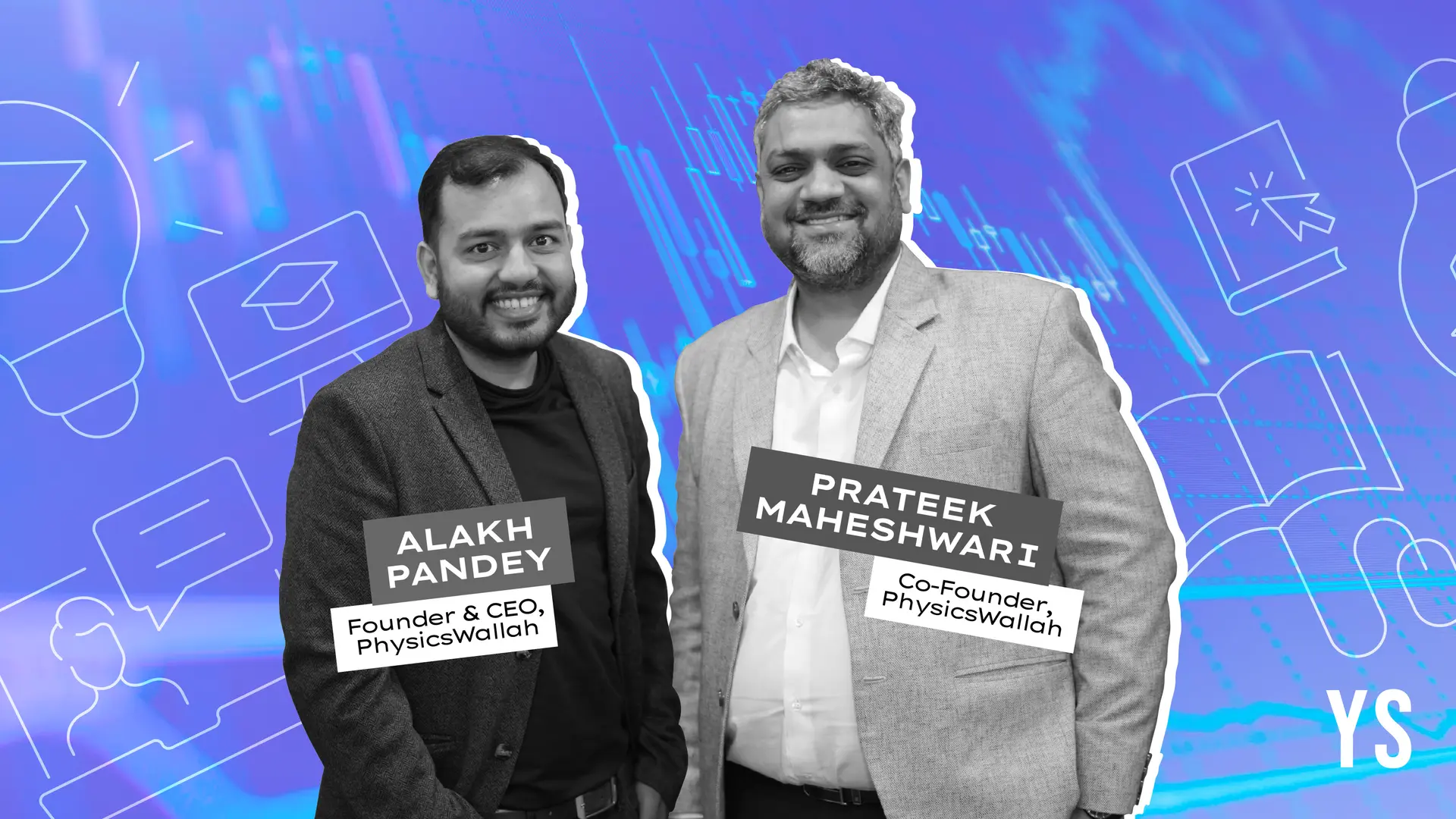

Edtech firm PhysicsWallah closed FY26 with strong revenue growth, an improvement in operating profitability, and positive pre-tax profit.
Revenue from operations rose 35% YoY to Rs 3,900 crore in FY26 from Rs 2,887 crore, while EBITDA surged 184% to Rs 549 crore with margins expanding to 14% from 7% in FY25.
The company narrowed its reported loss to Rs 24 crore in FY26 compared to Rs 243 crore in the year-ago period. The company attributed part of the pressure to one-time expenses of Rs 63 crore.
But its profit before tax turned positive at Rs 10 crore against a loss of Rs 259 crore a year earlier.
The edtech company also reported operating cash flow of Rs 833 crore, up 64% YoY, and said its treasury stood at Rs 5,027 crore at the end of March 2026, including IPO proceeds.
The Alakh Pandey-led firm’s full-year performance was driven by higher paid users, improved operating leverage and tighter cost discipline.
Paid users increased to 5.34 million in FY26 from 4.46 million in FY25, while online transacting users rose to 4.87 million and offline enrolments climbed to 0.47 million.
PhysicsWallah said it now operates 16+ exam categories that have each crossed Rs 10 crore in annual collections.
In the last quarter of the fiscal (Q4 FY26), revenue from operations rose 51% YoY to Rs 919 crore, while EBITDA came in at Rs 65 crore against a loss of Rs 204 crore in Q4 FY25. However, PAT remained negative at Rs 24 crore in the March-ended quarter.
PhysicsWallah stressed that quarterly numbers should be viewed in the context of India’s exam cycle. The company said nearly 79% of FY26 collections were generated between March and September, but revenue is recognised gradually over the duration of each batch.
That means Q2 and Q3 tend to carry stronger revenue and margins, while Q4 is usually lighter because batches conclude and new admissions are only beginning.
“Full year is a better basis to look into PW, not any single quarter. Collections lead, revenue follows,” the company said.
Hybrid business
The online business remained the largest contributor, accounting for roughly half of FY26 revenue. Online revenue grew 39% YoY to Rs 1,954 crore, supported by 18% growth in unique transacting users.
The company said 13 out of 16 categories posted double-digit enrolment growth. Average collection per user, or ACPU, rose 11.4% YoY to Rs 4,104, helped by higher uptake of premium and value-added offerings.
Offline revenue rose 31% to Rs 1,774 crore as the company expanded its physical network aggressively.
PhysicsWallah ended FY26 with 353 offline centres across India and the UAE, up from 198 centres a year earlier. Offline enrolments increased to 467,500 from 325,600 in FY25.
The company highlighted itself as the “fastest-growing player in the offline segment” and said its Vidyapeeth format, which contributes around 70% of offline revenue, made “significant strides toward profitability”.
Still, the offline business also showed some pressure points. Offline ARPU, or average revenue per user, declined 9% YoY to Rs 36,625 because of changes in segment mix. Rapid centre expansion may also keep costs elevated in the near term, even though the company noted that mature centres are showing improving unit economics.
AI push
The company made a significant push into AI-led products and automation through FY26. It said cumulative AI interactions crossed 100 million queries during the year, while nearly 33 lakh students spend more than an hour daily on its platform. It also claimed 91% of its code is now AI-assisted, helping improve engineering speed and workflow efficiency.
The company has developed several in-house AI products, including Ask AI, AI Guru, AI Grader and AI Mentor. It also introduced AI-led counselling systems, voice agents and lead routing tools aimed at improving sales conversion and lowering costs.
According to the company, AI voice bots now handle more than 6,000 calls daily and have reduced counselling costs by around 75% compared with human-led calling.
“AI is not a replacement for our teachers. It is a way to give every Indian student a tutor available at 11 at night, one who knows exactly where they struggle, doesn't judge them, and teaches them in their own language,” the co-founders said.
Demand ahead
Demand indicators for FY27 appeared healthy as PhysicsWallah said its annual Vishwas Diwas launch campaign generated Rs 205 crore in collections over three weeks beginning February 28, 2026, up 36% YoY, while total orders rose 21% to 439,600.
Premium categories such as Infinity Pro and newer offerings including vernacular and state board courses recorded strong growth. The company said enrolment growth in South India exceeded 30%, while Andhra Pradesh and Telangana delivered more than 50% growth.
The broader enrolment mix also shifted meaningfully over the past three years. While JEE and NEET remain core categories, their share of online enrolments fell to 29% in FY26 from 54% in FY23 as categories such as Boards, CUET, Commerce, Civil Services and Foundation expanded more quickly.
That diversification may help reduce dependence on any one exam category over time.