




Bayer
View Brand PublisherHow the future of sustainable agriculture is being shaped in small farms of Marathwada
On small farms in Marathwada, women farmers are redefining what sustainable agriculture looks like through Bayer’s Food Value Chain partnership. With digital tools, climate-smart practices, and stronger market access, they are turning farming into both an economic opportunity and a source of agency.


Scan the aisles of any metropolitan supermarket today and it becomes clear that the packaging is doing more than identifying the contents; it is articulating a new standard of accountability. Terms like sustainably sourced, traceable, and climate-smart have moved from niche marketing into the essential vocabulary of the modern food shelf.
What those labels rarely explain is who is doing the work to make the claims true. The answer lies far upstream, on small farms run by people the end consumer will never meet, often working a few acres against the odds of climate, credit, and market access.
No single company, scheme, or NGO can solve this alone. Producing quality food at scale needs an ecosystem of inputs, advisory, digital tools, farmer producer organisations, processors, and retailers, and the trust to hold them together. Bayer's Food Value Chain (FVC) partnership, anchored to the company's mission of ‘Health for All, Hunger for None’, is one attempt to build that ecosystem deliberately, partnering with around 60 leading players across India's food economy.
Where sustainability becomes personal
One of those ecosystems is taking shape in Thodsarwadi, where sustainable farming is becoming inseparable from women’s economic participation.
Thodsarwadi is a village of about 300 families in Maharashtra's Dharashiv district, in the Marathwada belt that has long lived with the volatility of the soybean economy. Dipali Kakasaheb Thodsare. farms here. Her daily routine once followed a rigid path: household chores first, then field work where decisions were made exclusively by men.
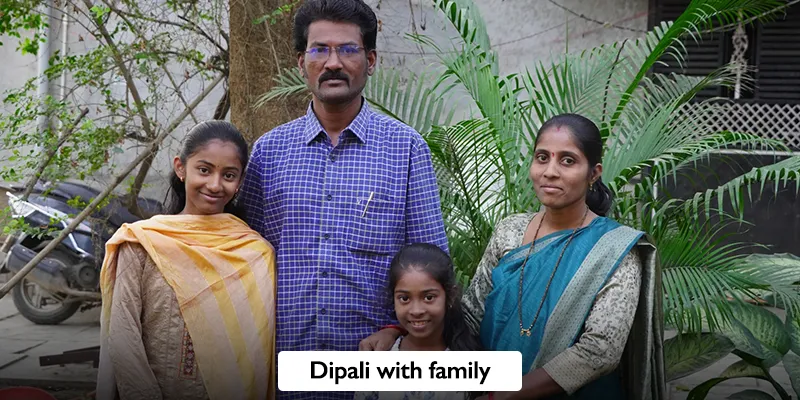
Today, Dipali leads a Farmer Producer Organisation (FPO) she built from the ground up. Her fields grow a strategic mix of soybean and pulses, the latter ensuring that surplus income stays directly in the hands of women.
The anchor of sustainability
Soybean is the anchor crop of Marathwada, and it is the crop through which Dipali's farm met Bayer's FVC partnership, via ADM, which sources soybean from Latur, Beed, and Dharashiv under sustainability protocols. Bayer's role runs from pre-sowing to post-harvest: residue compliance against the Minimum Residue Limits (MRL) of destination countries, seed treatment, integrated pest management, and Bayer Good Agricultural Practices (BayG.A.P.), its structured capacity-building programme for growers. The documentation that travels with the crop is what lets produce from a small village clear the standards of an export market thousands of kilometres away.
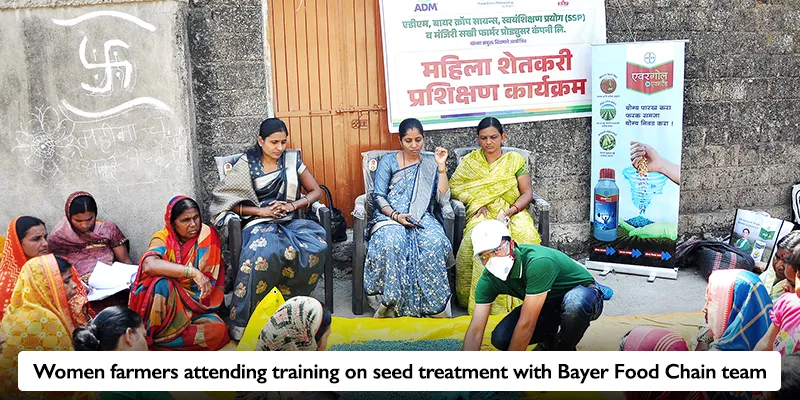
For Dipali, the changes began with the seed. “We learned things we did not know before – how to conduct germination tests, process seeds before sowing, and use Trichoderma, PSB, and Rhizobium along with Evergol for seed treatment,” she says. In a season of heavy rain, the treated seeds resisted fungal growth, and germination rates held steady where they might otherwise have collapsed. The result, by her own account, was a measurable drop in cultivation costs and a lift in yield.
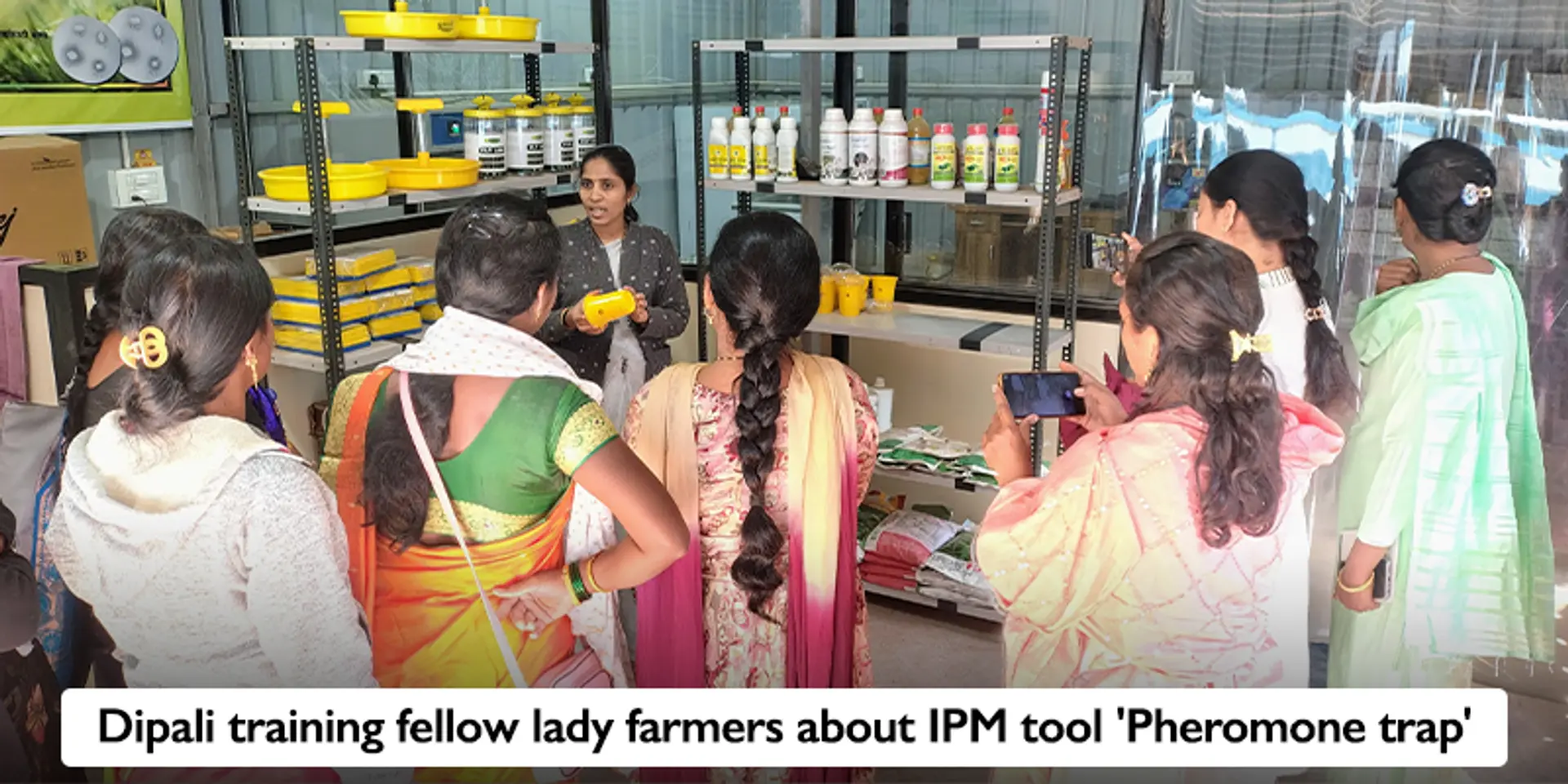
The mechanics are agronomic and digital. Bayer's agronomists run "train the trainer" sessions for partners, who carry the practices into the field. In place of the yield-per-acre competition that drives heavy crop protection use, the Integrated Pest Management approach leans on biological controls and physical interventions: yellow sticky traps, blue sticky traps, bird antennas. Village WhatsApp groups let farmers share photos of pest attacks and get answers within hours, often from experts.
Dipali uses the agricultural apps herself, and is teaching other women to do the same. Behind it sits the Proterra principle, a certification framework that reads as the operating manual for a regenerative farm: keep records of input costs; choose IPM over chemicals; move from flood irrigation to drip or sprinkler; triple-rinse chemical bottles; wear protective equipment; ensure no child labour on the field.
The ledger of power
Ask Dipali what was hardest, and the answer is not technical. "We live in a male-dominated society," she says, evenly. "Decisions about what to sow or what to buy were always taken by men."
The shift was as much about agency as agronomy. Through the FPO, women began participating in decisions that had been made for them, including what their own families needed for nutrition. As they gained control over pulse money, often earned through small surpluses sold from the kitchen, and accessed formal credit, the social fabric tightened. "Having money has brought power to these women," Dipali observes.
What 2030 looks like
The FPO's ascent was far from seamless; early hurdles like securing family consent letters have since been streamlined from months into days. With strategic scale from the Bayer and ADM partnerships, the collective has grown from 170 women to 2,500.
Looking to 2030, Dipali's mandate is to reach 10,000 women, focusing on organic certification and leadership tiers. There is no trace of the beneficiary in her delivery; she speaks with the clinical precision of a chief executive. The value chain extends to the processor's gate, but the true catalyst in Thodsarwadi is the shift in household power that occurs the moment a woman takes control of the ledger.