



AI and the new productivity curve for developers
AI is transforming software engineering from end to end, enabling faster development, smarter workflows, and higher productivity across enterprises. As adoption accelerates, organisations must balance innovation and speed with governance, security, and human oversight to realise its full potential.

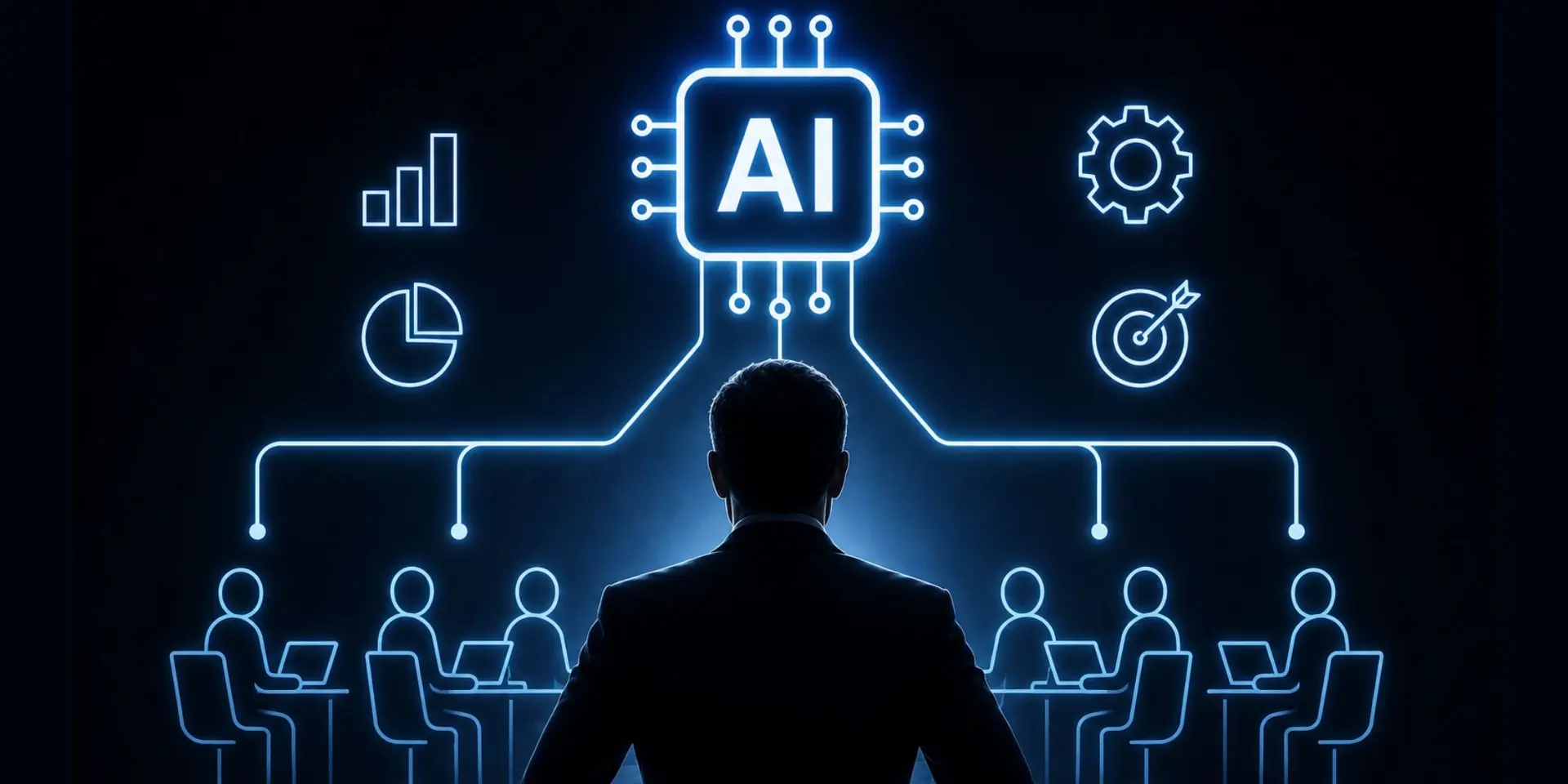

For decades, software engineering productivity improved in increments. Better frameworks, reusable libraries, DevOps practices, cloud infrastructure, and automation all helped teams move faster. But AI is creating a more fundamental shift. It is not just improving one part of the development lifecycle; it is beginning to reshape the entire rhythm of how technology teams imagine, build, test, secure, and operate software.
Across enterprises, AI has moved quickly from experimentation to execution. What was once viewed as a coding aid is now becoming part of the operating fabric of engineering organisations. Increasingly, AI is evolving from a productivity tool into a strategic capability that influences how software is designed, developed, and managed across the technology stack.
The real question for large organisations is no longer whether AI should be adopted. That debate has largely passed. The more important question is how AI can be adopted in a way that improves speed without weakening reliability, strengthens innovation without compromising governance, and enables teams without diluting accountability.
One of the most visible impacts AI has brought to software engineering is faster time to market. Activities that traditionally took weeks, such as creating boilerplate services, generating APIs, writing test cases, documenting code, or building initial prototypes can now happen in hours. Product managers and product owners are independently building proof-of-concepts using LLMs and low-code AI tooling before formal engineering cycles even begin. This is fundamentally changing the speed at which ideas move from discussion to validation.
What is particularly noteworthy is that this shift is no longer confined to engineering teams alone. Across enterprises, the usage is expanding into marketing, HR, finance, operations, and security teams. Marketing teams are generating campaigns faster. HR teams are streamlining communication and policy workflows. Finance teams are exploring AI-assisted reporting and analytics. Security teams are leveraging AI for threat analysis and code scanning. The productivity curve is shifting across every function, not just engineering.
From a developer’s perspective, the transformation is particularly significant. Modern AI systems are increasingly being used through multiple personas - code generators, reviewers, QA engineers, security analysts, and documentation assistants. Developers are no longer interacting with AI in a single dimension. A single workflow can involve AI generating code, validating security posture, suggesting optimisations, writing unit tests, and identifying reliability risks before deployment.
However, one important realisation has been that productivity alone cannot be the success metric. In financial infrastructure, reliability, resilience, and security are non-negotiable. Faster code generation without governance can increase operational risk. As coding speed increases, the probability of defects entering systems can also rise if strong controls are not embedded into the lifecycle.
This is why human-in-the-loop approaches remain extremely important. AI can accelerate development significantly, but human engineering judgment continues to play a critical role in validating architecture decisions, reviewing business logic, ensuring compliance, and maintaining operational reliability. Mandatory quality gates, peer reviews, security validations, and production-readiness checks cannot disappear simply because code is generated faster.
In fact, one of the challenges many organisations are now facing is that reviewers themselves can become bottlenecks. When development velocity increases dramatically, mid-level and senior engineering expertise becomes even more valuable. AI-assisted reviews are helping accelerate these processes, but strong engineering teams remain foundational to building production-grade systems.
Quality and governance
Another major focus area is embedding quality and reliability models directly into the development lifecycle. Generating code is relatively easy today. Generating reliable production-ready code consistently is much harder. Enterprises must train developers to think beyond prompt engineering and focus on system behavior, resiliency patterns, observability, scalability, and operational impact.
To make enterprise-wide AI adoption sustainable, governance becomes extremely important. Organisations need centralised platforms and controls to govern how AI systems are accessed and consumed. Strong enterprise AI adoption requires robust governance frameworks covering security, privacy, compliance, and observability.
One important architectural pattern emerging across enterprises is the creation of centralised AI gateways or platforms that mediate access to external cloud LLMs. These platforms help enforce security controls, prompt enrichment, PII masking, auditability, cost governance, and observability. They also provide organisations the ability to monitor usage patterns, apply policy controls, and ensure responsible AI consumption at scale.
Budget management is another practical challenge that organisations must address early. Uncontrolled AI adoption can quickly create significant operational expenditure. Enterprises therefore need cost governance models that include usage quotas, routing intelligence, caching strategies, and workload optimisation.
Enterprise AI readiness
Another critical enabler is building organisational knowledge layers. AI systems become significantly more valuable when connected to enterprise repositories, architecture documents, incident databases, operational runbooks, historical fixes, and internal standards. Context-aware AI produces far more meaningful outputs than isolated generic prompting.
At the same time, enterprises must recognise an important distinction: building proofs-of-concept is now relatively easy; building reliable enterprise-grade systems remains difficult. Production systems require deep integration across governance, operations, security, monitoring, compliance, and business workflows. AI accelerates execution, but disciplined engineering still determines long-term success.
The larger shift underway is not only technological, but cultural. Organisations must actively enable developers, encourage experimentation, create safe adoption frameworks, and advocate responsible usage. AI should not be viewed as a threat to engineering teams, but as a powerful capability that can help teams focus more on innovation, architecture, reliability, and customer outcomes.
We are still in the early stages of this transformation, but the direction is clear. AI is redefining the productivity baseline for developers and enterprises. The winners will not simply be the organisations that adopt AI the fastest. They will be the ones that adopt it with the right balance of speed, governance, engineering rigour, and human oversight.
(Vishal Kanvaty is the Chief Technology Officer at NPCI)
(Disclaimer: The views and opinions expressed in this article are those of the author and do not necessarily reflect the views of YourStory.)