




AI will not take your job, but it will take your excuses, say finance leaders at JLL roundtable
At a JLL roundtable, CFOs and finance leaders traded boardroom war stories on AI, Gen Z hiring, and the hard lessons that come with building, scaling, and sometimes shutting down a business.



Every founder's pitch deck tells a story of growth. What it rarely shows is the finance leader quietly asking how much of that growth the company can actually afford.
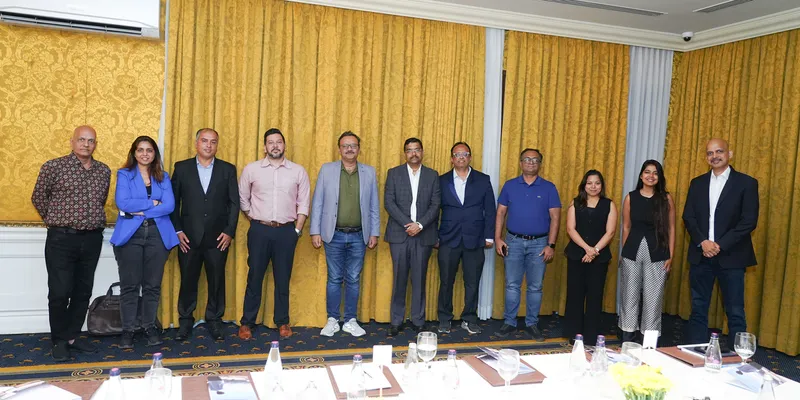
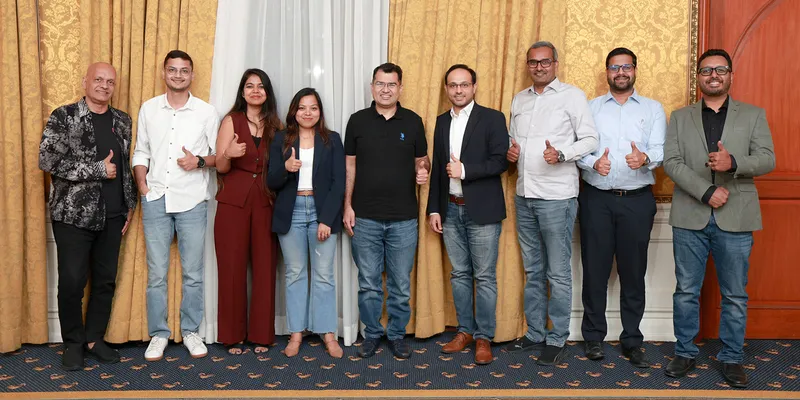
At a closed-door roundtable hosted by JLL, finance and business leaders from across sectors set aside the usual founder gloss to talk through the harder questions behind the scenes. The discussion brought together Rajesh Warrier (Betterplace), Anshul Agarwal (Leap Finance), Neeraj Jain (Amagi), Akshay Sarma (Axio), Karan Punjabi (Exponent Energy), Parul Gupta (Wakefit), Mandar Vaidya (Cloudphysician), and Sachin Nandwana (BigHaat), moderated by Madanmohan Roy of YourStory.
Productivity is real, but so is the disruption
AI is already changing how teams work. Customer service has been rewritten end-to-end, from automated chats to voice bots that read a customer's tone and soften or harden their responses accordingly. Coding is increasingly handled by AI tools rather than engineers, with product and engineering functions effectively merging into one. Several companies have built dedicated AI teams tasked with finding high-ROI automation use cases across functions, from hiring to background checks.
But the gains come with a cost. Teams will shrink, and the people who remain will need to be fluent in AI to stay relevant. Using AI well is itself becoming a new skill, one that will separate those who flourish from those who do not, both within companies and across them, since some businesses will adapt and others will not survive the shift.
Building with AI, not just adopting it
The sharpest example of AI moving beyond efficiency into genuine capability came from healthcare, where AI already reads ECGs and scans them with an accuracy that exceeds human specialists in narrow tasks. Within five years, human interpretation of such reports could become a liability rather than a safeguard. The real barrier, leaders argued, is not technical but psychological: people forgive human error far more easily than they forgive a machine's.
Regulatory hesitation emerged as a genuine hurdle, particularly data localization norms that complicate even basic analysis with global tools. There was also a reminder that the bigger constraint for serious AI use is not appetite, but the quality and depth of proprietary data a company has built over time.
From growth to profitability
The mandate inside several companies has shifted from scaling fast to becoming sustainably profitable, with cash flow positivity now treated as a milestone of its own rather than a by-product of growth. For companies that have gone public or been acquired, that transition ends gut-driven decision-making for good. Going public means answering for every decision to a wider set of shareholders, while being absorbed into a larger organization brings a slower, more deliberate pace of decision-making.
The geography of growth
Business models diverged sharply on physical footprint. Some companies stay deliberately asset-light, managing collections digitally and keeping a physical presence limited to a handful of cities for call centers and language coverage. Others maintain offices across 10 countries to stay close to customers who depend on uninterrupted service. Manufacturing-led businesses pointed to their factory roots as the reason their corporate base has stayed put even as operations expanded. A newer trend also came up: parts of Europe are now cheaper than Bengaluru for top talent, prompting some companies to look beyond India for both cost and access to skilled people.
Hiring and leading Gen Z
The conversation on talent turned candid quickly. Leaders cautioned against treating an entire generation as one block, pointing out that a Gen Z nurse, a Gen Z engineer, and a Gen Z sales hire behave nothing alike, and that the more useful lens is the kind of work and background they come from. The fundamentals of management have not changed as much as expected: clear KPIs and clear expectations still matter more than management tone or style.
Several leaders said they have deliberately hired from outside traditional pedigree backgrounds, finding that hunger to prove oneself often outperforms polish. Others described giving freshers real ownership early, telling them to build for themselves rather than for the company. There was agreement that younger hires push back and ask harder questions more openly than previous generations did, and that this should be encouraged rather than read as a discipline problem.
Lessons from the edge
The most candid stretch of the evening came when leaders reflected on their hardest moments. One recounted leading a cloud kitchen business that had to be wound down within months of the COVID-19 outbreak, after a board mandate to preserve cash overrode a year of expansion. Another described watching a large, well-funded company slide into liquidation over a year and a half, despite active merger talks and significant capital behind it, a reminder that scale offers no guarantee of survival.
The leaders agreed that success in the startup world owes as much to luck and timing as it does to strategy, and that surviving a near-death moment changes every decision that follows.
What stays in the room
Asked for their key takeaway, the group circled back to three ideas: curiosity, clarity, and collaboration. Several leaders said the value of hearing how other industries solve similar problems outweighed any single piece of advice, while others pointed to the reassurance that AI, for all the anxiety around it, was being treated as a productivity multiplier rather than a replacement for judgment.
Across sectors as different as agritech, healthcare, energy, and fintech, the room was united by one instinct: the businesses that last are not the ones that avoid hard moments, but the ones that learn fastest from them.