



Beyond AI buzzwords: What employers are really looking for in 2026
At DevSparks Bengaluru 2026, leaders from Toast and Zoho Corp share why judgment, adaptability, and real-world problem-solving matter more than tool proficiency.

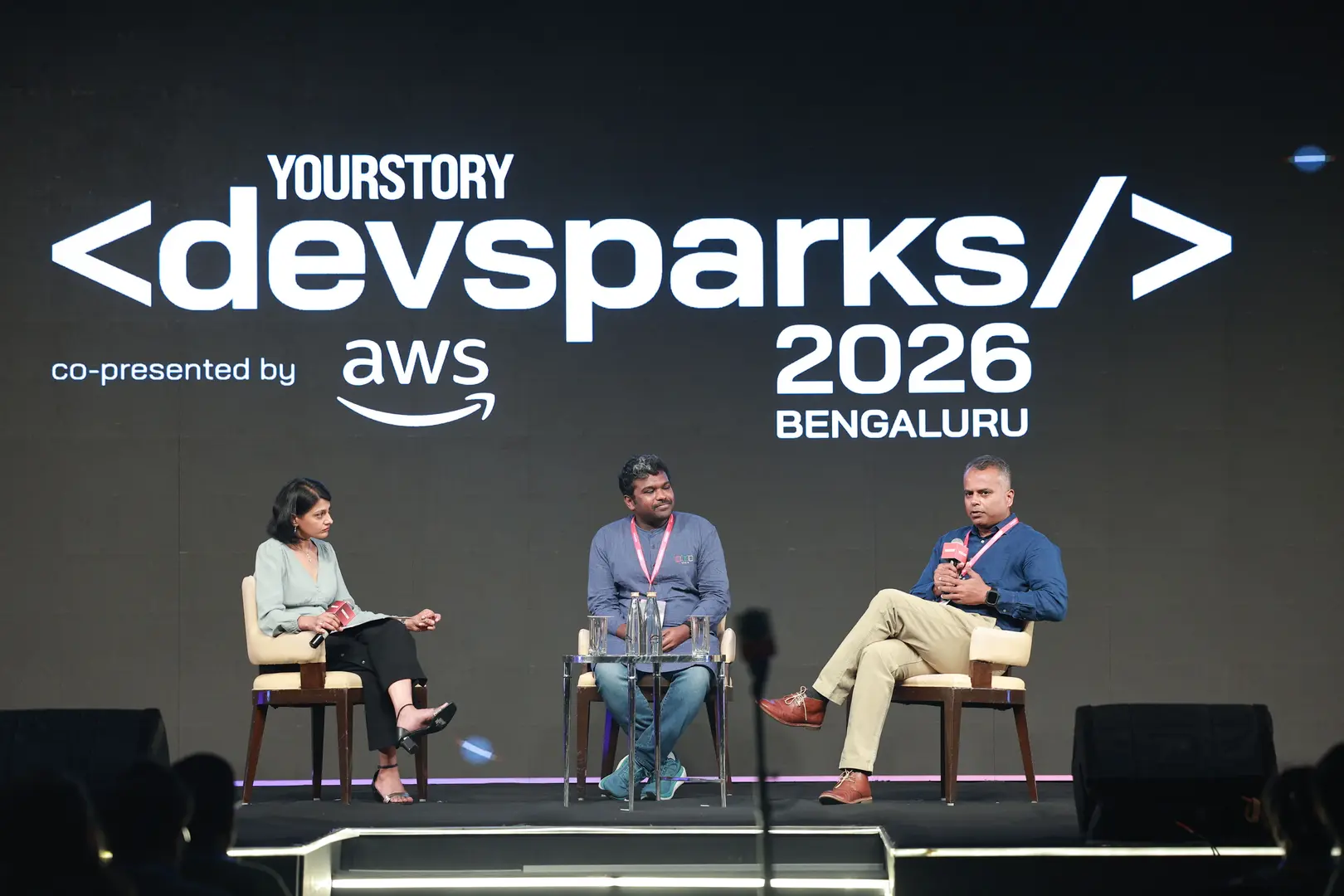

With AI tools becoming commonplace and technical skills increasingly accessible, employers are now looking beyond résumés packed with buzzwords. The qualities that stand out today are harder to automate: sound judgment, adaptability, curiosity, and the ability to solve real business problems.
That was the central message from a panel discussion at DevSparks Bengaluru 2026, where industry leaders argued that hiring decisions are no longer driven by familiarity with the latest tools alone. Instead, recruiters are paying closer attention to how candidates think, learn, and apply their skills in practical situations.
During the session, 'The modern interview: What are companies actually looking for?', speakers explored the realities of hiring in an AI-driven workplace and the skills they believe will remain valuable in the current market and years ahead.
Moderated by Shivani Muthanna, Senior Director - Strategic Partnerships & Content, YourStory Media, the discussion featured Murali Vasudevan, Head of People & Org Success, Toast, and Ramprakash Ramamoorthy, Director - AI Research, Zoho Corp.
Judgment, adaptability, and ownership: The real signals in hiring
Both speakers pushed back against the idea that AI-era hiring was about stacking tools and buzzwords. Ramamoorthy argued that while AI had made it easier to code and ship features, it had also raised the threshold for what counted as real competence.
"For me, judgment is the real differentiator. You can build apps all day, but what matters is deciding what to build and what to write. AI hasn't changed that,” he said. “Your fundamentals are non-negotiable too. When I scan CVs, the ones that stand out show real work in production, a QR code or URL I can click and see what you've actually shipped."
Vasudevan added that as software development becomes increasingly commoditized, companies now expect candidates to act as architects who could audit and validate AI outputs.
"It's not enough for me that you can just prompt a model. I expect you to challenge its answers, design safety nets, and constantly think in terms of business impact and customer outcomes. For me, AI skills sit on top of deep, durable capabilities but they don't replace them," he said.
The Toast leader stressed that each employee needed to have an 'adaptability quotient', the ability to move across domains and industries without feeling diluted, and to keep solving problems wherever the business needed them most.

How hiring managers separate signal from noise
Both speakers stated that an AI-polished resume was just the starting point. Vasudevan explained that his teams leaned heavily on situational awareness assessments that mimicked real business scenarios.
"We watch how candidates reason through ambiguous problems, how they balance trade-offs, and whether they genuinely factor in the customer's point of view. We test technical depth through extended assessments, but the real filter is how people think under realistic constraints," he said.
Ramamoorthy revealed his own litmus tests: in the final round, his decision rested on three questions.
"Those questions are: has the candidate actually done something meaningful before, are they truly ready to pivot into new work, and are they someone I'd be comfortable sitting down to lunch with," he said.
The Zoho director added that he urged developers to become 'T-shaped professionals' who knew a bit of everything, but went deep in one area, and continuously updated themselves as AI tools and practices shifted.

Staying relevant in the AI era
Both speakers framed the advent of AI not as a "job apocalypse" but as a reality check. Ramamoorthy urged engineers to stick to fundamentals yet stay curious, using side projects and small experiments as a way to learn quickly.
"Then developers can turn the best of those into real products people actually use. For me, coding has never been easier, but building reliable, privacy-aware, production-grade software is where careers are made," he said.
Vasudevan echoed that the differentiator wasn't how many AI tools one touched, but whether one could translate them into business value without burning out or chasing every trend.
The closing message to the DevSparks audience was crystal clear. AI will keep evolving, titles will keep changing, but those who combine strong basics, real shipped work, and a clear sense of impact won’t just survive this wave but also help define it.
Edited by Teja Lele