


Bharat Innovates 2026 wraps in Nice, turning India's deep-tech showcase into deals and global capital
India’s first deep-tech showcase abroad closed in Nice with $254.5 million in funding commitments, over 50 collaboration agreements and new India-France innovation bridges.

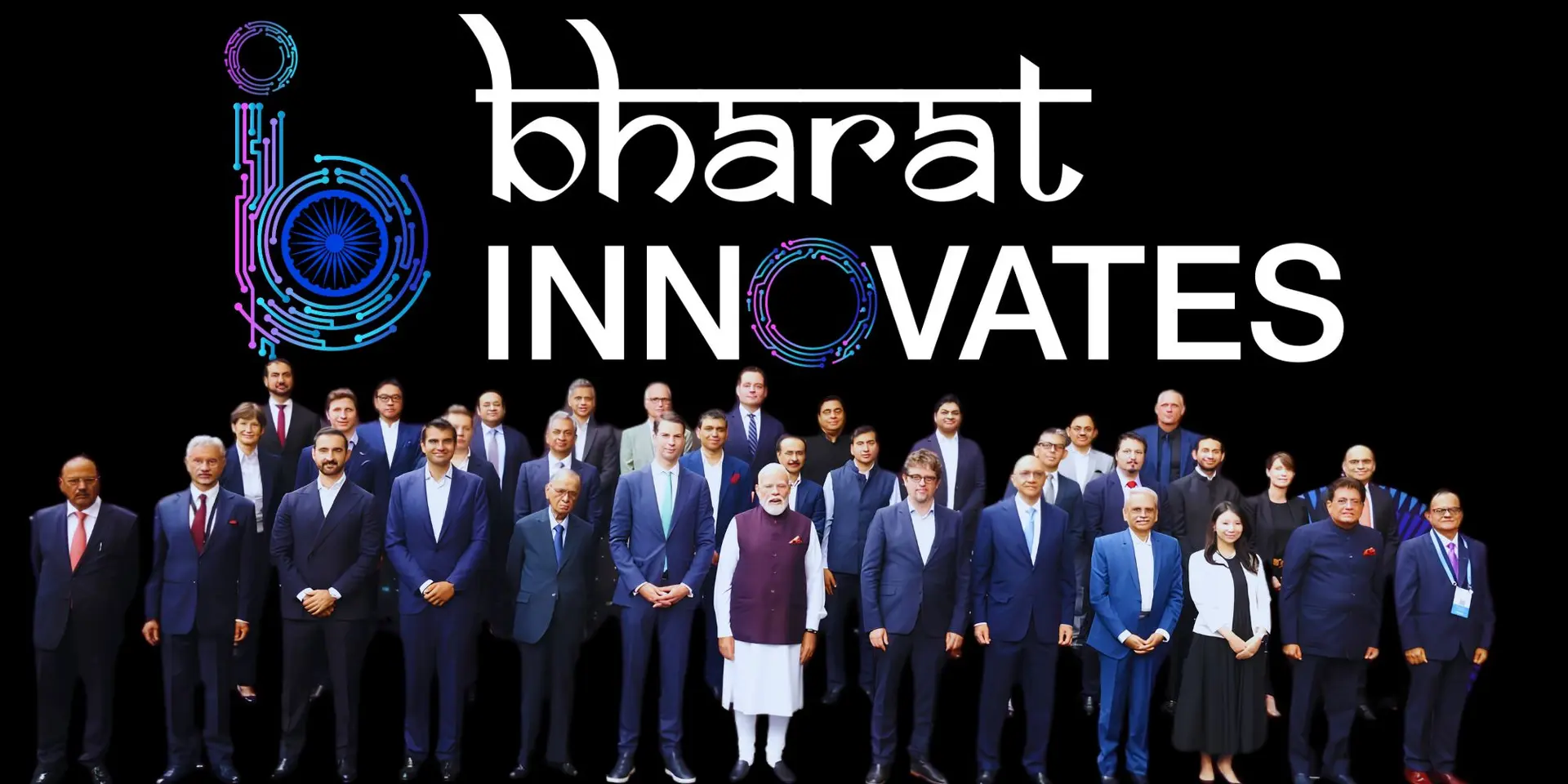

Bharat Innovates 2026 concluded in Nice on 16 June 2026, closing a three-day run that turned India's first deep-tech showcase abroad into a tally of investment commitments, signed agreements and new institutional bridges with France and the wider world. The maiden edition, an initiative of the Union Ministry of Education organised by the Government of India, drew more than 2,000 participants from 29 countries and ended with around USD 254.5 million in funding commitments and over 50 collaboration agreements.
Inaugurated on 14 June 2026 by Prime Minister Narendra Modi and French President Emmanuel Macron at the Palais des Expositions de Nice, the summit anchored the India-France Year of Innovation and put 120 curated Indian deep-tech startups and around 45 technology projects from 15 premier higher education institutions in front of global investors and corporations. Nearly 60% of the participating startups were incubated in or closely associated with the IITs, IISc and other leading institutions.
The capital on the table
The headline number was financial. The Ministry of Education said the summit generated approximately USD 254.5 million in funding commitments and advanced-stage investments, including from investors in the United States and Japan. The opening day alone accounted for nearly USD 30 million in announced investment activity. Over the three days, more than 80 startups pitched to over 50 global investors from more than 10 countries, across six themes spanning space and defence, AI and semiconductors, healthcare and medtech, biotechnology and agritech, energy and climate technologies, and advanced manufacturing. More than 40 startups secured confirmed investor follow-up commitments, and several picked up orders and expressions of interest from French and other international buyers. Union Education Minister Dharmendra Pradhan had said going in that the platform was opening doors to investment firms managing assets worth over USD 3 trillion.
The agreements signed
Alongside the capital came the paperwork. The summit produced over 50 collaboration agreements, with more than 30 partnerships signed on the opening day alone. These included 12 agreements between Indian higher education institutions and incubators and their French and global counterparts, 16 with leading global corporations, and partnership agreements between 13 French universities and 11 IITs and the IISc.
Several deals stood out. iCreate, an Indian deep-tech incubator, signed an MoU with the Hauts-de-France Regional Council to set up a bilateral deep-tech innovation corridor. IIT Madras, through its global arm IITM Global, exchanged nine MoUs, seven commercial and two institutional, expected to unlock nearly USD 100 million in value. Those tie-ups linked space startup Agnikul Cosmos with Finland's ICEYE and France's Safran, Detect Technologies with TotalEnergies, TuTr Hyperloop with thyssenkrupp, and iElectron Technologies with ALTEN, while The ePlane Company drew a potential investment from the Indian Angel Network. IITM Global also partnered Agna Capital to set up a Bharat Innovates Fund for high-potential deep-tech ventures.
At the school level, the Atal Innovation Mission under NITI Aayog and La Fondation Dassault Systèmes exchanged a letter of intent to launch the India-France ATL Bridge, under which France will set up its first school innovation lab based on India's Atal Tinkering Lab model.
The sessions that framed the week
The programme ran to 11 high-level panels alongside masterclasses, demonstrations and matchmaking. Infosys founder N.R. Narayana Murthy opened the first day, recalling how the company grew from an idea funded with USD 250, and arguing that enduring enterprises are built on complementary talent, shared values, disciplined innovation, transparent governance and trust. A plenary on AI for Global Good called for a trusted, inclusive AI corridor and open-source collaboration over technology monopolies, followed by sessions titled India and Europe: Deep Tech Without Borders and Global Deep-Tech Capital Corridors. The second day centred on the investor pitch rooms, and the final day turned to technology parks, industrial decarbonisation and global scale-up, with a keynote from Nothing co-founder Akis Evangelidis on entrepreneurship, product development and international growth.
What the headliners said
The leaders set the tone. In his keynote, Prime Minister Modi said "Bharat innovates with scale and speed," casting India as a contributor of solutions rather than a consumer of technology. President Macron called Nice hosting the first Bharat Innovates outside India a testament to the depth of the two countries' ties.
Education Minister Dharmendra Pradhan called the Nice inauguration "a defining milestone in the India-France partnership," saying it showed India emerging as a provider of solutions for the world rather than only a technology powerhouse. Closing the summit at the valedictory session, Union Minister of Commerce and Industry Piyush Goyal told founders "the world is your stage" and said the India-France Year of Innovation could grow into a transformational platform. IIT Madras director V. Kamakoti described the event as "a watershed moment for Indian deep tech," stressing that the agreements signed were commercial and actionable rather than ceremonial.
Why take India's deep-tech abroad
Deep-tech ventures are different from the consumer apps that dominate startup headlines. They are built on hard science in fields like semiconductors, space, biotechnology and quantum, where research runs for years and capital needs are heavy before revenue arrives.
That profile makes global, patient capital and corporate partners especially valuable, and hard to find at scale within a single market. An event like Bharat Innovates puts founders directly in front of that capital, alongside corporates that can run pilots and universities that can co-develop.
Pairing the showcase with France, itself strong in AI, nuclear energy and space, gave Indian founders ready partners and a doorway into Europe rather than a one-off stage.
The real test now lies beyond Nice, in how many of the 40-plus follow-up commitments convert into cheques and how many MoUs turn into running pilots and funded rounds. With the India-France Year of Innovation set to continue through flagship events including VivaTech, and Principal Scientific Adviser Ajay Kumar Sood describing the summit as the start rather than the end of the push, the months ahead will show whether the first Bharat Innovates abroad becomes a fixture in India's innovation calendar.