



The doctor who built Asia's first human milk bank: Armida Fernandez receives Padma Shri
Dr Armida Fernandez, who founded Asia’s first human milk bank at Mumbai’s Sion Hospital, has been honoured with the Padma Shri for her decades of work in neonatal, maternal and community healthcare.

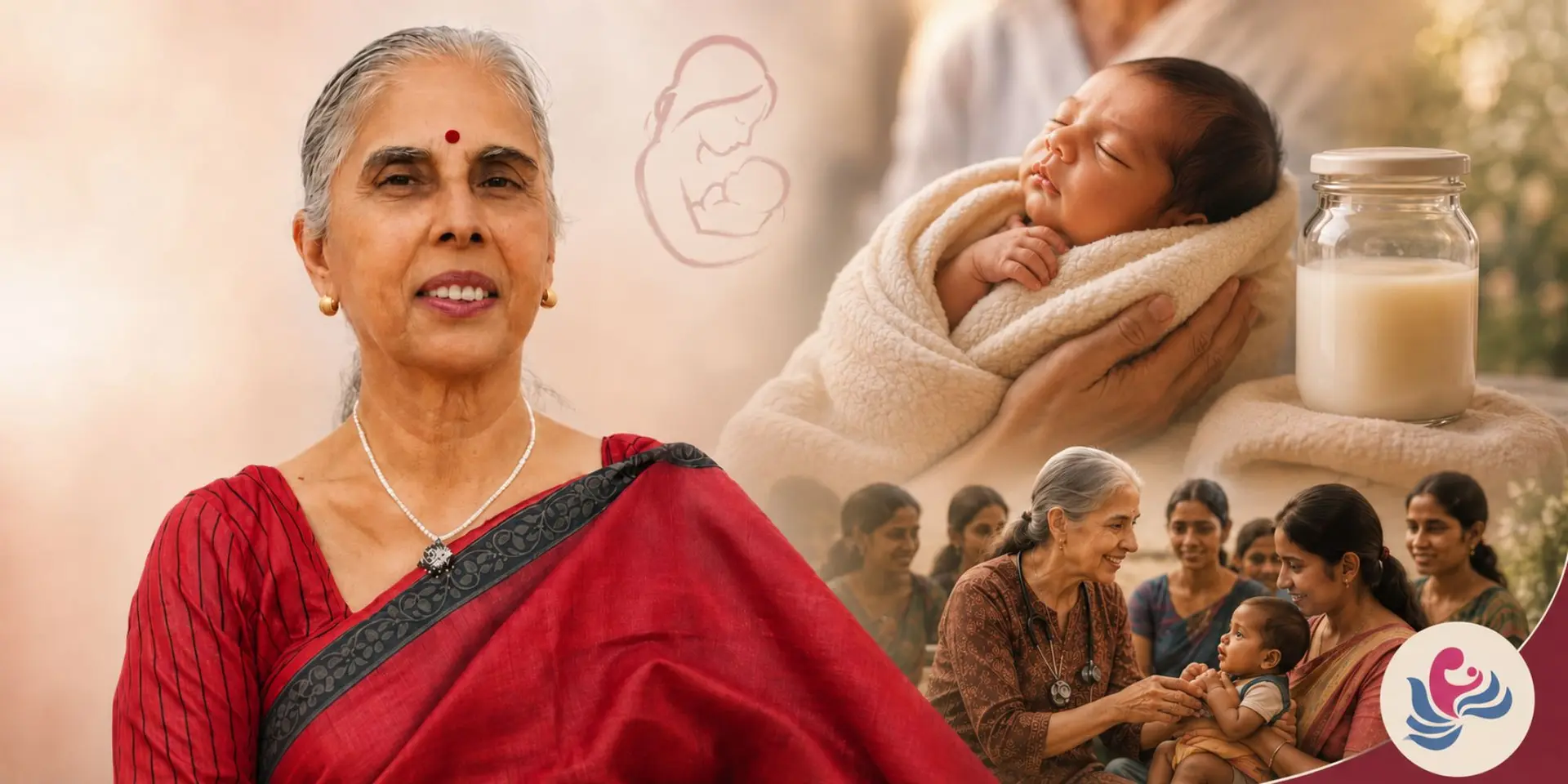

Dr Armida Fernandez, a senior neonatologist who set up Asia's first human milk bank and went on to found one of Mumbai's best known community health organisations, has been conferred the Padma Shri for 2026 in the field of medicine. The Armida Fernandez Padma Shri honour recognises a lifetime spent improving the survival of newborns and the health of mothers and children in some of the country's poorest urban neighbourhoods. At 83, she has called the award a recognition of the teams and volunteers she has worked with rather than of herself alone.
Her career is a reminder that public health, built patiently over decades, can save lives at scale.
A pioneer of newborn care
Fernandez was born in Goa, studied medicine in Karnataka, completing her MBBS in Hubli, and pursued her post graduation at King Edward Memorial Hospital in Mumbai. She spent around three decades at the Lokmanya Tilak Municipal General Hospital in Sion, Mumbai, as professor and head of neonatology and later as dean, troubled from early on by the high rate of newborn deaths she saw there.
In 1989 she helped establish India's first and Asia's first human milk bank at Sion Hospital. At the time, the idea of feeding infants with donated human milk was unfamiliar and often resisted, but she built safe systems for the collection, storage and use of donor milk. The bank played a major role in improving survival among premature and low birth weight babies whose mothers could not breastfeed, and her work encouraged mothers to take part in the care of their hospitalised newborns, a practice later widely accepted.
What the Armida Fernandez Padma Shri honours
In 1999, after retiring from Sion Hospital, Fernandez extended her work beyond the hospital by founding SNEHA, the Society for Nutrition, Education and Health Action. At a time when public health efforts were largely focused on rural India, SNEHA brought sustained attention to the needs of vulnerable urban communities, working in slums and chawls on maternal and newborn care, child nutrition, adolescent health and the prevention of violence against women and children.
Today the organisation has around 400 full time staff and 750 volunteers, and has reached close to one million people across districts of Maharashtra and other states including Gujarat and Jharkhand. Fernandez has also served as president of the National Neonatology Forum, was named an Ashoka Fellow in 2004, and later founded the Romila Palliative Care Centre, named after her daughter, for patients with life limiting illnesses.
What is a human milk bank
A human milk bank is a service that collects, screens, stores and distributes donated breast milk so that it can be given to babies whose own mothers are unable to provide it.
For premature and sick newborns, breast milk is far more than nourishment. It offers protection against infection and can be the difference between life and death in the first fragile weeks. By creating a safe supply of donor milk, a milk bank gives the most vulnerable infants access to this protection even when their mothers cannot feed them. When Fernandez set one up in 1989, it was the first of its kind in Asia, and the model has since inspired similar facilities across the country.
Her recognition points to the quiet power of community led healthcare. For social entrepreneurs and public health workers, Fernandez's example shows how a single clinical innovation can grow into a lasting institution, and how attention to the poorest patients can reshape what the wider system considers possible.