



IIT Madras director V Kamakoti honoured with Padma Shri for Shakti, India's first homegrown chip
IIT Madras director V Kamakoti has been awarded the Padma Shri 2026 for his contributions to science and engineering, including his role in India’s indigenous Shakti microprocessor programme.

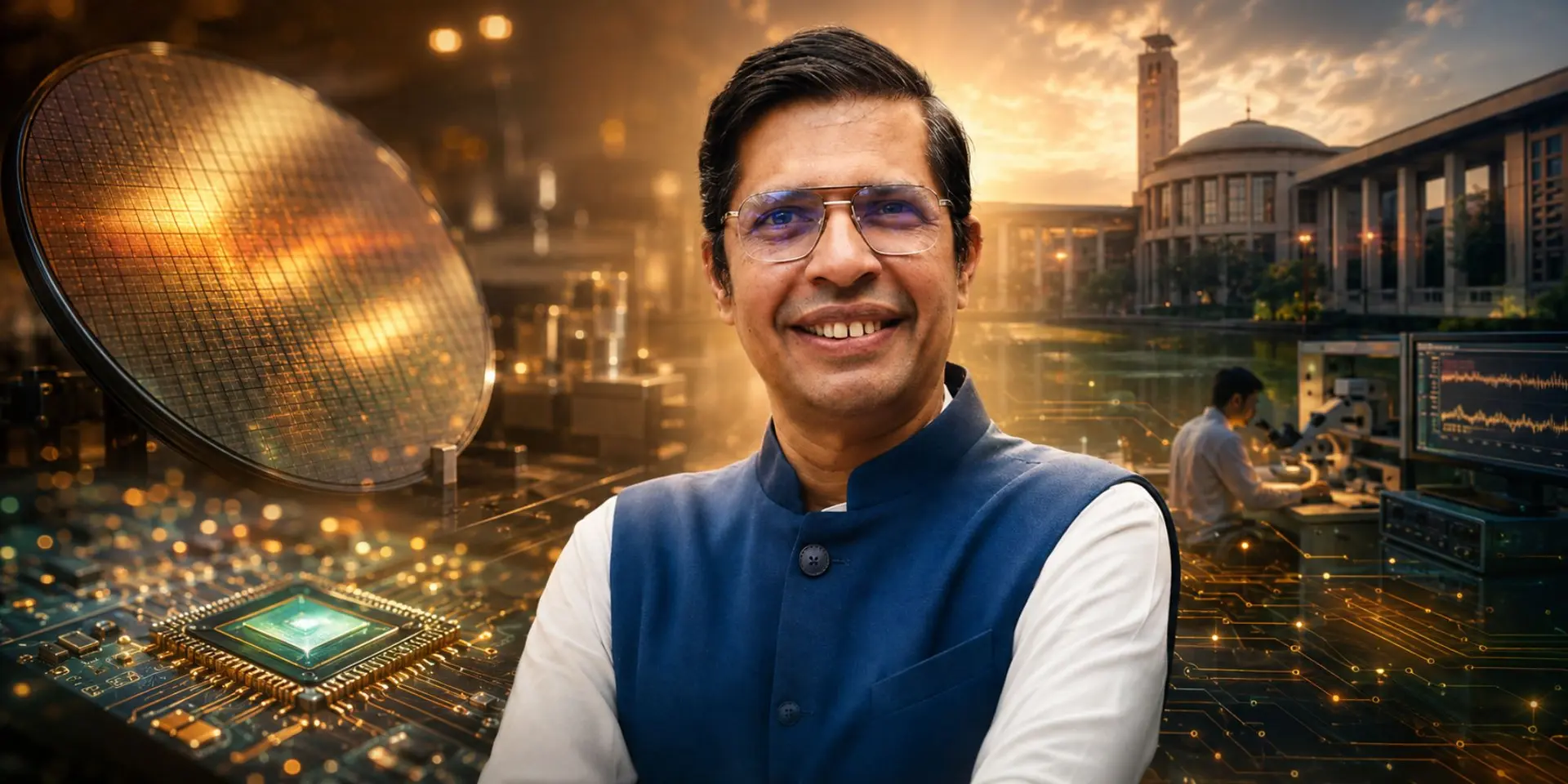

Veezhinathan Kamakoti, the director of the Indian Institute of Technology Madras and one of the country's most respected computer scientists, has been conferred the Padma Shri for 2026 in the science and engineering category. The Veezhinathan Kamakoti Padma Shri recognition shines a light on India's quiet, long running effort to build its own semiconductor and computing capability, a field that has moved to the centre of national strategy. Dedicating the honour, Kamakoti described it as a collective effort and credited his team and the nation.
The award is timely. As India pushes to reduce its dependence on imported chips, the work Kamakoti has led offers a working example of indigenous design.
The architect of Shakti
Kamakoti led the research team that designed Shakti, described as India's first indigenously developed microprocessor. The processor family is intended for use in devices ranging from mobile and networking systems to communications and defence applications, and its central promise is the ability to reduce reliance on imported microprocessors in sensitive sectors.
At IIT Madras he heads the Microprocessor Development Programme and the Information Security Education and Awareness programme, both supported by the Ministry of Electronics and Information Technology. His areas of specialisation are computer architecture, information security and VLSI design, the discipline concerned with packing large numbers of components onto a single chip.
What the Veezhinathan Kamakoti Padma Shri reflects
Kamakoti completed his masters and doctoral degrees in computer science and engineering at IIT Madras, joined the institute as a faculty member in 2001, and took charge as director in January 2022. Beyond the campus he is a member of the National Security Advisory Board and earlier chaired an artificial intelligence task force constituted by the Ministry of Commerce and Industry. His earlier honours include national fellowships and industry research awards, reflecting a career that has bridged academic research and questions of national capability.
Why does an indigenous microprocessor matter
A microprocessor is the brain of a computing device, the chip that carries out instructions in everything from phones to servers to weapons systems. For decades, India has imported almost all of these.
That creates a strategic vulnerability. In communications and defence, relying entirely on foreign chips raises concerns about security, supply and control. An indigenously designed processor, even if manufactured with partners, gives the country more say over the technology inside its most sensitive systems. This is the gap the Shakti effort set out to address, and it is why work that might once have seemed narrowly academic now carries national weight.
For India's deeptech ecosystem, Kamakoti's recognition is encouraging. It places hardware and semiconductor research alongside the more visible world of software and startups, and signals that patient, foundational engineering is valued at the highest level. As the country builds out its chip ambitions, the institutions and talent he represents will be central to whether those ambitions are realised.