



India to showcase 120 deep-tech startups in Nice: inside the Bharat Innovates 2026 cohort
The Ministry of Education will showcase 120 Indian deep-tech startups across 13 frontier sectors at Bharat Innovates 2026 in Nice, France, as part of the India-France Year of Innovation.

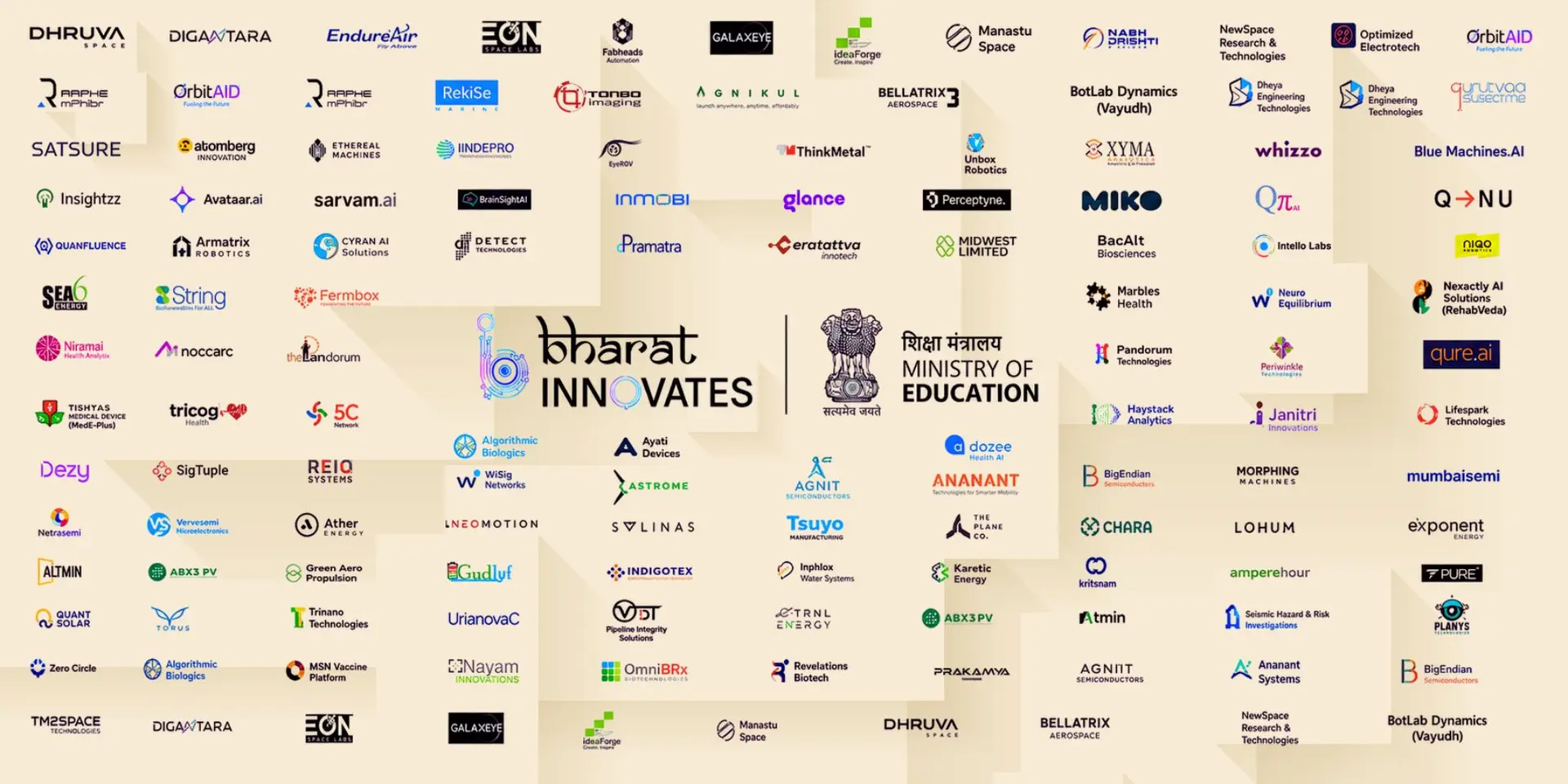

India is about to put 120 of its most research-heavy companies on a global stage. From 14 to 16 June 2026, the Ministry of Education will showcase a curated cohort of Indian deep-tech startups at Bharat Innovates 2026 in Nice, France, presenting them to international investors, policymakers and technology partners. Held as part of the India-France Year of Innovation, the event is arguably the country's most ambitious attempt yet to be seen not as a back-office for the world's software, but as a builder of frontier technology in its own right. And it is only days away.
A platform built to connect science with capital
Bharat Innovates was announced by Prime Minister Narendra Modi on 17 February 2026 at the inauguration of the India-France Year of Innovation. The idea behind it is straightforward but rarely executed well in India: give founders working on hard science and engineering a structured way to meet the kind of patient, long-term capital their products actually need. Deep tech does not move at the speed of a consumer app. A semiconductor design or a satellite payload can take years to commercialise, and that timeline has long made such ventures harder to fund.
What India is sending to France
The cohort reads like a map of where Indian research is concentrating its energy. Space and Defence is the single largest group with 22 startups, followed closely by Healthcare and MedTech with 20. Energy, Sustainability and Climate accounts for 16, Advanced Computing for 13, and Biotechnology for 11. Manufacturing and Industry 4.0, Smart Cities and Mobility, and Semiconductors fill out the heavier categories, with Agri and FoodTech, Next-Gen Communications, Advanced Materials, Blue Economy and Disaster Management making up the rest. In all, the line-up spans 13 frontier technology sectors.
Some names will be familiar to anyone tracking the ecosystem. Electric two-wheeler maker Ather Energy and drone manufacturer ideaForge sit alongside AI diagnostics firm Qure.ai, sovereign-AI builder Sarvam AI and small-launch-vehicle company Agnikul Cosmos. Others are far earlier in their journeys but working on equally hard problems, from quantum cybersecurity and iron-air batteries to brain-mapping platforms and green propulsion systems.
The numbers behind the moment
The cohort arrives just as the underlying ecosystem is maturing quickly. According to the Nasscom-Zinnov India Tech Startup Report 2025, India now hosts more than 4,200 deep-tech startups, including over 550 founded in 2025 alone. Deep-tech funding rose 37% to $2.3 billion last year, even as investors turned more selective and milestone-linked. Artificial intelligence did much of the heavy lifting, accounting for roughly 91% of deep-tech capital deployed.
The investor appetite is visible. Ahead of Nice, the Ministry of Education and the Indian Venture and Alternate Capital Association convened a Bharat Innovates investor showcase in Bengaluru on 19 May 2026, where 24 startups from the cohort pitched to more than 90 investors managing over $85 billion in assets between them. Saumya Gupta, Joint Secretary in the Department of Higher Education, framed the effort as the Ministry's bid to build platforms where founders can engage directly with capital capable of backing a genuine global scale-up.
What exactly makes a startup "deep tech"?
It is a term that gets stretched, so it helps to be precise. A deep-tech company is one whose product rests on a real scientific or engineering breakthrough, not just a clever app built on top of existing tools. Think new battery chemistries, semiconductor chips, gene therapies or satellite systems.
The defining feature is that the hard technology sits at the core and is difficult to copy. That also means longer research cycles, heavier capital needs and more risk before anything reaches the market.
In return, the payoff can be far larger and far more defensible, which is exactly why governments and investors are paying closer attention. A piece of protected intellectual property is harder to compete away than a discount or a marketing budget.
What to watch after Nice
The real test of Bharat Innovates will not be the showcase itself but what follows it. The Ministry says several investors who attended the Bengaluru round were keen to keep the conversation going, and the Nice edition is designed to spark pilots, co-development deals and research tie-ups rather than one-off cheques. If even a handful of these 120 startups convert that interest into lasting partnerships or manufacturing on the ground, India's claim to a "deep-tech decade" will start to look less like a slogan and more like a trajectory. For now, the cohort heading to France is the clearest signal yet of where the country wants its next generation of companies to compete.