



Padma Shri 2026: the folk, tribal and visual artists recognised this year
Padma Shri 2026 honours over two dozen folk, tribal, theatre and visual artists from across India, recognising regional traditions that survive through community practice and cultural memory.

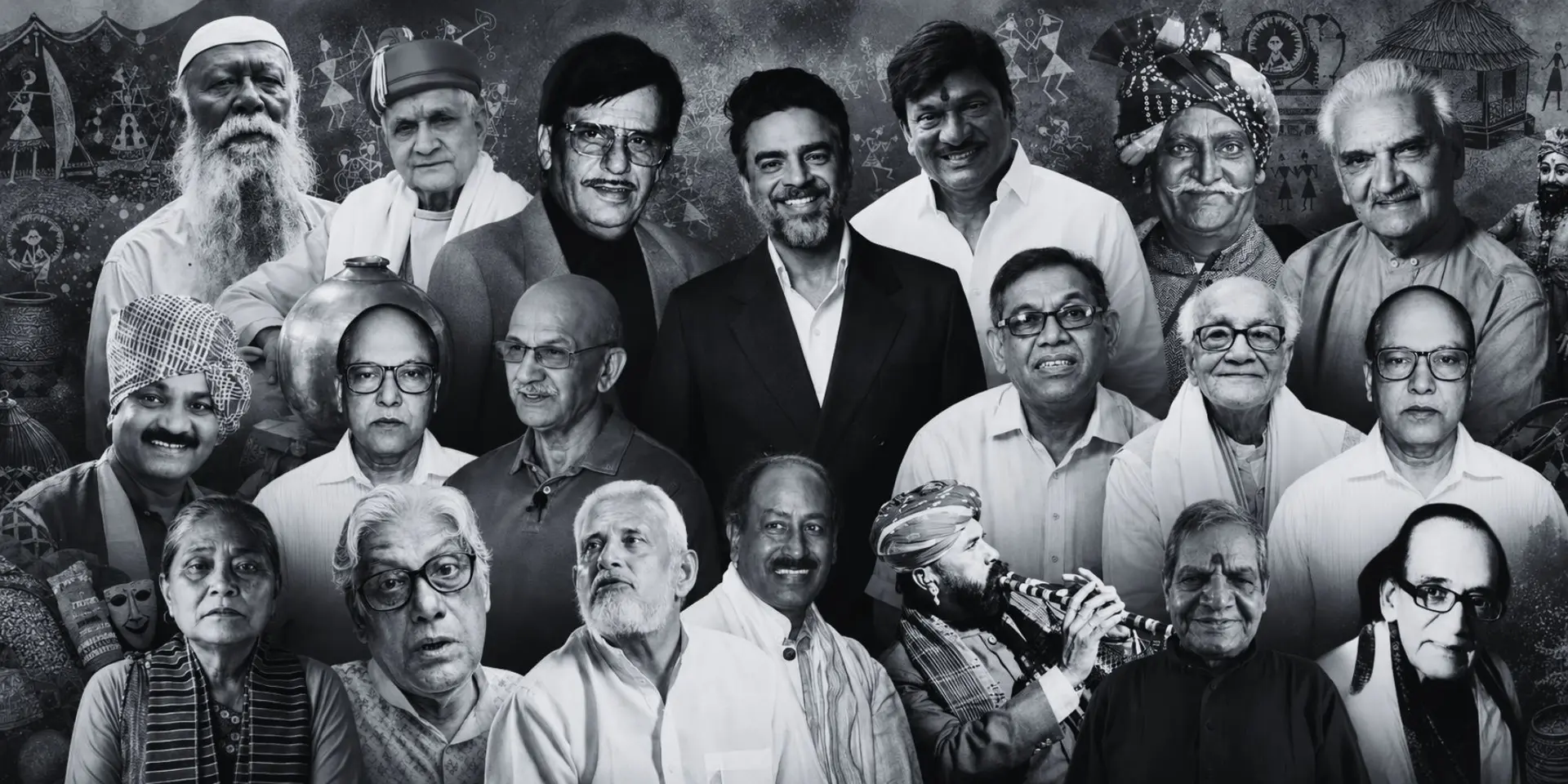

The largest single cluster of artists on the Padma Shri 2026 list comes not from the concert halls of the cities but from the folk, tribal, theatre and visual art traditions of India's regions. Recognised in the field of art, this group spans more than two dozen practitioners, many of them custodians of forms that exist far from the mainstream and survive through community practice rather than commercial success.
It is in this category that the awards do some of their most distinctive work, bringing recognition to artists who might otherwise remain known only within their own regions.
A spread across regions and forms
The honourees are drawn from across the country, from Maharashtra, Gujarat, Rajasthan, West Bengal, Assam, Odisha, Bihar, Uttar Pradesh and the north eastern states. They include theatre practitioners such as Anil Kumar Rastogi of Uttar Pradesh, folk performers like Raghuveer Tukaram Khedkar of Maharashtra, associated with the Tamasha tradition, and tribal and folk artists including Bhiklya Ladakya Dhinda of Maharashtra and Taga Ram Bheel of Rajasthan.
The full list in this category also features Arvind Vaidya, Bharat Singh Bharti, Bishwa Bandhu, Chiranji Lal Yadav, Dharmiklal Chunilal Pandya, Gadde Babu Rajendra Prasad, Gafruddin Mewati Jogi, Hari Madhab Mukhopadhyay, Haricharan Saikia, Jyotish Debnath, Khem Raj Sundriyal, Madhavan Ranganathan, Maganti Murali Mohan, Mir Hajibhai Kasambhai, Nuruddin Ahmed, Pokhila Lekthepi, R Krishnan, Rajastapathi Kaliappa Goundar, Sangyusang S Pongener, Sarat Kumar Patra, Simanchal Patro and Yumnam Jatra Singh, several of them honoured posthumously and many drawn from tribal and rural communities.
Why folk and tribal art receives the Padma Shri
Readers more familiar with classical or film honours sometimes ask why so many little known folk artists feature on the list. The reason is that the Padma Shri is explicitly meant to reward distinguished service in any field, and folk and tribal art forms are treated as living heritage worth protecting.
Many of these traditions are sustained by a handful of ageing practitioners, with few formal records and little institutional support. Recognising them is a way of signalling that these forms matter, and of bringing a measure of dignity, and often renewed local interest, to art that the wider market tends to overlook.
This year's list, with its long roll of folk and tribal names, is a quiet statement of cultural breadth. It places the artist of the village stage and the tribal performer alongside the celebrities of cinema and the concert hall, on the same honours list, under the same award.