



Padma Shri 2026: the year's literature and education honourees
The Padma Shri 2026 literature and education list celebrates writers, scholars and educationists who have shaped Indian learning across regional languages, universities and global scholarship.

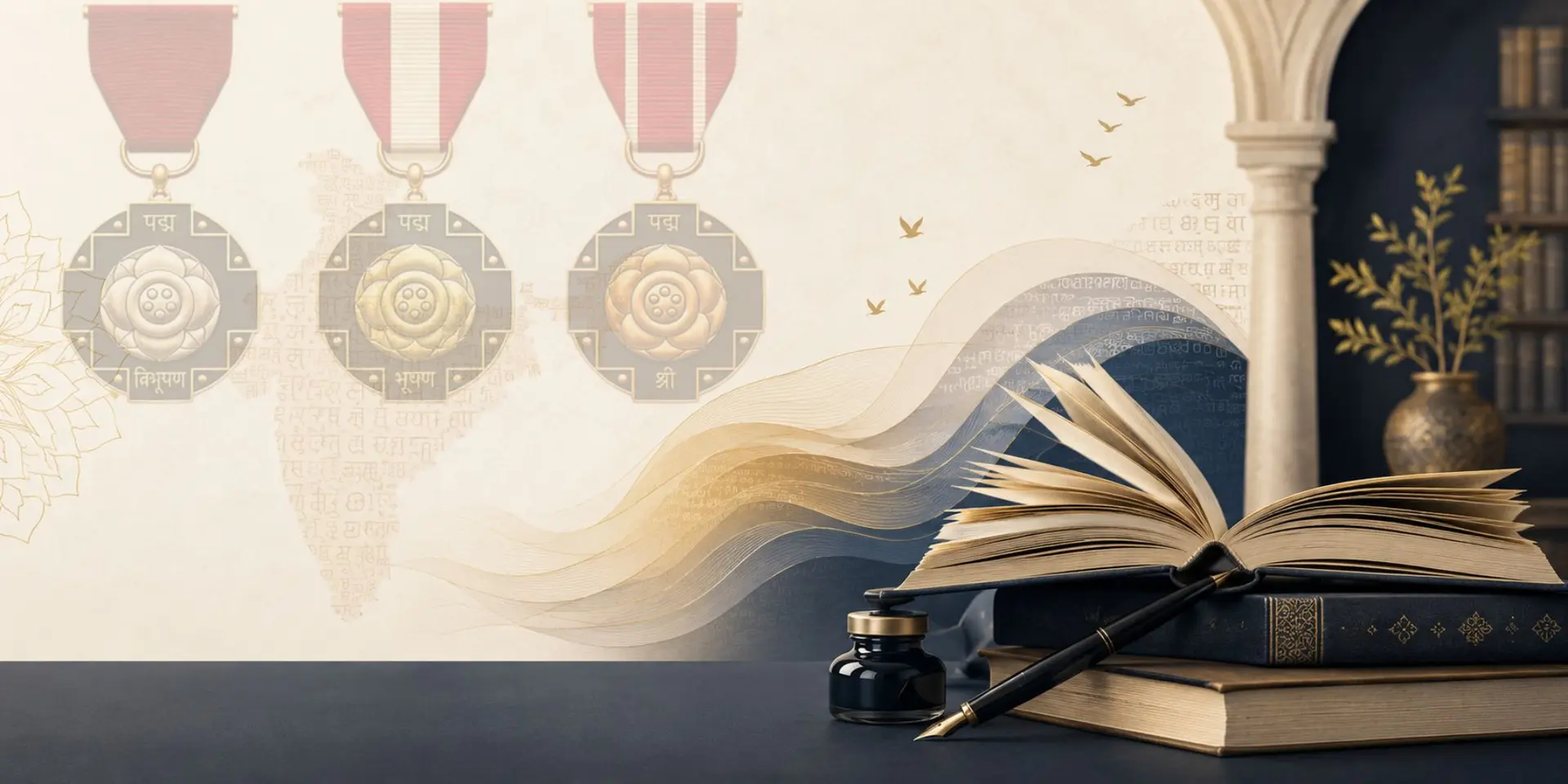

The Padma Shri 2026 list recognised a substantial group of writers, scholars and educationists, one of the larger categories on this year's roll of honour. Recognised in the field of literature and education, the group includes figures who have shaped academic institutions, enriched regional literatures and carried Indian scholarship abroad.
This category captures the quieter forms of national contribution, the work of teaching, writing and preserving knowledge.
The literature and education honourees
Among the more widely known names, Mamidala Jagadesh Kumar of Delhi, a senior figure in higher education administration, and Shashi Shekhar Vempati of Karnataka, known for his work in public broadcasting and digital media, feature on the list. The acclaimed Tamil writer Sivasankari and the Kashmiri scholar Shafi Shauq were also recognised, as was the Russian scholar of Indian languages Liudmila Viktorovna Khokhlova, reflecting the international reach of Indian literary study.
The full list in this category also includes Asok Kumar Haldar, Charan Hembram, Gambir Singh Yonzone, Kailash Chandra Pant, Mahendra Kumar Mishra, Mahendra Nath Roy, Mangala Kapoor, Naresh Chandra Dev Varma, Prabhakar Basavprabhu Kore, Rabilal Tudu, Ratilal Borisagar and Vempaty Kutumba Sastry, drawn from across India's languages and regions.
Why regional literature matters on the list
For readers used to seeing English language writing celebrated, the prominence of regional language scholars and authors on the Padma list is worth noting. India's literary life is lived overwhelmingly in its many regional languages, and much of its most important work is produced in them.
Recognising writers and scholars who work in Tamil, Kashmiri, Odia, Bengali and other languages affirms that this is where a great deal of the country's intellectual and cultural life resides. It also helps draw attention to literatures that rarely receive national coverage.
Together, the 2026 literature and education honourees represent the breadth of Indian learning, from university administration to regional poetry to the study of Indian languages abroad. Their recognition is a reminder that the work of words and ideas remains central to how the country understands itself.