



A bus conductor, a street-sweeping officer and more: India's unsung Padma heroes
The Padma Shri 2026 list honours grassroots changemakers, social workers, rural innovators and community builders whose quiet work reflects the spirit of the People’s Padma.

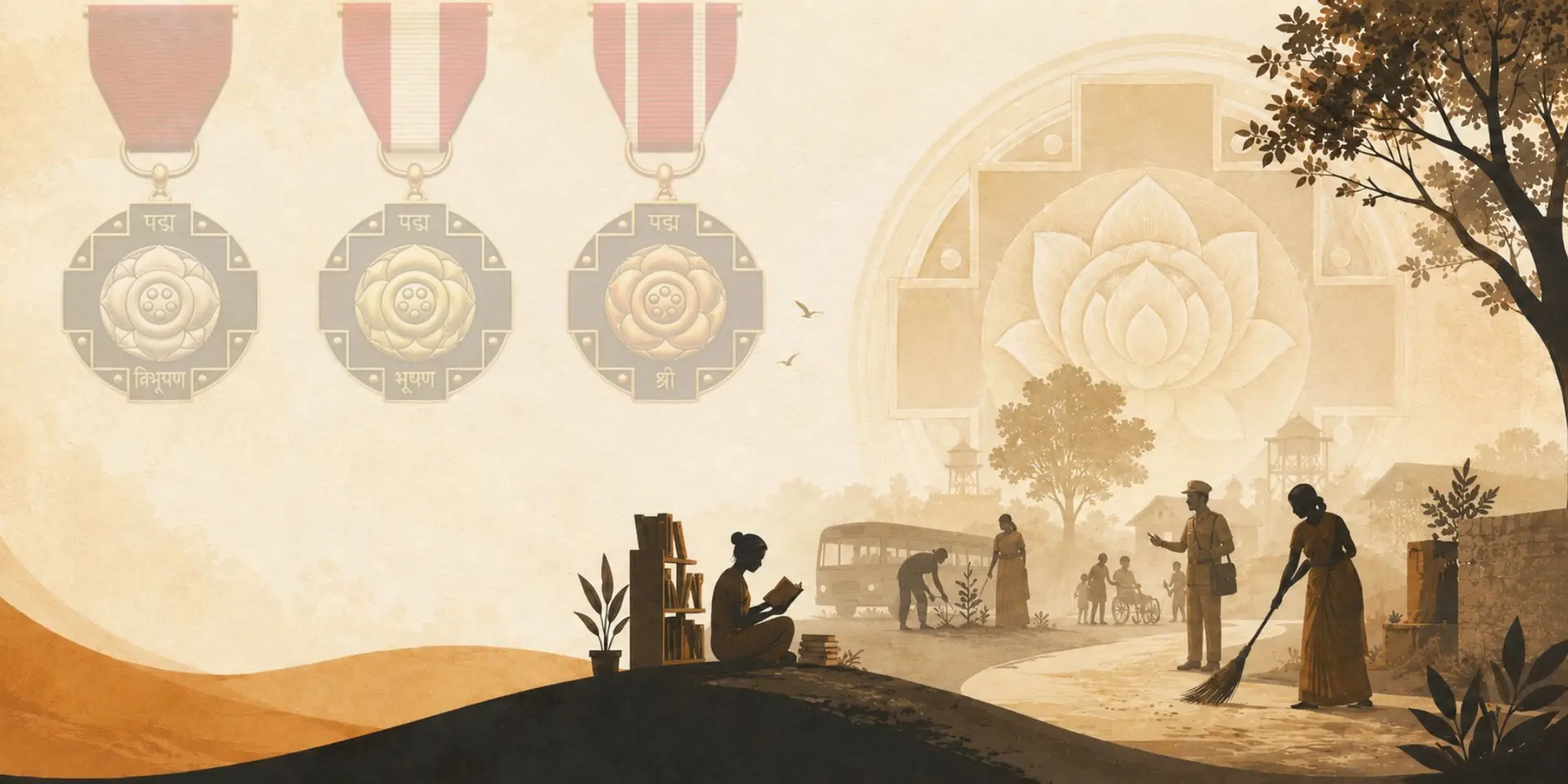

If there is one category that defines the character of the Padma Shri 2026 list, it is the long roll of grassroots changemakers, the social workers, rural innovators and quiet community builders who make up the spirit of what is often called the People's Padma. Recognised largely in social work and allied fields, this group includes some of the most moving stories on the entire list, of people who have spent their lives serving others with little expectation of reward.
For a readership drawn to stories of social impact, this is the heart of the Padma Awards.
The changemakers on this year's list
Among the names that have drawn the most attention is a former bus conductor honoured for building a large public library, turning a modest livelihood into a lifelong mission of spreading reading. Another is an 87 year old retired senior police officer, Inderjit Singh Sidhu of Chandigarh, recognised after becoming known for cleaning the city's streets each morning. Nilesh Vinodchandra Mandlewala of Gujarat was honoured for his work promoting organ donation, and Dr Budhri Tati of Chhattisgarh for her service among tribal communities.
The wider list of grassroots honourees includes S K M Maeilanandhan, Anke Gowda M, Brij Lal Bhat, Buddha Rashmi Mani, Hally War, Janardan Bapurao Bothe, Jogesh Deuri, Kollakal Devaki Amma G, Mohan Nagar, Narayan Vyas, Raghupat Singh, Rama Reddy Mamidi, Ramamurthy Sreedher, S G Susheelamma, Sant Niranjan Dass, Shrirang Devaba Lad, Swami Brahmdev Ji Maharaj and Techi Gubin, drawn from fields as varied as social work, agriculture, archaeology, animal husbandry and spiritual service, and from states across the country including several in the north east.
What is the People's Padma
The phrase People's Padma is not an official award category but a description of a deliberate shift in how the honours work. In recent years, the government has encouraged ordinary citizens to nominate deserving people from their own communities, rather than leaving nominations only to institutions and the well connected.
The result has been a steady rise in awards going to grassroots figures, people doing extraordinary work in farming, conservation, health and social service, often in remote areas and without recognition. The idea is to ensure that distinguished service is honoured wherever it is found, not only where it is visible.
It is this category, more than any other, that gives the Padma list its emotional force. For every household name, there is a village teacher, a tribal social worker or a retired official quietly serving a community. Their recognition is a reminder that meaningful impact rarely makes headlines, and that the work of changing lives is most often done far from the spotlight.