



Why rising healthcare spending is a sign of economic failure, not growth
Every new hospital bed added to our infrastructure is not an achievement but a sign that we have failed at the primary job of keeping people healthy. We need to move from volume-based care to outcome-based care, from disease management to disease resolution, and from revenue maximisation to wellness

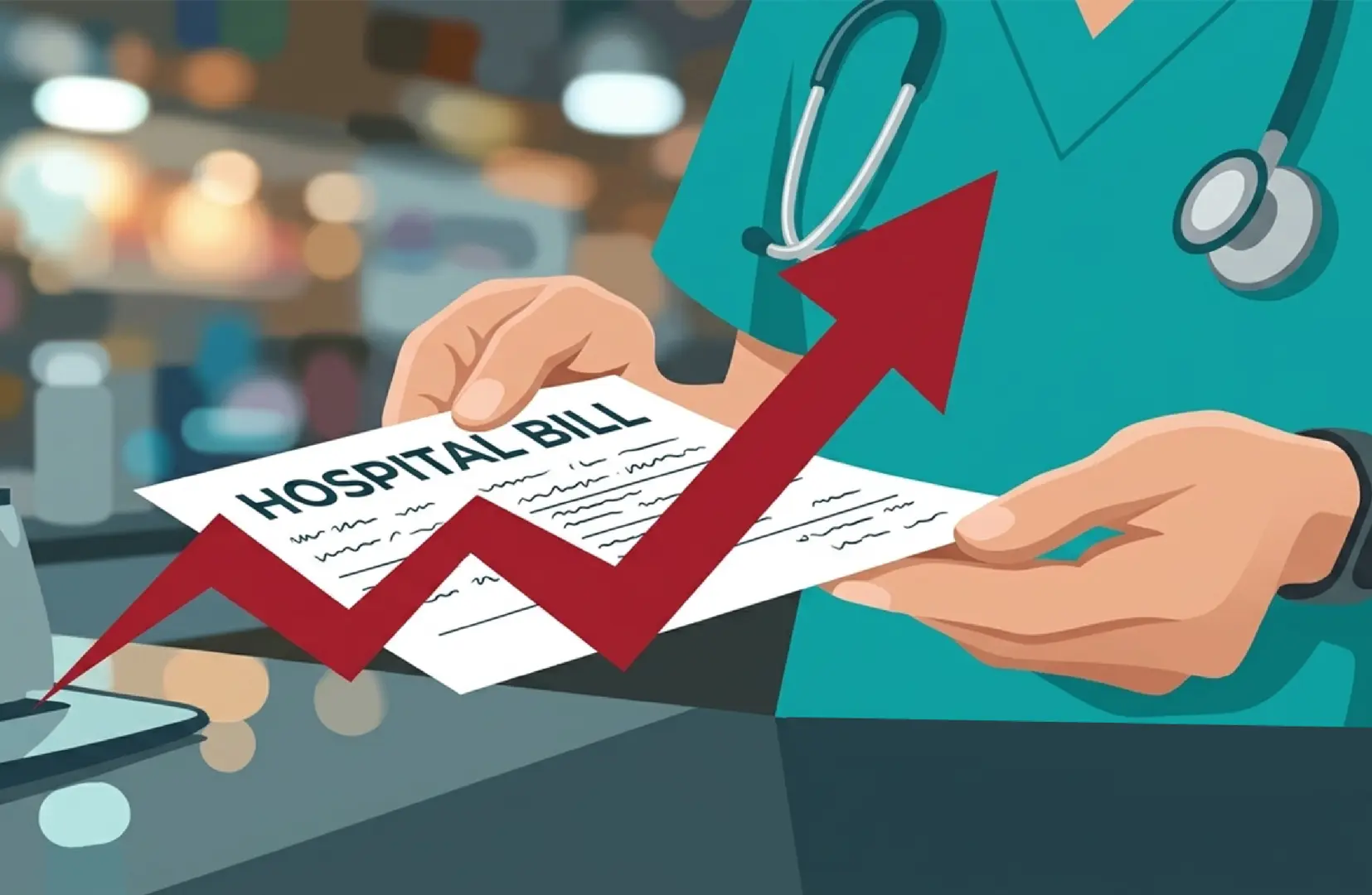

In the world of macroeconomics, we are conditioned to cheer for growth sectors, and now we are celebrating a bull market in human suffering. In boardrooms and budget meetings across India, a double-digit rise in healthcare spending is hailed as a victory for the economy, a sign of modernisation and capital flow. We point to the thousands of new hospital beds, the multi-billion dollar valuations of pharmacy chains, and the rising percentage of healthcare spend in our GDP as proof of progress.
But if we pause to look past the balance sheets, we must ask a darker question: since when did a rise in the number of sick people become a success metric for a nation?
The hard truth is that we are confusing sickness spending with healthcare growth. Every new hospital bed added to our infrastructure is not a landmark of achievement but is a sign that we have failed at the primary job of keeping people healthy. In reality, rising healthcare spending is often the ultimate indicator of a systemic economic failure. When our GDP grows because more citizens are occupying hospital beds, we aren't witnessing the birth of a developed nation, but we are witnessing the institutionalization of a health crisis.
In any other industry, say, aviation or hospitality, high occupancy is a sign of operational efficiency and consumer demand. In healthcare, high bed occupancy is a sign of a failing preventative net. When we celebrate a 15% year-on-year growth in critical care revenue, we are essentially celebrating the fact that more citizens have to undergo life-altering, expensive medical interventions.
The deeper issue lies in how the system itself is designed. Healthcare today is structurally aligned to manage disease rather than eliminate it. A cured patient exits the system, but a managed patient stays within it, often for decades. This creates a fundamental misalignment where chronic conditions become long-term revenue streams, and interventions are optimised for continuity rather than closure. In effect, disease becomes a subscription model. But healthcare was never meant to be a subscription business.
If anything, it should be the only industry where success is defined by the absence of repeat customers. Yet our current metrics reward volume, number of procedures, bed occupancy, and revenue per patient, instead of outcomes. The real KPI of a healthcare system should be simple: how many people do not need to come back. We need to move from volume-based care to outcome-based care, from disease management to disease resolution, and from revenue maximisation to wellness maximisation. The system must be incentivised to cure, not to manage.
Beyond the corporate metrics, there is a profound human cost to this growth. In India, a medical emergency is often a wealth-transfer mechanism. It waits for a middle-class family to save for 20 years, only to liquidate those savings in 20 days of an ICU stay.
When healthcare spending rises because of reactive care, it siphons capital away from the productive economy. Money that should have gone towards education, small business investments, or consumer spending is instead diverted into the ‘sickness economy’. A nation that spends a high percentage of its GDP on fixing preventable diseases is a nation that is effectively taxing its own future. We aren’t building health wealth, but we are just managing a slow-motion financial disaster.
There is also the invisible cost of a sick day. A nation of patients cannot be a nation of builders. High reactive healthcare spending is always shadowed by a massive loss in productive man-hours. For every rupee spent on treating a chronic condition in a Tier II city, there are hundreds of rupees lost in potential economic output because that individual is no longer operating at peak performance.
By 2030, if India is to become a global economic powerhouse, we cannot afford to be a nation that is simply managing disease better. We need a population that is securing wellness as a permanent state. To fix this, the industry must undergo an incentive flip. We need to move from volume-based care to value-based outcomes.
The government and the venture capital ecosystem need to stop rewarding the building of more fire engines(hospitals) and start investing in smoke detectors (preventive diagnostics and AI-led wellness). The biggest economic opportunity in India doesn’t lie in treating the sick. It lies in keeping the healthy from ever becoming patients. We need to build a system where the business only wins when the user stays well.
True economic success isn’t measured by the height of our hospital walls, but by our lack of need for them. Our goal shouldn’t be to build the world’s largest sickbay, but to architect the world’s most resilient workforce. It is time to stop investing in the mechanics of decline and start building a nation of performers. The future of our economy shouldn’t be written on a prescription pad, it should be forged in the resilience of a workforce that is too healthy to be customers of the status quo. It’s time to flip the script.
The author is a serial entrepreneur, angel investor, and the founder of Un:Bloc, an impact-led venture, and Healthians, a healthtech company.