



Agnikul CEO: “We Can’t Build Use-and-Throw Systems If We Want to Be a Business”
Why the real race in launch is economic, not technological, and what it takes to fly 100 missions a year
Prem Manukonda
Friday July 24, 2026 , 4 min Read

In the same week that Skyroot’s Vikram-1 made India only the third country to achieve private-sector orbital launch capability, Chennai-based Agnikul Cosmos set out its own next frontier. Agnikul Cosmos’ Mission-02 will attempt India’s first recovery of an orbital-class rocket booster and convert the spent upper stage into a functioning in-orbit platform, an architecture the company has patented in India, the United States and Europe. Agnikul, incubated at IIT Madras, has already launched the world’s first rocket powered by a single-piece 3D-printed engine from India’s first private launchpad.
In a written interview, co-founder and CEO Srinath Ravichandran explains why he believes the real race in launch is economic rather than technological and what it will take for Agnikul to reach 100 missions a year. His responses have an engineer’s directness. Edited excerpts follow.
Globally, several companies mastered rocket science but struggled to build businesses. As you plan Mission-02, how do you think about launch economics as distinct from launch technology?
Launch economics being a focus is why Mission-02 itself has both commercial and profitability objectives. Reuse is the most important variable to keep launch economics meaningfully low. We can’t be building use-and-throw systems if we want to be a business. So Mission-02 is designed to reuse both the upper and lower stages of Agnibaan.
Mission-02 attempts booster recovery plus converting the upper stage into an in-orbit platform. Why are reusability and convertibility your answer to the cost curve?
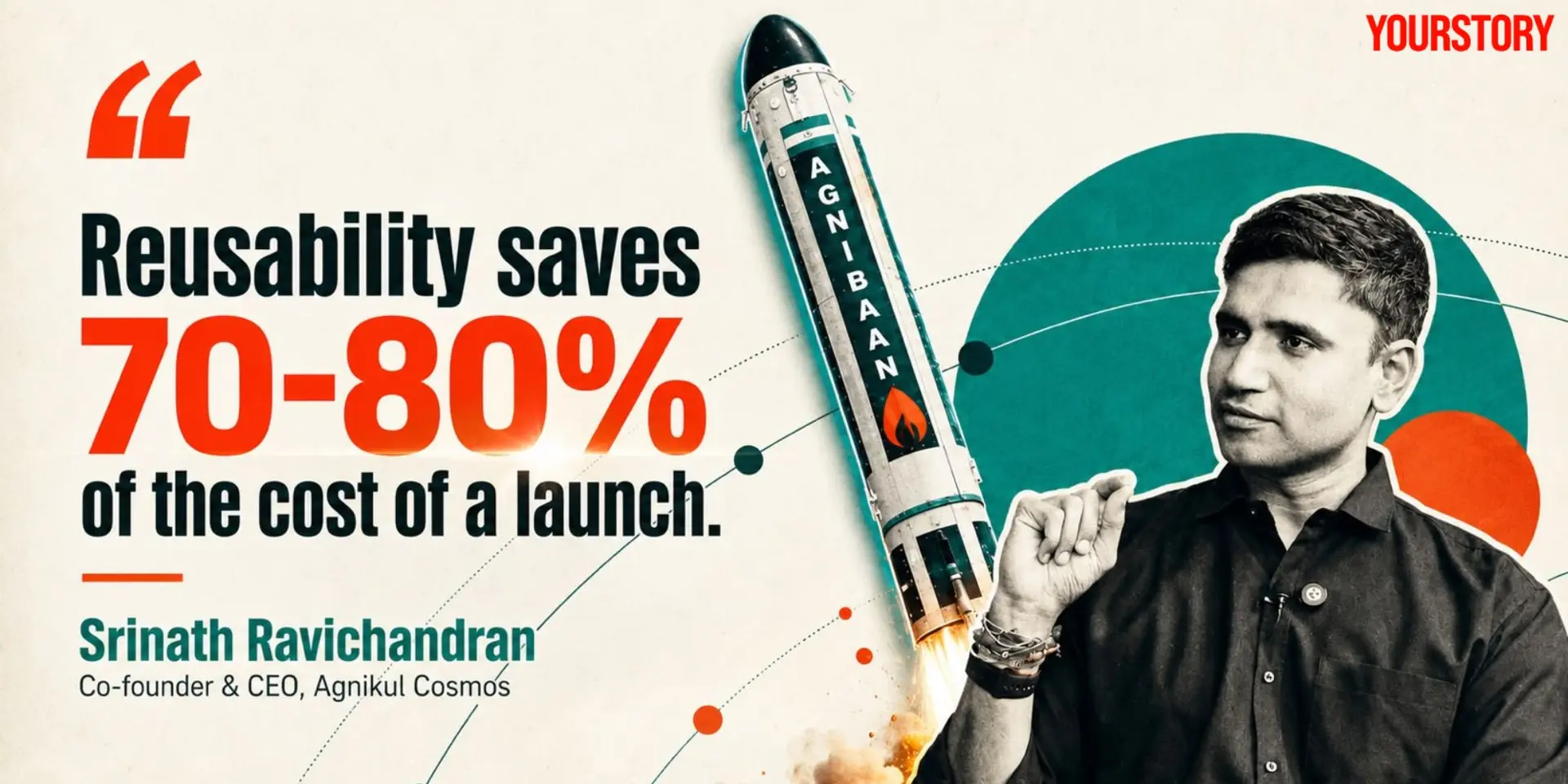
Reusability saves 70–80 per cent of the cost of a launch. It also allows you to decouple production from launch. If you look at a metric like the launch-to-production ratio, only with reuse does this number go above 1. In the steady state, we can make 20 booster stages to launch 100 times in a year.
Reusability also eliminates the need for calibration and tuning a rocket between launches. New hardware always means painful and time-consuming calibration every time you launch.
Convertibility is the only way we can make the upper stage also be used multiple times. Convertibility of the upper stage blurs the line between a small satellite and a small rocket’s upper stage, allowing for maximum profitability in any given mission.
SpaceX’s Rideshare program carries most of the world’s small satellites cheaply. What demand does a dedicated Indian launcher serve that rideshares fundamentally cannot?
SpaceX, because of the rideshare model, is never able to fully address the demands of any small satellite operator. SpaceX cannot offer last-mile connectivity in space, because rideshare missions drop off satellites in a common orbit from which satellites have to find their way to the final destination.
Wait times are very high, because a pool of satellites, all of which are going to the same destination orbit, have to come together to launch. The minimum order quantity to launch is also high, which means pricing is actually high even though the dollars-per-kilogram figure itself may look low.
Who are Agnikul’s anchor customers over the next five years? Would you count on Space-Based Surveillance-Phase III (SBS-3), Indian constellation builders, or international payloads? And in what order?
Our anchor customers are international commercial players in Europe, Australia, Japan and Singapore. Government programmes in India and the plethora of startups coming up now are a big bonus, but we have always thought of Agnibaan as building for the world from India, for constellation builders and smaller satellite operators.
You’ve spoken of around 100 launches a year by 2030. What has to be true, in demand, capital and infrastructure, for that cadence to materialise?
Since reuse decouples production from launch, a facility capable of making 20 rockets a year should be enough to service 100 launches a year. We plan to develop an end-to-end facility, from design to vehicle roll-out, near the launchpad coming up in Kulasekarapatnam for this. Scaling is not too complex, because we are fairly vertically integrated already, with manufacturing and testing facilities in-house. What’s the single most valuable thing the ecosystem could do for Indian launch companies in the next 24 months?
The single most important thing is to have unified approaches across various government entities to enable complex missions. Having customs, taxes, launch, mission operations and the supply chain all governed by one body for approvals will be a big help in moving things quickly and efficiently.
Edited by Adith Charlie