



How AI can power India's digitally-empowered farming ecosystem
As India's digital agriculture ecosystem grows, the biggest opportunity lies in using AI-powered intelligence to improve farm traceability, optimise procurement, and build more resilient agribusiness supply chains.

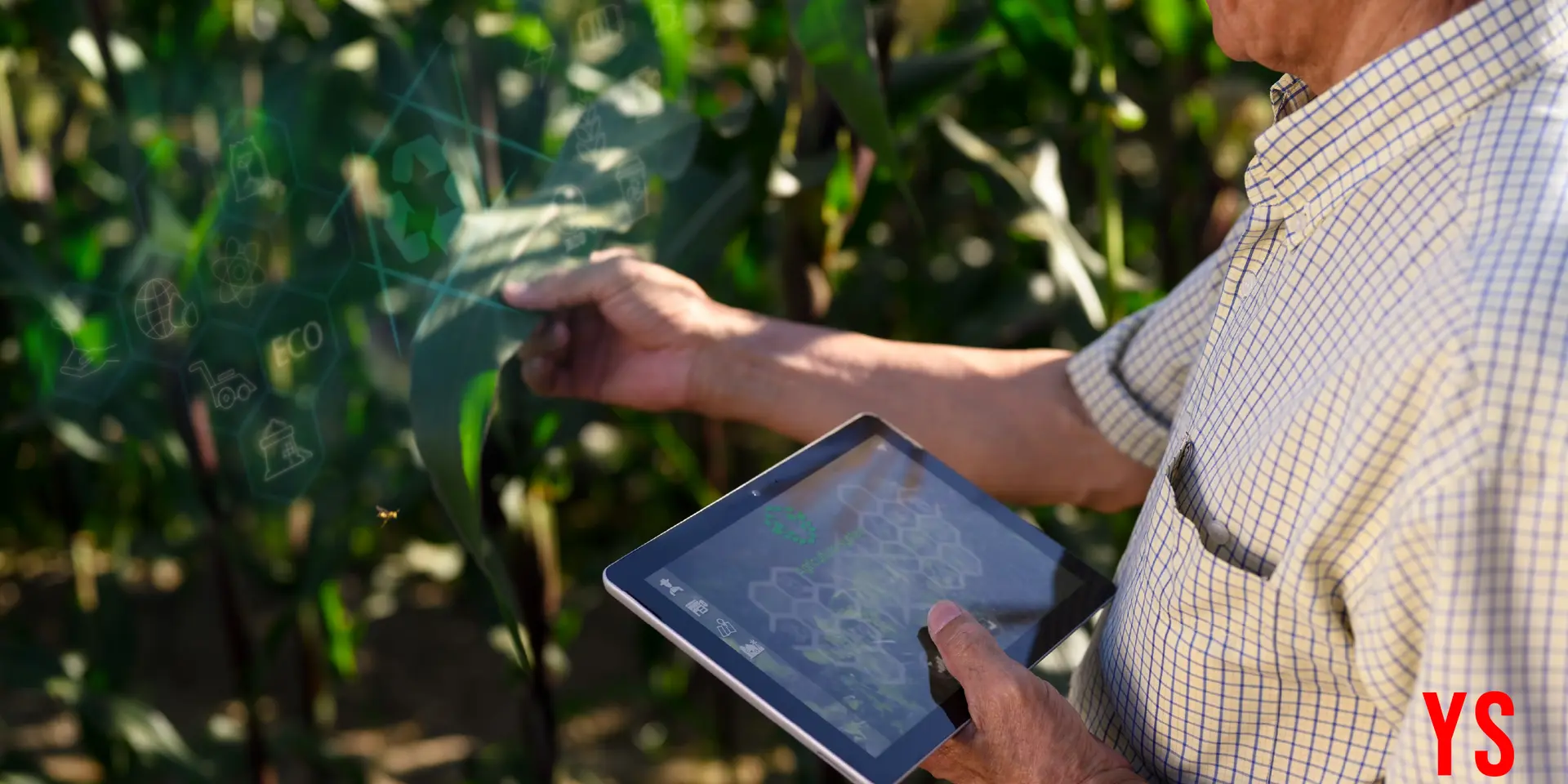

A mid-sized food processing company set out to solve a straightforward problem: they had no reliable way to verify what was coming in from their farmer network. Crop varieties, input usage, harvest dates all of it lived in handwritten registers or nowhere at all. Their goal was simple. Digitise farm records. Improve procurement visibility. Know what they were buying before it arrived at the factory gate.
They achieved that. But something unexpected happened along the way.
Once farm-level data started flowing soil health, agronomic practices, spray records, field observations a picture emerged that no procurement manager had ever seen before. Farms that looked identical on paper began to show meaningful differences in how they were managed. And those differences, it turned out, were predictive. Farms with certain input patterns and crop health indicators were consistently delivering higher-quality raw material. Others were quietly heading toward quality shortfalls weeks before harvest.
The company had started a digitisation project. They ended up with an early warning system.
This is not an isolated story. It is the shape of what is happening across Indian agribusiness and it tells us something important about where the real value of AI in agriculture lies.
The data gap nobody talks about
India loses agricultural produce worth over Rs 1.5 lakh crore every year, according to a large-scale study by NABARD Consultancy Services (NABCONS, 2022). Fruits and vegetables suffer losses ranging from 6% to 15%, while perishables across the board remain vulnerable to supply chain gaps. These are not numbers that will be fixed by growing more. They will be fixed by managing better and managing better requires knowing more, earlier.
India's food processing sector is projected to reach $535 billion by 2025–26 (IBEF). The AI-in-agritech segment alone is growing at a 44% CAGR, expected to scale from $900 million in 2025 to $5.6 billion by 2030, according to a report by StarAgri Indian Agritech Market Landscape Report. The infrastructure for digital agriculture is being built. The policy intent is clear. What is less discussed is who actually captures the intelligence that this infrastructure generates.
The answer, more often than not, is nobody. Not yet.
Most agribusinesses food processors, input companies, cooperatives, commodity aggregators sit at the centre of enormous farm networks. They touch thousands of acres. They interact with hundreds of farmers every season. But the data from those interactions rarely makes it past a spreadsheet, if it is captured at all. The farmer gets an advisory. The agribusiness gets a purchase record. Neither gets intelligence.
The real beneficiary of farm AI
There is a common assumption in conversations about agricultural technology: that the primary beneficiary should be the farmer. And farmers do benefit better crop management, timely advisories, access to inputs and markets. That is real and important.
But the entity with the greatest untapped capacity to act on farm data and to invest in generating it systematically is the agribusiness. A food processor procuring from 500 farmers can amortise the cost of a digital system across an entire supply chain. An input company advising 2,000 farmer-customers already has agronomists on the ground. The infrastructure for data collection exists. What is missing is the layer that turns that data into decisions.
That is exactly what AI enables. And when agribusinesses start making better decisions sourcing from the right farms at the right time, intervening before crop health deteriorates, planning procurement months instead of weeks in advance the farmer wins too. Better-managed supply chains pay better prices. Reduced rejection rates mean fewer disputes at the farm gate. Early advisory based on field data reaches the farmer when it can still make a difference.
The empowerment flows both ways. But it has to start somewhere and it starts with the agribusiness having the tools to see clearly.
From records to intelligence
What makes AI genuinely powerful in this context is not any single capability. It is the compounding effect of connected data. Farm records create traceability. Traceability enables quality prediction. Quality prediction enables smarter procurement planning. Procurement planning feeds into supply chain and inventory decisions. Each layer builds on the one before.
The food processing company that started with a digitisation goal eventually found itself able to anticipate quality variance before harvest, optimise advance procurement commitments, and build a supplier scorecard that reflected agronomic reality not just delivery volume. None of this was the original brief. All of it became possible once the data started flowing.
This is the pattern we consistently see across agribusinesses that cross the threshold from digitisation to intelligence. The initial use case is narrow. The unlocked value is not.
Where India's agribusiness layer goes next
India's Digital Agriculture Mission has committed Rs 2,817 crore to building a robust digital agriculture ecosystem (Ministry of Agriculture & Farmers Welfare, 2024–25). The government's intent is clear. But public investment in infrastructure does not automatically translate into enterprise-level intelligence. That translation requires platforms built for the complexity that mid-size and large agribusinesses actually operate in multi-crop, multi-geography, with supply chains that run from a farmer's field to a factory floor to an export container.
The opportunity is significant. So is the gap between what most agribusinesses have today and what is possible. Most are still in the records phase. A smaller number are beginning to use data for operational decisions. Very few have crossed into predictive intelligence.
The next three to five years will determine which agribusinesses build that capability for themselves and which ones find that their competitors already have.
At Khetibuddy, working with agribusinesses across 250,000+ acres and 35+ enterprise customers, we have seen this shift happen. The companies that move first are not necessarily the largest. They are the ones willing to treat farm data as a strategic asset rather than a compliance requirement. That mindset shift, more than any single technology, is what India's agribusiness sector needs next.
(Vinay Nair is the Co-founder and CEO of Khetibuddy Agritech Limited, an enterprise agri-intelligence platform)
(Disclaimer: The views and opinions expressed in this article are those of the author and do not necessarily reflect the views of YourStory.)