


Apple's real profit machine isn't the iPhone. It's the toll booth
The iPhone gets users through the door, but Apple’s highest margins come later—from App Store fees, search licensing and subscriptions. Now antitrust rulings in the US, EU and Japan are challenging the toll-booth model.

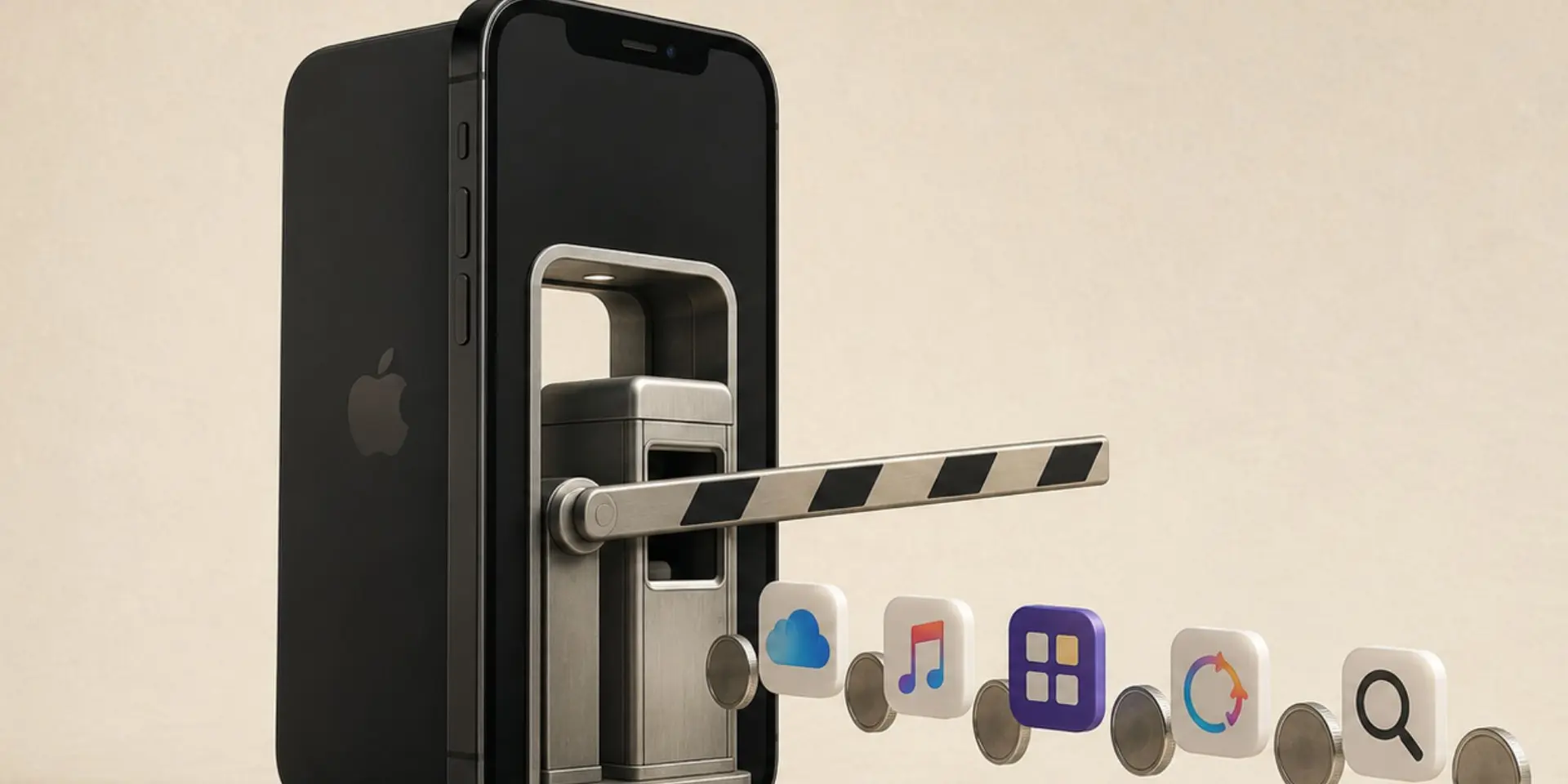

Apple is known as the company that makes the iPhone. But look at where its profit comes from, and a different business has quietly taken over: not the device, but the toll Apple collects on everything that happens on it afterward.
The margin gap that explains everything
In fiscal Q4 2025, Apple's Services segment (App Store commissions, iCloud, search licensing, Apple Music, AppleCare, advertising) posted a gross margin of 75.3%. Its Products segment, the actual iPhones, iPads, and Macs, posted 36.2%. Every dollar of Services revenue generates roughly twice the gross profit of a hardware dollar.
Services revenue hit $109.16 billion in fiscal 2025, up 13.5%, and now makes up 26% of Apple's $416.2 billion in total revenue, up from about 22% two years earlier. It punches well above that weight: roughly 42% of Apple's $195.2 billion in fiscal 2025 gross profit came from a segment generating a quarter of sales.
None of this is accident. The economics have pulled Apple there for years.
Where the toll gets collected
At the center sits the App Store, where Apple takes up to 30% on purchases and in-app transactions, dropping to 15% for small developers and for subscriptions after the first year. That commission sits on an installed base that passed 2.5 billion active devices in January 2026, up from 2.35 billion a year earlier: 2.5 billion standing invitations to spend inside the ecosystem without Apple shipping another unit of hardware.
But the App Store alone does not explain the 75%. A large share of Services revenue is licensing, overwhelmingly the multibillion-dollar payment Google makes each year to stay the default search engine in Safari. It carries essentially no cost of goods, which makes it the purest margin in the company: a check Apple cashes for leaving a default setting alone.
Around it sit the recurring pieces. Paid iCloud storage, which Apple never breaks out but which surveys rank as its most widely adopted US subscription. Apple Music, AppleCare, a fast-growing ads business. All digital, all near zero variable cost.
So critics who read the sports rights and streaming deals as a desperate pivot away from hardware are misreading it. The 75% is not coming from Apple TV+, which carries thin margins and is widely reported to lose money. It comes from search licensing, commissions, and storage.
The toll booth under challenge
In 2021, Judge Yvonne Gonzalez Rogers largely sided with Apple against Epic Games on federal antitrust law, but found its anti-steering policy, which barred apps from pointing users to cheaper outside payment options, violated California's Unfair Competition Law. The Ninth Circuit affirmed in 2023, and in January 2024 the Supreme Court declined petitions from both sides.
Apple then complied as narrowly as possible. It allowed external payment links, then charged 27% on purchases made through them within seven days of a tap, behind warning screens designed to scare users off. Epic said this nullified the injunction. In April 2025 Gonzalez Rogers agreed, found Apple in willful civil contempt, ordered it to stop charging any commission on external-link purchases, and referred it for possible criminal contempt. Fortnite returned to the US App Store within weeks.
That commission has been zero ever since, but the fight is live. In December 2025 the Ninth Circuit upheld the contempt finding while holding that a total fee ban went too far, ruling Apple may charge a rate reflecting costs genuinely and reasonably necessary to coordinate external purchases. The Supreme Court refused Apple a stay in May 2026, then in June agreed to hear its appeal, with argument set for October.
The honest status: zero, in the US only, on one narrow transaction type, pending a remand and a Supreme Court ruling. The standard 15% to 30% in-app commission remains intact, and the rate card has already fragmented under the EU's Digital Markets Act and Japan's competition law. A single global 30% is history.
Why it matters
Once a company achieves real platform lock-in, the product that got you in stops being the most profitable part. The iPhone earns a respectable margin once. Everything done on it afterward, every app, subscription, storage upgrade, and Safari search, earns far more, repeatedly, for years.
The hardware is the door. The toll booth is the business. Which is why the litigation aimed at Apple targets not the door, but the price of passage.