



One machine, three domains: This Bengaluru drone flies, swims and dives
AquaAirX's AVATAAR moves from air to underwater in a single mission, built for coastal patrol, search and rescue, and defence.


India has more than 7,500 km of coastline and a vast maritime zone to watch, and the tools for the job are split in two. Aerial drones cover the surface; underwater robots work below it. Neither does both, so monitoring a coast usually means running two separate systems.
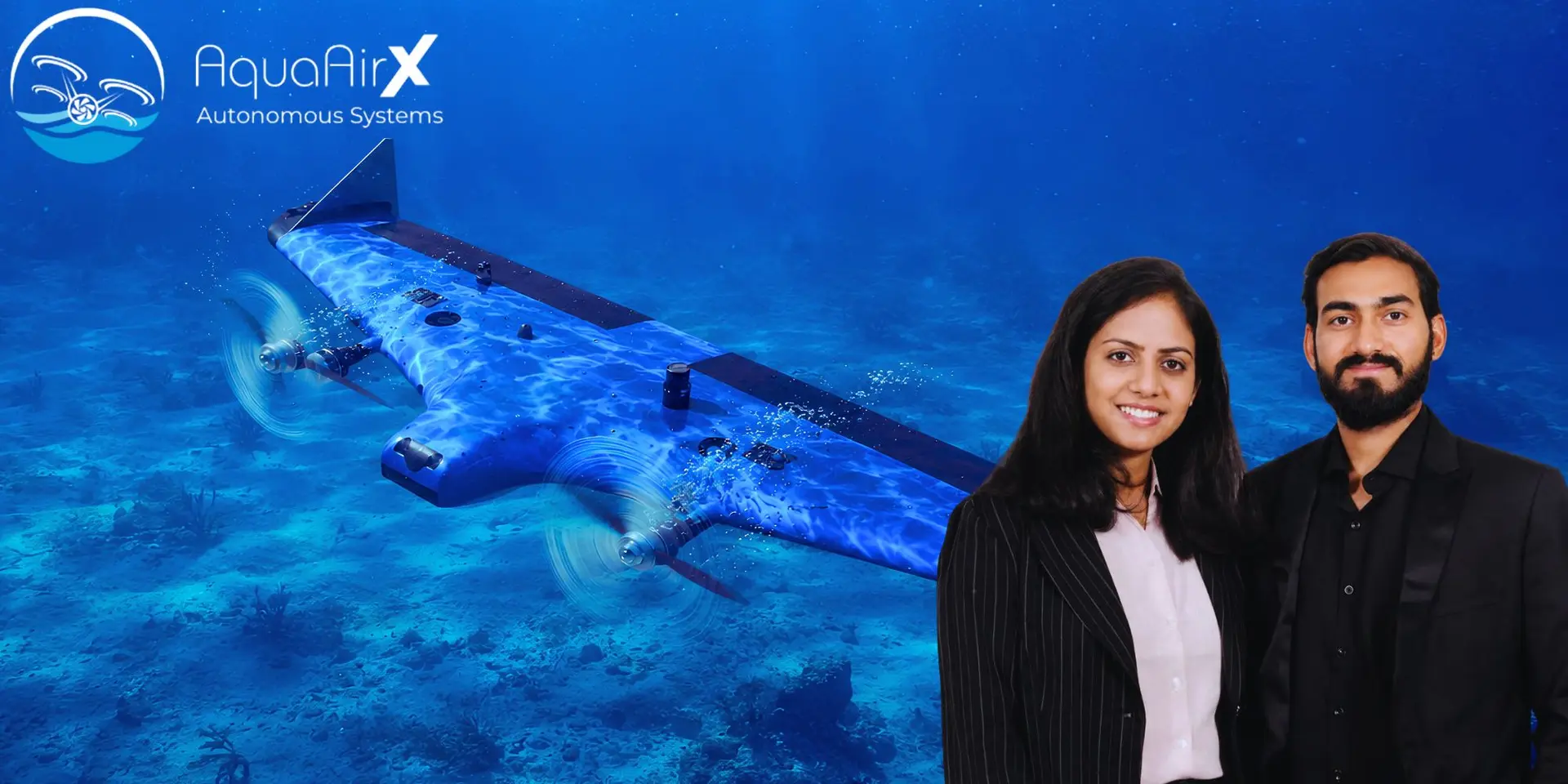
, a Bengaluru-based deeptech startup, is trying to collapse that into one machine. Its drones fly like a quadcopter, land on water, dive to carry out underwater tasks, then resurface and fly on.
The gap it is chasing is not academic. India's long coasts face illegal fishing, smuggling and intrusions, and ships and crewed aircraft cannot realistically watch every stretch at once. Underwater activity in particular often goes unseen until it is too late.
The company was founded in 2024 by aeronautical engineers Gouthami T S and Jitendra Kumar Purnmal Saini, who shared an interest in robotics, aerospace and autonomous systems. What began as a research project into machines that could cross between air and water grew into a startup building amphibious drones and underwater robots.
A drone that crosses from air to water
Its flagship is AVATAAR, which the company describes as India's first amphibious drone. The hard part is the transition: staying stable and in control as the machine moves between air and water, two environments that behave nothing alike.
The defence use is specific. AVATAAR can scan a suspect area from the air, then dive to check what is below with sonar and acoustic sensors, hunting for the small submarines and combat swimmers that exploit shallow coastal waters where large naval assets are slow to reposition.
AquaAirX pairs AVATAAR with NEXOR, an underwater vehicle, and a software layer called DeepNimbus that turns the data collected from both the camera feeds, sonar and telemetry, into mission reports and intelligence. A single ground control station runs the whole system across air, surface and the subsea region.
The company says its amphibious platform has reached technology readiness level six, meaning it has been demonstrated in a realistic operational setting and is nearing deployment. It is incubated at Nitte Meenakshi Institute of Technology and at IIM Bangalore's N.S. Raghavan Centre for Entrepreneurial Learning (NSRCEL).
Aimed first at the coastline
AquaAirX is aimed first at defence and security: persistent patrol of coasts and exclusive economic zones, port protection, and detecting underwater threats that conventional sonar struggles with. Beyond defence, it targets oil and gas, maritime operators and search and rescue.
On the commercial side, the ability to inspect underwater without divers or a support ship appeals to oil and gas operators and port authorities, who spend heavily on routine subsea checks. AquaAirX also builds standalone underwater vehicles for jobs that stay below the surface, such as inspecting rigs, hulls and cables.
In early 2026, it raised Rs 12.5 crore in a seed round led by Rainmatter, the investment arm of Zerodha. Rainmatter is better known for backing climate and fintech ideas than defence hardware, so this is a sign of how far Indian deeptech investment has spread.
The money is going into making the air-to-water transition more reliable, improving the drone's sensing and communication, and hiring across robotics, autonomy and control systems.
Revenue is limited for now. The wager is that a single system that can fly, dive and gather intelligence across both domains will cost less to run, and cover more ground, than the two or more separate fleets it could otherwise replace.
(This story has been researched and compiled using publicly available information.)