



‘Cut 50% of the syllabus’: Ashok Jhunjhunwala’s bold plan for India
With 350 startups valued at Rs 70,000 crore, Prof Jhunjhunwala’s institution-building journey shows how academia, industry and young entrepreneurs can power India’s future.

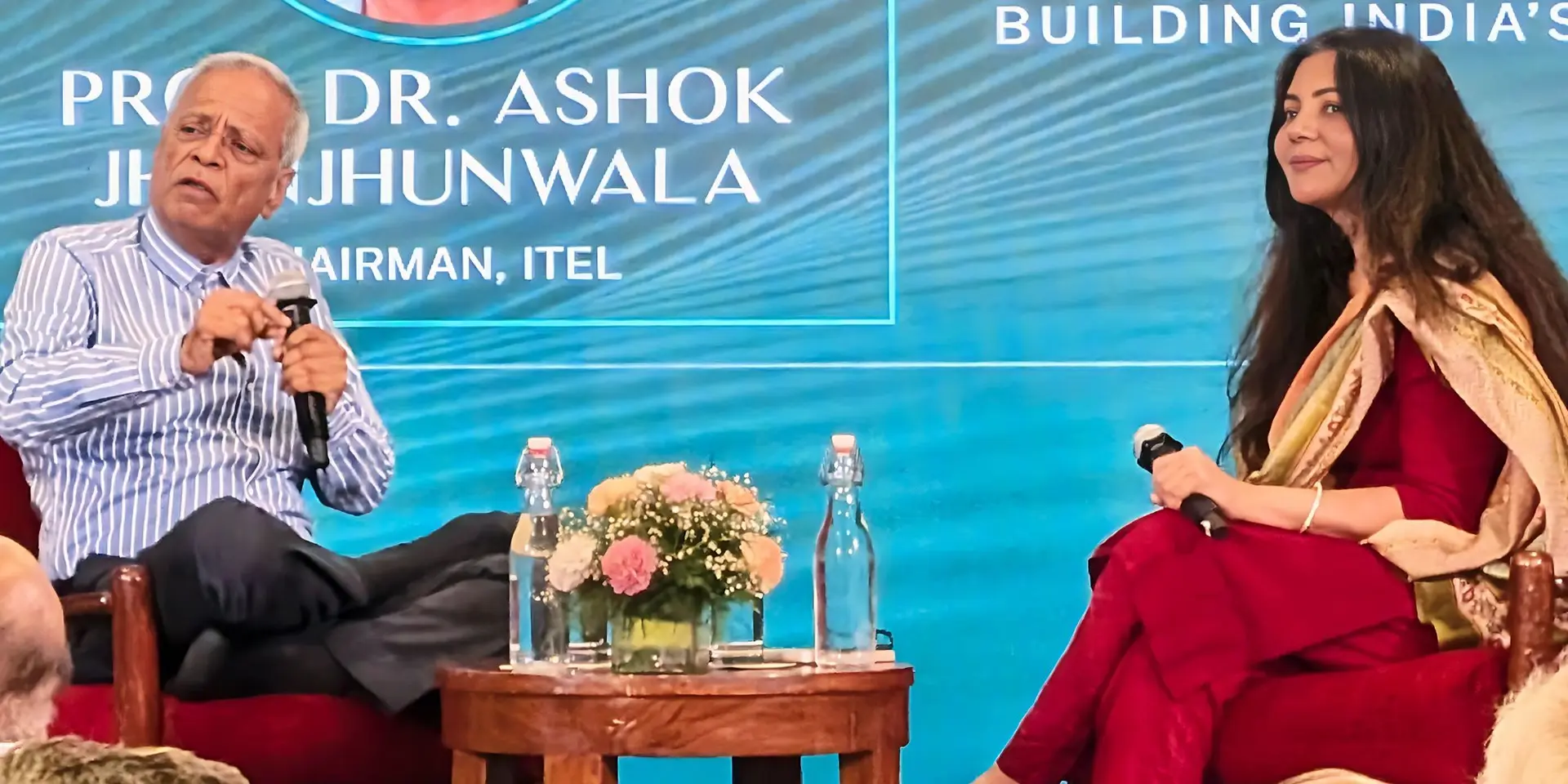

The professor who built India's deep tech engine wants the country to think bigger. At the Delhi launch of Roots & Wings: Building India's Deep Tech Ecosystem, the authorised biography of Padma Shri Prof Ashok Jhunjhunwala, the veteran technologist declared that India's transformation will come not from a handful of unicorns but from an army of builders. "Not 20 entrepreneurs, not 200, not even 2 million. Can we create 20 million entrepreneurs? If that happens, that will transform the country," he said, in conversation with Shradha Sharma, Founder and CEO of YourStory and The Bharat Project.
Written by entrepreneur Saloni Malhotra, who spent seven years under his mentorship, the book traces Prof Jhunjhunwala's journey since his return to India in 1981 and his four decades of institution building, most famously the IIT Madras Research Park, the model that redefined how Indian academia works with industry.
The Rs 70,000 crore proof
The numbers he shared from that journey stunned the audience. The research park refused government funding because, in his words, "easy funding hurts". Instead, it borrowed nearly Rs 300 to 350 crore from banks, repaid it all, and generated Rs 80 crore in cash profit. Till June 2024, it had built 350 startups whose combined value today stands at Rs 70,000 crore, against barely Rs 2 to 3 crore of government money spent.
His formula was simple: pair India's 150,000 scientists, who publish papers but rarely translate research, with bright 22-year-olds, especially from middle and lower middle class families, who are hungry to build.
That conviction now drives his newest challenge. Through the ITEL Foundation, which he chairs, a consortium is developing a green, affordable urban transport system that promises to move commuters 15 km in 20 minutes. After proving the model on campus, the team plans to install it in Sri City next year, with Andhra Pradesh Chief Minister N Chandrababu Naidu offering his state as the first home.
Why does he want half the syllabus thrown out
Prof Jhunjhunwala saved his most provocative remarks for education. He argued that 50% of the engineering and school syllabus can be scrapped outright, because institutions must teach students how to learn and how to build, not how to crack exams. "Teaching to pass exams is not what we need. Learn to build, build anything, build together," he said, admitting the view is controversial but one he strongly holds.
He recalled how a once-resisted proposal for reserving seats for women in IITs changed the institutions. IIT Madras today has about 250 women in a batch of 1,000 undergraduates, compared to just two in his IIT Kanpur class of 400.
Asked about AI, he offered a reality check: India imports almost every technology, from battery cells to chips, and must first solve its own problems, traffic, garbage, water logging, fertiliser imports, each of which he called a massive opportunity.
For the man who declined IIT directorships and says he seeks neither money, fame nor power, the mission ahead is unfinished. "I want to see India change, India happy, at large scale," he said. If his 20 million entrepreneurs answer the call, that future may arrive sooner than expected.