



He bought a ₹3.5 lakh bank server. Now he makes ₹27 lakh a month with AI
A 27 year old Bangalore developer bought a retired bank server at a government auction for ₹3.5 lakh, added two RTX 3090s, and now fine tunes AI models for eleven US firms from a one bedroom flat. Here is how the setup works and why the auction was his real cheat code.

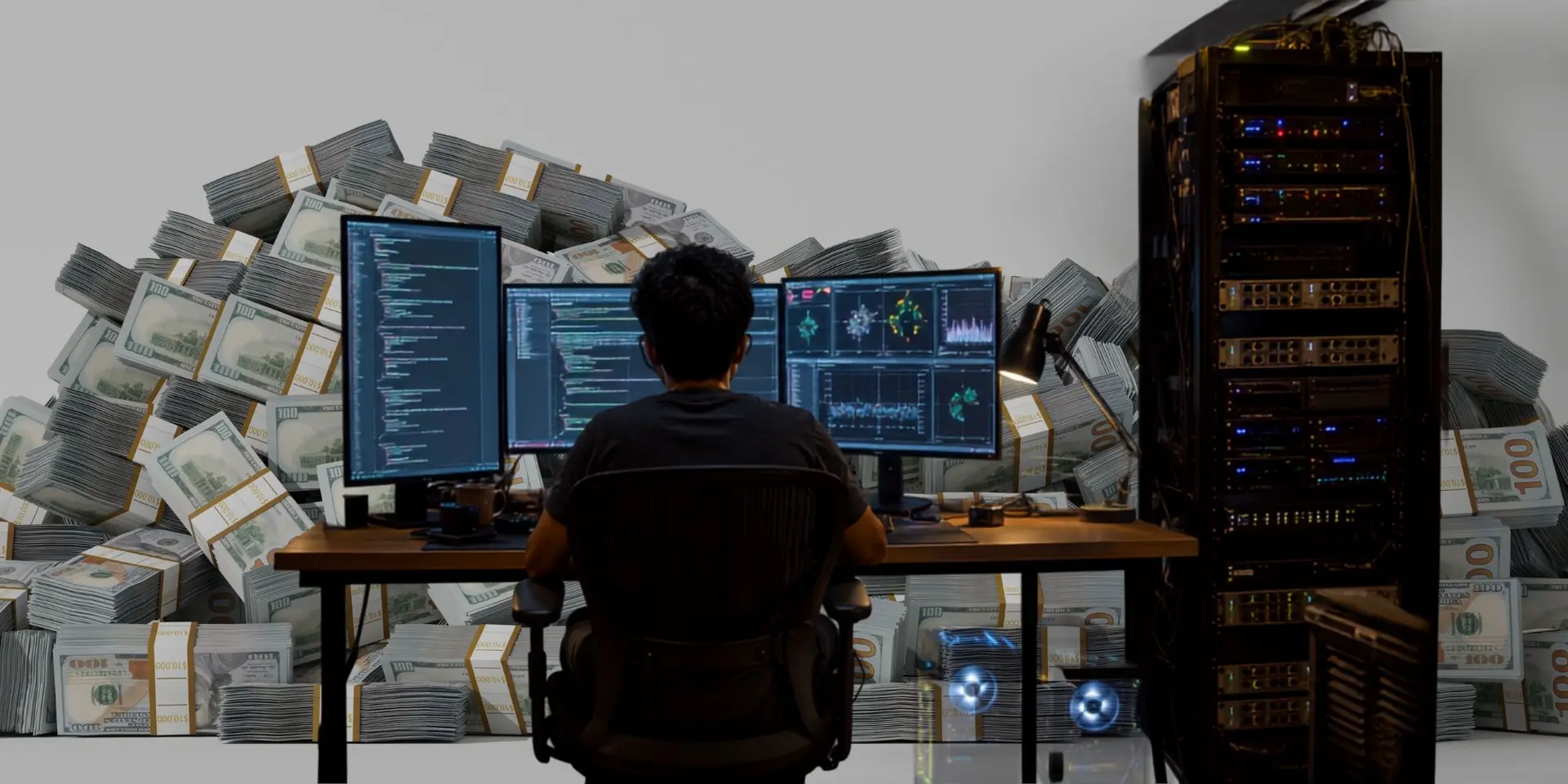

Raj is 27, writes code in a one bedroom flat in Bangalore, and a few months ago he did something almost nobody thinks to do. He went to a government IT auction. If you have never heard of these, that is exactly the point. Every few months, banks and government departments quietly sell off their old servers, hardware they have already written off, stuff nobody in the room really wants.
Raj wanted it, and he came home with four storage shelves, 96TB of hard drives and a managed switch. The same setup had cost over ₹1.5 crore when it was new. Raj paid ₹3.5 lakh for the lot.
The bet under the desk
A pile of old bank hardware does not make money on its own, and Raj knew that. Storage shelves only hold data, they do not think, so he did the smart thing. He bought two towers, dropped a pair of RTX 3090 graphics cards into them, and slid the whole thing under his desk.
Those two cards are the real engine. Together they give him 48GB of VRAM, which is enough to run Llama 3.3 70B right there in his flat, with no data centre and no cloud login. A model that goes toe to toe with the big commercial names now sits humming quietly next to his chair. That was the moment the junk server stopped being junk.
Eleven clients, zero cloud bills
With the rig running, Raj started fine tuning AI models for eleven software companies in the US, and he does all of it from Bangalore on hardware he owns outright. His electricity bill is around ₹5,000 a month, there are no cloud charges eating into every job, no rate limits telling him to slow down, and no invoice that grows every time a client sends more work. The numbers he talks about are hard to sit with quietly: ₹27 lakh a month, and his full ₹3.5 lakh investment earned back in four days.
Whether or not those exact figures hold for everyone, the logic underneath them is solid. Once you are running heavy workloads all day, owning your hardware beats renting the cloud, and the rule of thumb in the industry is simple. Run models eight or more hours a day and your own machine pays for itself in about 6 to 12 months. Raj just took that idea to its extreme, because every token his rig generates is profit while the cloud crowd is still paying by the hour.
Why the auction was the real cheat code
The GPUs do the work, but the auction is what made the whole thing cheap enough to try in the first place. These sales are real and they are open to the public. MSTC Limited, a Government of India enterprise, runs regular e-auctions for surplus and obsolete assets, including electronic equipment, for government bodies and public sector units, and banks run their own auctions too. In December 2025, Bengaluru Customs even auctioned seized phones, laptops, iPads and a TV through the MSTC portal.
The steps are not complicated. You register on the portal, finish your KYC, pay a deposit, bid, and collect. The gear goes cheap for one boring reason, which is that the seller just wants it gone and hardly anyone shows up to bid. Raj showed up.
What Raj's story really tells you
Strip away the eye watering numbers and you are left with something you can actually use. Cheap enterprise hardware is sitting in government warehouses across India, used GPUs can turn a home desk into a serious AI machine, and once you are running at volume, owning your compute quietly beats the cloud month after month. Raj did not have a secret. He had a portal, a bid, two graphics cards, and the nerve to try before anyone else in his city did.
That same class of hardware is sitting in a warehouse near you right now, going for almost nothing. The only thing missing is someone willing to show up and bid.