



How this Delhi startup is weaving what machines cannot
Ahead of National Handloom Day, BhashaBharat introduces a patented weaving technique designed to strengthen Indian handloom craftsmanship and livelihoods.

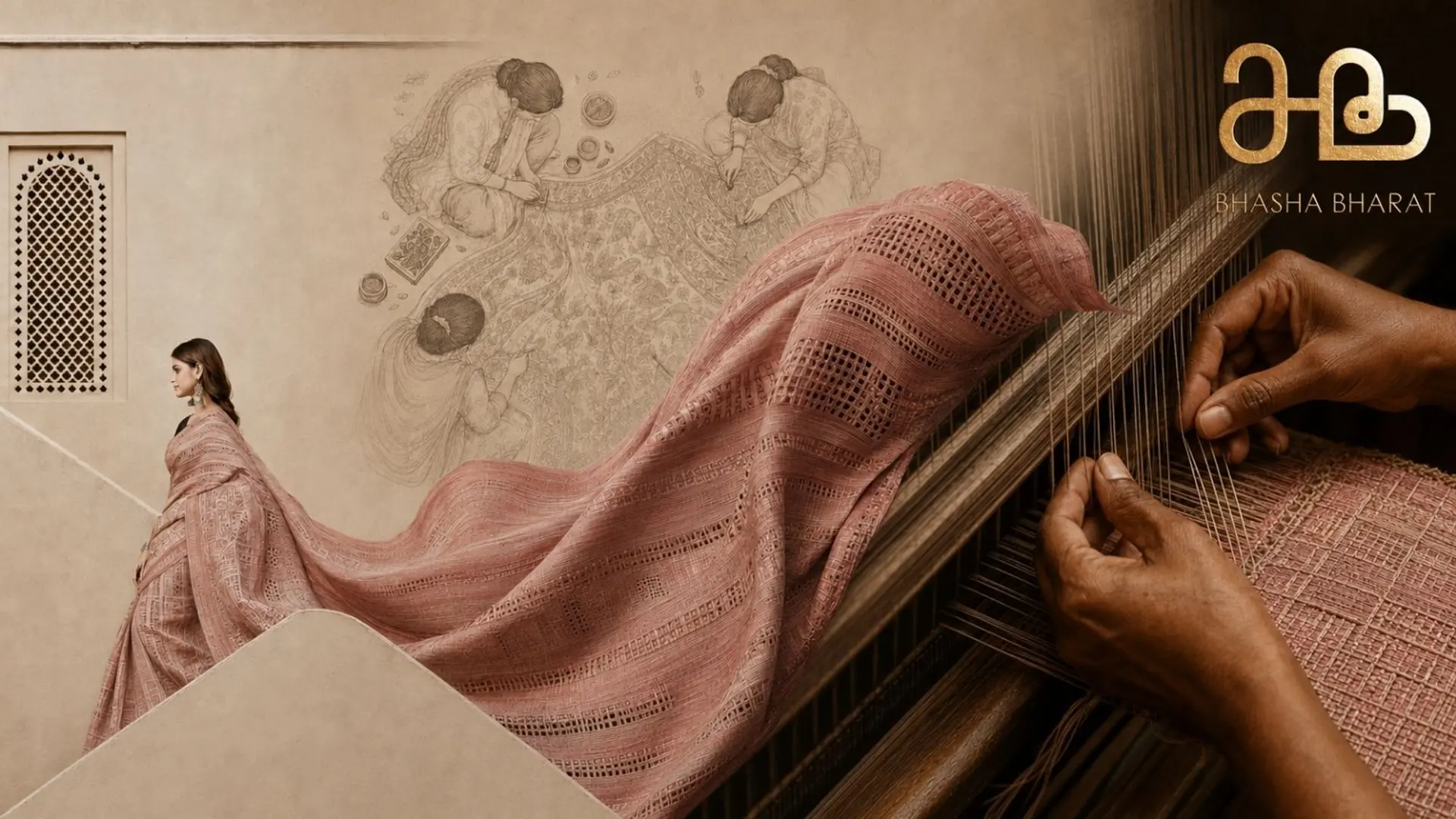

A handloom innovation built specifically for Indian looms has reached buyers for the first time. BhashaBharat, a Delhi label operating as BhashaBharat Textile Design Private Limited, has launched the Blush Loom Kurta Set, handwoven in 100% cotton using what the company describes as a patented Warp Manipulation Technique. The launch comes ahead of National Handloom Day on 7 August.
In this sector, innovation usually means a fresh motif, a new dye or a better sales channel. A change to how the cloth is structurally built is rarer, and it is the kind of change that can alter what a weaver is paid.
A company that started with a trust problem, not a design one
The company was incorporated on 19th September 2023 in New Delhi, according to registry records, with Shashank Kumar Pandey among its founding directors. Its opening challenge was persuasion. Buyers assumed authentic handloom could not be bought online, and the company set out to counter that by sourcing directly from weavers rather than through trading layers.
It also works on reviving fading crafts by giving traditional dressing a contemporary treatment, experimenting with fabrics, cuts, dyes and combinations of weaves. BhashaBharat says it is recognised under Startup India and works with the National Institute of Fashion Technology through an incubation programme.
The technique itself came from outside the company's own studio. It began as a NIFT graduation project by a student named Sneha, developed during an internship at BhashaBharat, and was refined with technical guidance from the Weavers' Service Centre, Meerut, which functions under the Office of the Development Commissioner for Handlooms, Ministry of Textiles. Tapan Sharma, Deputy Director at the centre, says the technique was selected among the leading innovations at the Handloom Hackathon.
How does a motif get woven into the cloth instead of onto it
In conventional weaving, warp threads run lengthwise and hold fixed positions, while the crosswise weft builds the pattern. Warp Manipulation changes the position and grouping of those warp threads during weaving itself.
Shifting them creates raised, recessed or open areas. The motif becomes a change in the fabric's structure, read through light and shadow, rather than colour applied to a finished surface.
Because each shift is judged by the weaver at the loom rather than set by a machine, no two pieces are identical. The variation that machine production treats as a defect becomes the product's character.
Why the method matters to the weaver
Handloom's chronic commercial problem is imitation. Powerloom copies undercut handwoven cloth on price while borrowing its visual language, and the weaver absorbs the loss. A method that depends on hand control at the loom resists mechanical replication, which puts the skill itself at the centre of the pricing rather than the design.
The population this affects is large. The Handloom Census 2019-20 counted about 35.22 lakh handloom workers, of whom 25.46 lakh were women, a share of 72.29%. Nearly 15% of India's cloth production comes from the sector, according to Invest India. Official interest in craft innovation is also rising. The Office of the Development Commissioner (Handlooms) holds the grand finale of Handloom Hackathon 2026, titled Weaving Innovation, on 1 August 2026 at IIT Delhi's Foundation for Innovation and Technology Transfer, with a prize pool of Rs 4 lakh across four themes.
The open question is whether one label's technique becomes a cluster's capability. A patented method used by a single company is a product advantage. The same method taught across weaving clusters is a livelihood shift, and only the second delivers on the empowerment case. Training time at the loom, costing and how quickly a weaver reaches consistent output will decide which it becomes. The 7 August showcase is the first indication of whether other designers take it up.