



How a Woman Mukhiya Built Bihar's Digital Panchayat
Through digital governance, sanitation, and women's empowerment, this Bihar panchayat became a nationally recognised model village.

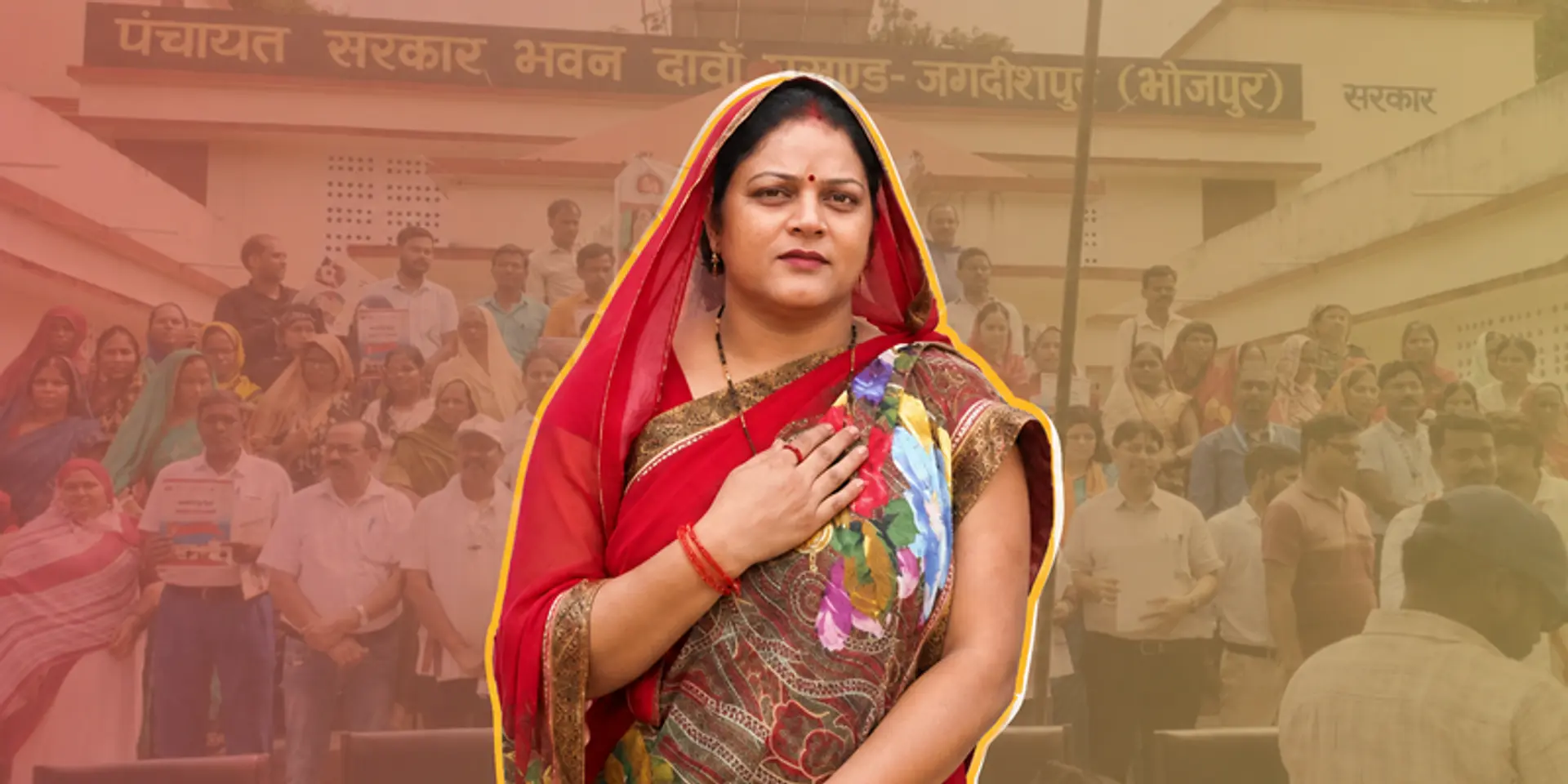

Bihar’s identity is no longer limited to its history, culture and heritage. Several villages across the state are emerging as new examples of good governance, digital transformation and effective local leadership. Dawa Panchayat, located in the Jagdishpur block of Bhojpur district, is one such inspiring example.
With a population of around 14,000, the panchayat has undertaken remarkable work in e-governance, sanitation, education, healthcare and women’s empowerment. In recognition of these efforts, it received the Deen Dayal Upadhyay Panchayat Sashaktikaran Puraskar from the Union Ministry of Panchayati Raj. Dawa is also Bihar’s first panchayat to have a digital Panchayat Sarkar Bhawan and Bhojpur district’s first ODF Plus panchayat.
The credit for this remarkable transformation goes to the panchayat’s mukhiya, Shushumalata Kushwaha, whose tireless efforts over the past decade have transformed the entire area.
A childhood dream turned into a mission
Shushumalata Kushwaha spent her childhood in different states across the country. Her father was a Junior Commissioned Officer in the Indian Army. His frequent transfers gave her an opportunity to closely observe the cultures and societies of different regions. She completed her early education at Kendriya Vidyalaya and later earned a Master of Social Work degree.
After marriage, she moved to rural Bhojpur. In 2016, encouraged by her husband and family, she contested the panchayat election for a seat reserved for women and was elected mukhiya for the first time.
While living in different states during her childhood, she encountered negative perceptions about Bihar and its people. That experience inspired her to do something meaningful for her state.
Speaking to YourStory, Dawa Panchayat Mukhiya Shushumalata Kushwaha says, “When I lived with my father in different states across the country, Bihar and its people were often viewed differently. At that time, I decided that if I ever got an opportunity to do something in life, I would do it for my state. Today, whenever I represent Bihar on a platform, I feel proud that I am able to showcase the identity of my village and my state to the world.”
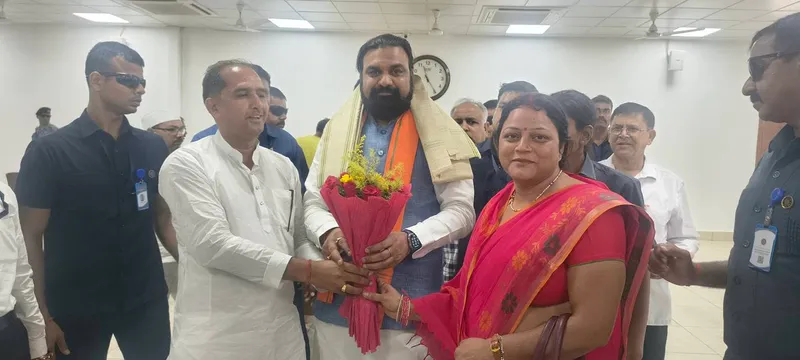
(Dawa Panchayat Mukhiya Shushumalata Kushwaha (right) and others welcome Bihar Chief Minister Samrat Choudhary (centre).)
The transformation began with a filthy road
After becoming mukhiya, the first major challenge before her was the road leading to the Panchayat Sarkar Bhawan. The road remained extremely dirty because of open defecation. Changing people’s habits was not easy, and she faced opposition on several occasions.
Following continuous dialogue, public awareness campaigns and community participation, Dawa Panchayat was declared open-defecation-free on December 31, 2016. It later achieved ODF Plus status as well.
Shushumalata says, “When I began working, the biggest challenge was changing people’s mindset. The road leading to the Panchayat Sarkar Bhawan had become a place for open defecation. It was not easy to convince people, and we faced opposition several times. But we did not give up. Once the entire village came together, the same panchayat became known across the country for its sanitation and digital systems.”
Digital governance became its new identity
Following the sanitation campaign, the panchayat turned its attention to digital services. Several government services were made available under one roof at the Panchayat Sarkar Bhawan. Right to Public Services (RTPS) facilities are also provided there, ensuring that residents no longer need to make repeated visits to the block office for certificates and other government services.
The panchayat also took steps to increase its revenue. Better management of the local market generates approximately ₹1.30 lakh in annual revenue, which is used to fund development projects within the panchayat.
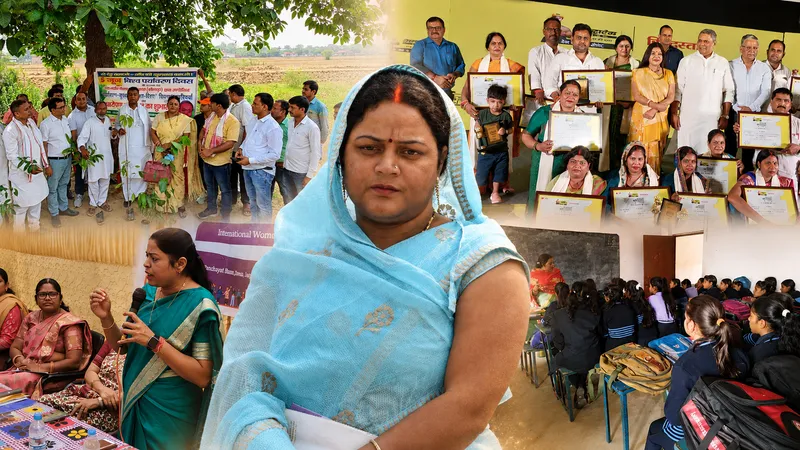
(Thanks to the efforts of Mukhiya Shushumalata Kushwaha, Dawa became Bihar’s first panchayat to have a digital Panchayat Sarkar Bhawan and Bhojpur district’s first ODF Plus panchayat. It also received the Deen Dayal Upadhyay Panchayat Sashaktikaran Puraskar from the Union Ministry of Panchayati Raj.)
Transformation visible in education and healthcare
The Har Ghar Nal Ka Jal scheme has been fully implemented across Dawa Panchayat. Along with delivering safe drinking water to every household, the quality of the water is regularly tested.
Initiatives such as Bal Sabha and Balika Sabha have also been introduced in the education sector. According to Shushumalata Kushwaha, these efforts have brought the number of school dropouts down to almost zero. Regular awareness campaigns have also been conducted to prevent child marriage.
Encouraging open conversations about women’s health
One of the panchayat’s most notable initiatives has been its work on menstrual hygiene.
During a training programme, Shushumalata learned about sanitary pad manufacturing. After returning to the village, she discovered that most women were still using old pieces of cloth. Subsequently, with support from the district administration, the Sangini sanitary pad manufacturing unit was established.
The initiative increased awareness about menstrual hygiene among women and created local employment opportunities for several of them.
Shushumalata Kushwaha says, “Discussing menstruation was one of the most difficult tasks in the village. Initially, women were afraid to speak openly, while men did not even consider it a subject worth discussing. We maintained a continuous dialogue through schools, self-help groups and community meetings. Today, those same women speak openly about health and hygiene. For me, this transformation is no less than an award.”
Community participation became the greatest strength
Dawa Panchayat’s success is not merely the result of government schemes. The panchayat formed health committees, organised regular review meetings and conducted awareness campaigns about diseases such as filariasis.
The panchayat’s work has been evaluated by several institutions. Representatives of the World Bank also studied its model and praised its achievements.
Shushumalata believes that no panchayat can develop solely through the efforts of its mukhiya.
She says, “Schemes alone do not turn a panchayat into a model panchayat. Its real strength lies in its people. We involved villagers in every decision. Women, young people and children were also given an opportunity to express their views. When society itself becomes part of the transformation, development automatically accelerates and its impact reaches far and wide.”
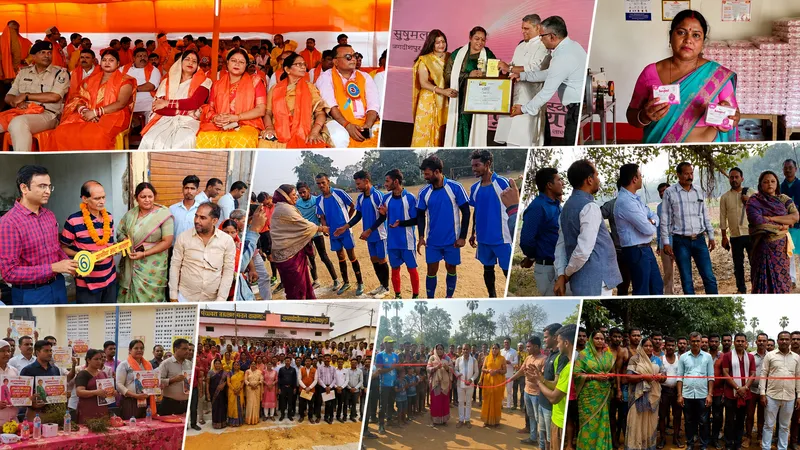
(Through Bihar government schemes and policies, combined with the leadership of Mukhiya Shushumalata Kushwaha, Dawa Panchayat has implemented several initiatives from sanitation and digital governance to education, women’s health and local revenue generation that other rural areas can learn from.)
The focus is now on employment
Despite receiving a national award and several other honours, Shushumalata still considers herself a public representative who is constantly learning.
Her next goal is to create more local employment opportunities within the panchayat. She wants women and young people to find dignified employment within the village through small industries and local enterprises.
Shushumalata Kushwaha says, “If your determination is strong, no challenge is too big. Throughout this journey, I have always received support from my family, the village and my colleagues. Today, my dream is for our panchayat to create new employment opportunities. Women and young people should be able to work with dignity in their own village. That will be true development, and that is our next goal.”
Why Dawa Panchayat’s story is special
Dawa Panchayat proves that transformation does not happen only in large cities. With visionary leadership, community participation and consistent effort, even a village can become an example for the entire country.
From sanitation and digital governance to education, women’s health and local revenue generation, the panchayat has introduced several initiatives from which other rural areas can learn.
Shushumalata Kushwaha’s journey demonstrates that when education, sensitivity and a spirit of service are combined with leadership, a panchayat ceases to be merely an administrative unit and becomes a powerful medium for social transformation. Through Bihar government schemes and policies, along with the leadership of Mukhiya Shushumalata Kushwaha, Dawa Panchayat has emerged as a strong symbol of positive change.