



Doodhvale Farms is fixing India’s milk trust problem from farm to doorstep
By owning the dairy supply chain from farm to doorstep, Doodhvale Farms is building a profitable D2C brand around trusted milk, fresh dairy products, protein foods and everyday essentials.

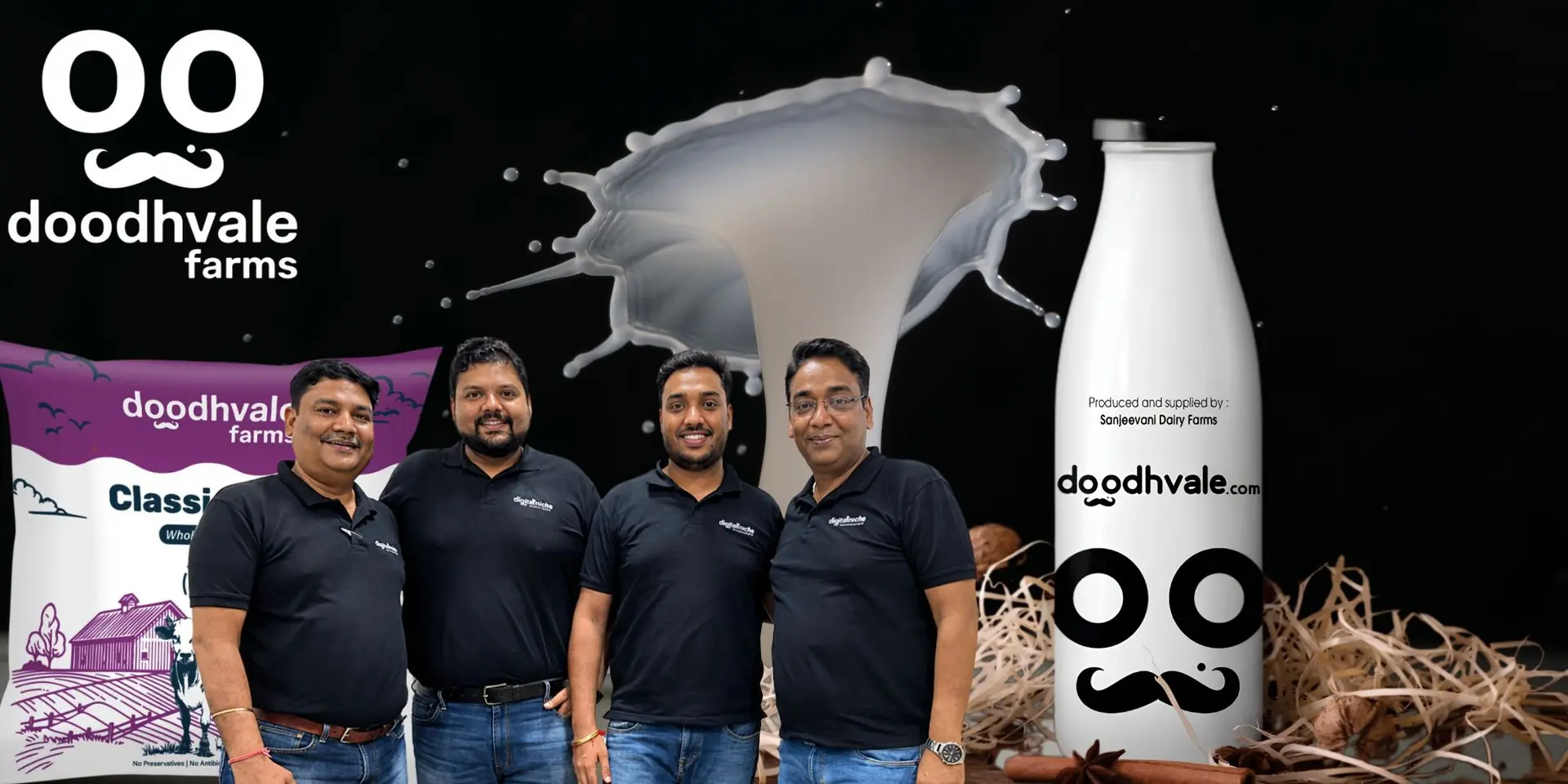

India produces more milk than any other country in the world, and yet ask most urban Indian parents whether they fully trust the milk in their fridge, and the honest answer is usually no. Adulteration scandals, inconsistent quality, and a supply chain with more middlemen than anyone can count have made "farm fresh" one of the most overused, least believed phrases in Indian FMCG. Doodhvale Farms was built on the bet that the fix wasn't a new marketing claim. It was owning the entire chain, farm to doorstep, and refusing to hand any part of it to someone else.
A family bet on an unglamorous category
Founded in 2019 by Sudhir Jain, Aman Jain, Ishu Jain, and Sanjay Jain, Doodhvale Farms (operated by Sanjeevani Dairy Farms Private Limited) chose one of the least venture-friendly categories imaginable: dairy. Low margins, high spoilage risk, brutal logistics, and a market where trust is nearly impossible to build and painfully easy to lose. Instead of outsourcing production or sourcing, the company built a vertically integrated model, controlling everything from the farm to the final delivery, with lab-testing built into every stage rather than bolted on as a marketing claim.
The company currently delivers fresh milk, dahi, paneer, and protein-focused products directly to households across Delhi-NCR, Chandigarh, Ambala, Karnal, and Meerut, while shipping non-perishables like ghee and wood-pressed oils across the rest of the country.
The numbers behind the "boring" category
Doodhvale's growth so far tells a story most flashy D2C brands can't match: consistent profitability. The company has reported year-over-year growth and consistent EBITDA profitability for three straight years, a rare claim in a D2C landscape usually defined by growth-at-all-costs burn. In its most recent update, the company said its D2C business nearly doubled over the past year, pushing overall revenue growth to roughly 65%, with D2C now accounting for close to 90% of total revenue. Value-added products, meaning everything beyond plain milk, now make up about 35% of sales, a sign that customers who came for trustworthy milk are staying for the wider basket.
That performance has attracted real institutional backing. Atomic Capital led a $3 million Series A round in November 2024, with Singularity Early Opportunities Fund joining as a major co-investor, alongside Bharat Founders Fund, Indigram Labs Foundation, and angel investors including Ramakant Sharma and Saurabh Jain of Livspace, Ankit Tandon of OYO, and Arjun Vaidya of V3 Ventures. In July 2026, Atomic Capital Fund I came back with an additional $1 million follow-on round to fund market expansion, deeper penetration in existing channels, and product innovation, with a portion of the capital going toward AI and technology, including demand forecasting and delivery route optimisation. It is a notable pairing of a distinctly old-economy category with distinctly modern tooling.
Where it's headed next
Doodhvale isn't positioning itself as just a milk company anymore. It's expanding deliberately into India's protein gap, building out household protein products alongside staples like atta and wood-pressed oils, effectively repositioning itself as a trusted daily-essentials brand rather than a single-category dairy startup.
The company has said it aims to more than double its business over the next 12 to 18 months, while entering new cities and deepening penetration in existing ones.
Why this story matters
Doodhvale's real innovation isn't a clever product or a viral marketing moment. It's choosing to compete on the one thing Indian dairy has historically struggled to guarantee: trust, built through ownership of the entire supply chain rather than promises about it. In a market saturated with startups chasing flashy categories, Doodhvale's founders bet that the biggest opportunity was quietly fixing something everyone already buys every single day, and getting paid consistently for doing it right.