



From Period Taboos to Mushroom Farms: How Dr Surbhi Empowers Bihar’s Women
Dr Surbhi Kumari’s SumArth has educated thousands about menstrual health while helping rural women build sustainable incomes through mushroom farming.

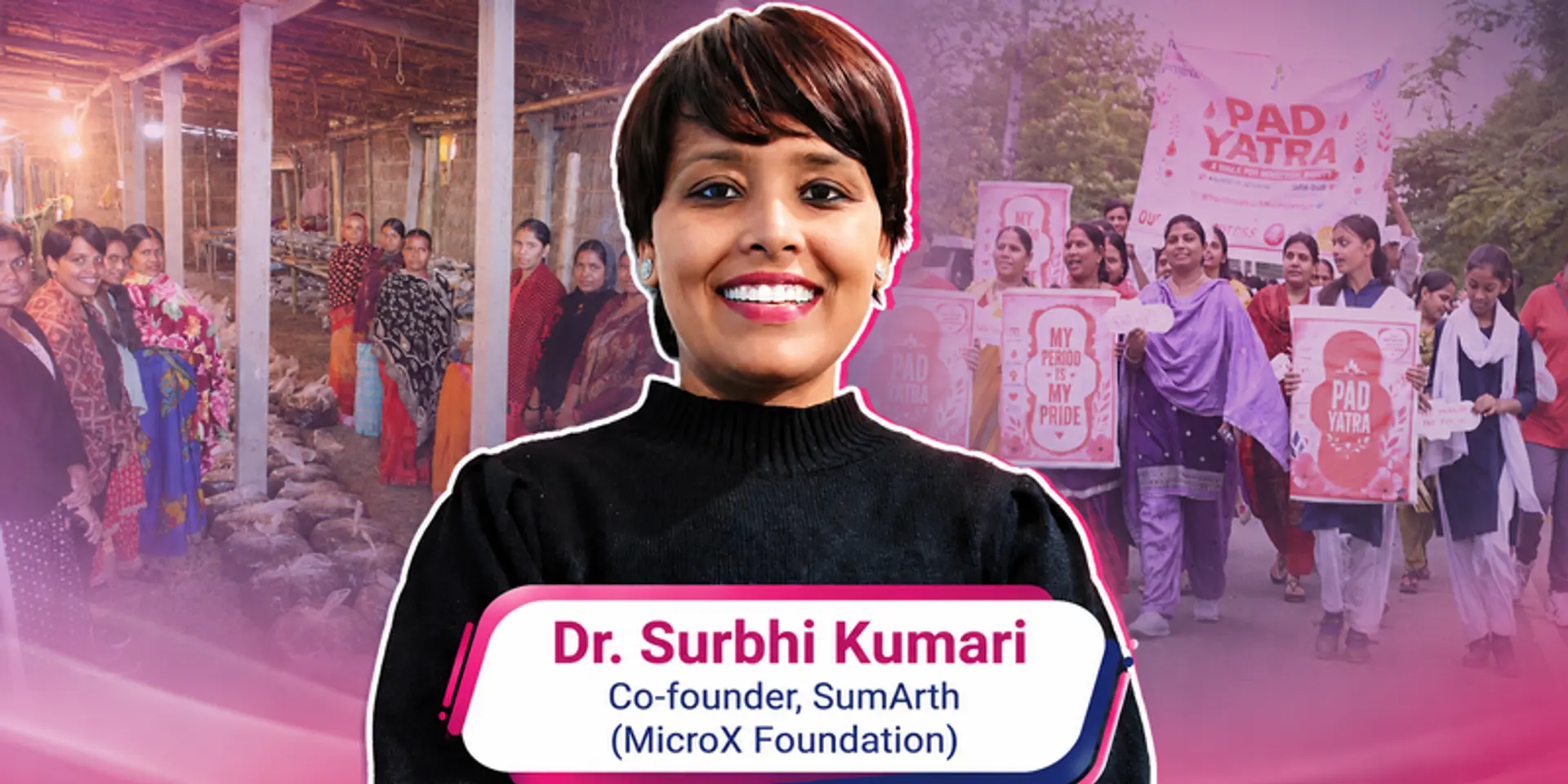

In the villages of Bihar, a new beginning of awareness regarding menstruation has now started to become visible. Many women and adolescent girls are speaking openly about periods, obtaining correct information, and leaving behind the old hesitation associated with it. Behind this change are the continuous efforts of certain people who went village to village to begin a dialogue and gave the message of connecting menstruation with health and dignity. Taking this very initiative forward, a campaign is also being run to make women economically self-reliant by connecting them with mushroom farming. This is not merely a social initiative, but an effort to strengthen a new way of thinking about awareness, dignity and self-reliance.
Among the people through whose sustained efforts this change is becoming possible, one prominent name is also that of Dr. Surbhi Kumari.
Dr. Surbhi Kumari, who is the co-founder of SumArth (MicroX Foundation), was once associated with journalism. Today she is writing a new story of change in the villages of Bihar, connecting together women's health, dignity and livelihood. From open conversation on periods to making women economically self-reliant through mushroom farming, her initiative is becoming a new example of awareness and empowerment in society.
This initiative of hers has come forward at a time when the situation regarding menstrual hygiene in India has improved, but challenges still remain. According to the National Family Health Survey (NFHS-5, 2019-21), about 78 percent of young women aged 15-24 in the country use safe menstrual hygiene products. However, in rural areas both awareness and availability are still major challenges.
The Journey From Journalism to Social Service
Dr. Surbhi Kumari was born into an ordinary joint family in Gaya district of Bihar. The family was large and the financial resources limited. Her grandfather had retired from government service, and the expenses of the entire family were run on that same income. Despite the difficult circumstances, the family considered education to be the biggest investment. This very thinking became the foundation of her personality.
After completing her school education from Nazareth Academy in Gaya, she did her graduation in Communicative English and Media Studies from Patna Women's College. After this she completed her post-graduation in Journalism and Mass Communication, and then completed her PhD while researching on the subject of women's health and menstrual awareness.
During her time in journalism she reported on many social issues. She listened to people's problems and placed their stories before the country. But with time she realised that only writing about problems is not enough; it is also necessary to become a part of the solution.
In conversation with YourStory, Dr. Surbhi says, "Journalism gave me the opportunity to see people's lives closely. But a time came when I felt that change would not come merely from writing about problems. I wanted to live and work among those people whose stories I was writing. That is when I decided that now, along with the pen, I must also work on the ground."
During the Covid-19 pandemic she returned to her home in Gaya. It was here, during conversations with rural women, that she came to know that during menstruation many women would not work in the fields for four to five days. The reason was not only the shortage of sanitary pads; the lack of information and social hesitation were equally big problems.
This very experience became the decisive turning point of her life.
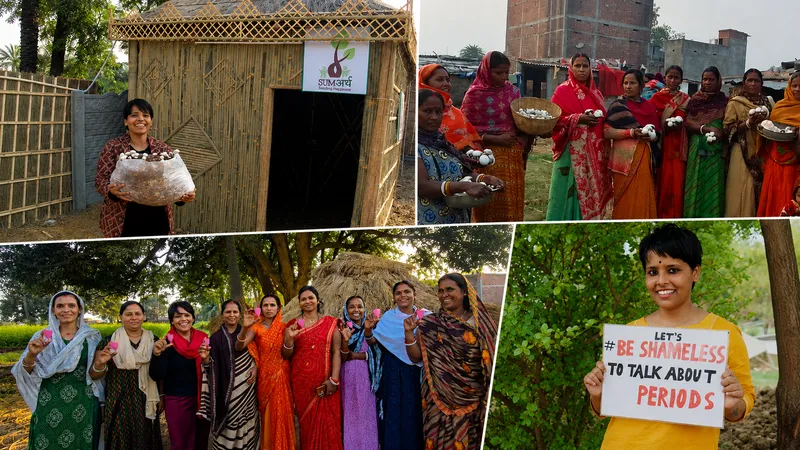
The Beginning of Breaking the Silence on Periods in Villages
Dr. Surbhi started menstrual awareness sessions in the villages. But the beginning was not easy at all.
Many times mothers would take their daughters home from the middle of the programme. Some men would call their wives back, saying that such subjects should not be discussed publicly.
It was then that she understood that the biggest problem was not the lack of information, but the silence that had been going on for years.
It was from here that programmes like Periodshala, SABLA and Pad Yatra began. The objective of these initiatives was not only to give information to girls, but to make the family, teachers, men and the entire community a part of this dialogue.
The padyatras (foot marches) taken out in the villages bring people together. After this, myths related to menstruation are discussed through street plays, community meetings and open dialogue.
UNICEF too believes that menstruation is not merely a subject of health. It is also connected with education, dignity, equal opportunity and women's participation. According to experts, only when men and families become a part of this conversation does lasting change come about in social behaviour.
Dr. Surbhi says, "In the beginning people used to say that talking about periods is wrong. But we did not give up. We understood that change would not come from girls alone. Only when family, men, teachers and the whole society come together will the silence break. Today those same villages are talking openly. This is our biggest success."
In many villages she met women who had seen a sanitary pad for the first time in their lives. Her team then did not limit itself to awareness alone, and also began working on the availability of sanitary pads at the local level and on the livelihood model connected with it.
When Awareness Became the Greatest Force of Change
Dr. Surbhi believes that the success of any social initiative should be measured not only by figures, but by the change that comes about in people's behaviour.
In the past few years her team has delivered menstrual health related information to more than 30,000 women and more than 10,000 adolescent girls across various districts of Bihar.
But for her, the biggest achievement is not the figures, but the change that has come about in thinking.
During one padyatra, many boys of the village were hesitating even to take a sanitary pad in their hands. They thought that it was only a women's thing. Some time later, those very boys became part of the awareness campaign across the entire village with sanitary pads in their hands, and began explaining to people that menstruation is a normal biological process.
Dr. Surbhi says, "We often think that menstruation is only a women's subject. But that is not so. When boys, fathers, teachers and families become a part of this conversation, only then does real change come. I have seen with my own eyes that the children who earlier hesitated even to touch a sanitary pad later began spreading awareness throughout the village."
One incident still makes her emotional.
A woman told her that she deliberately did not bathe during menstruation. She thought that the foul smell coming from her body would keep her husband away from her.
After several counselling sessions, she not only adopted correct menstrual hygiene, but also began speaking openly about her health, her rights and her self-respect.
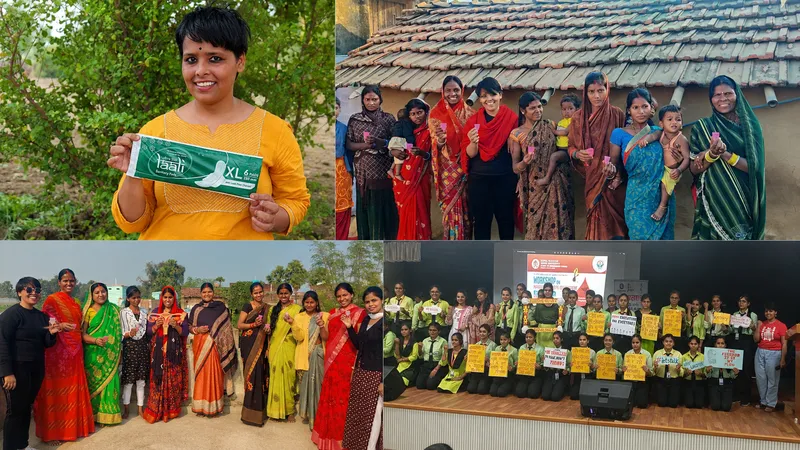
Mushroom Farming Gave Women a New Identity
SumArth's identity is not limited only to period awareness.
The organisation's very beginning was made with the objective of strengthening women's economic self-reliance. For this, the team chose mushroom farming.
According to the Indian Council of Agricultural Research (ICAR), mushroom production can be started in less space, at low cost and in less time. This is the reason it is seen as an effective income-raising model for women's self-help groups and small farmers.
Dr. Surbhi and her team prepared low-cost, climate-friendly mushroom huts made locally from bamboo and kusha grass. These naturally maintain temperature and moisture, due to which dependence on electricity is reduced and production becomes possible throughout the year.
The organisation does not give training alone, but also connects women with technical support, markets and entrepreneurship.
One of the most inspiring stories connected with this initiative is that of Lalsa Devi.
Lalsa Devi, who comes from the Mahadalit community, did not even have a pucca (permanent) house to live in. With SumArth's help she built a climate-friendly mushroom hut, took training, and started mushroom production.
Today she is earning a regular income and has become an inspiration for the other women of her village.
Dr. Surbhi says, "When a woman's first earning comes into her own hands, it is not only her economic condition that changes, her self-confidence changes too. Her voice begins to be heard within the family. For us, mushroom farming is not merely employment, but a medium for giving women dignity and identity."
A Shared Dream of Health, Dignity and Livelihood
Dr. Surbhi believes that the biggest challenge even today is the lack of resources.
Many schools, panchayats and government institutions want to invite her organisation, but because of limited funding it is not possible to reach every place.
She believes that social change does not come from any single workshop. For this, continuous dialogue with the community has to be maintained over a long period of time.
In the coming years, her plan is to take Periodshala, SABLA and Pad Yatra beyond Bihar to other states. Along with this, connecting thousands of women with climate-friendly mushroom farming is her goal.
She wants to develop such a model that in future other organisations and government institutions may also adopt it. With this very objective, her team is also paying special attention to research and documentation.
Dr. Surbhi says, "My dream is that such a society be built where no girl leaves school because of periods, no woman compromises on her health due to a lack of information, and every rural woman has the opportunity of a dignified livelihood. When health, education and economic self-reliance walk together, only then does lasting change come about in society."
The World Bank too believes that when women's economic participation increases, it is not only the income of families that rises, but there is also a positive impact on the local economy, on education and on social development.
Today, when there is fresh discussion on women's health and economic empowerment in rural India, the journey of Dr. Surbhi Kumari conveys an important message.
Change does not always come from grand plans. Sometimes it begins with a question. Sometimes with an open conversation. Sometimes with a padyatra taken out through the lanes of a village. And sometimes with a small mushroom hut.
These very small steps together bring big change into the lives of thousands of women. This is SumArth's greatest story.