



Musk quietly buys APR Energy in $1B deal to power Grok
Elon Musk's APR Energy acquisition, worth over $1 billion, gives him a 1 GW mobile turbine fleet to power xAI's Grok data centres.

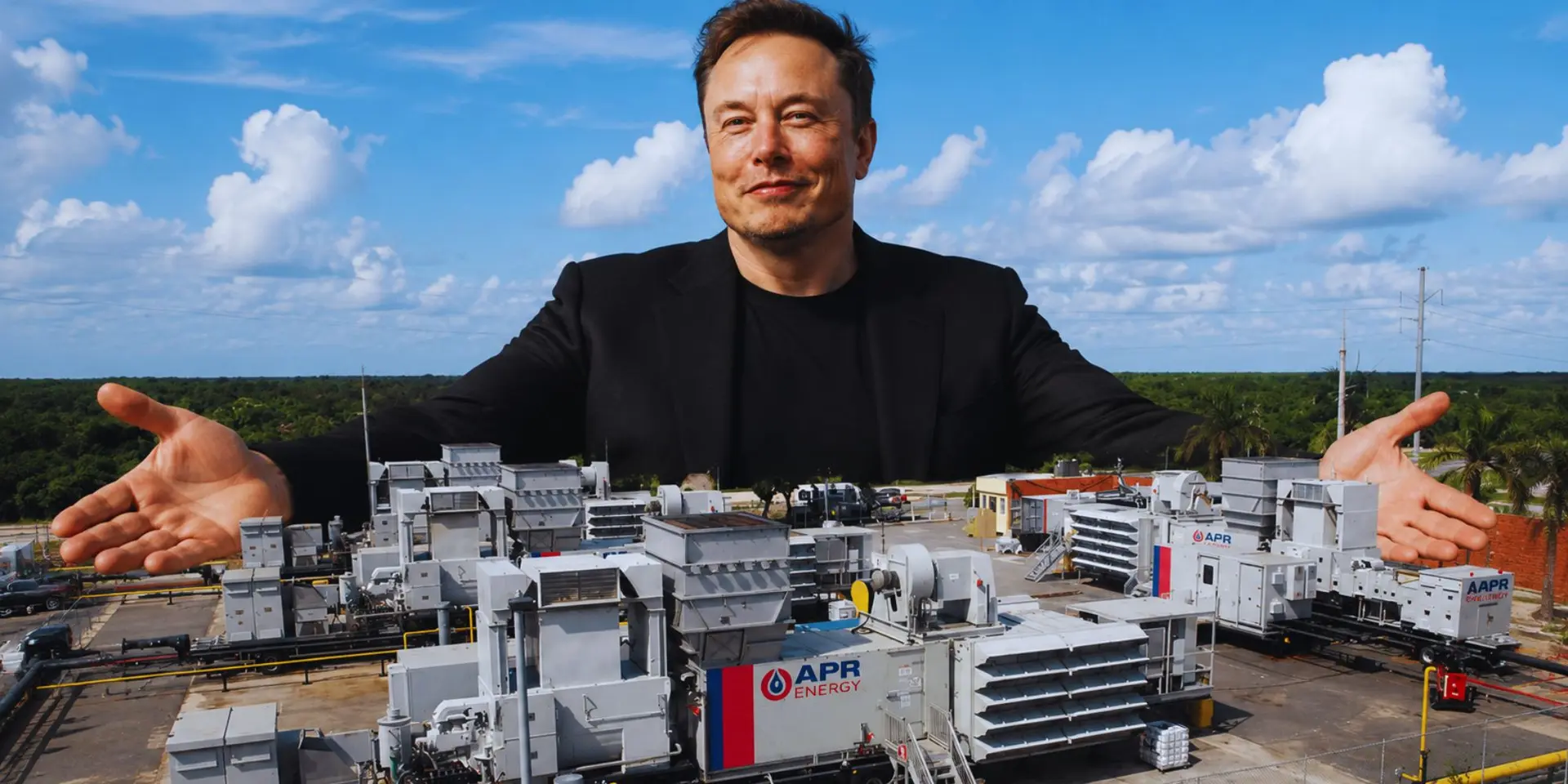

Elon Musk has acquired APR Energy, a Jacksonville-based builder of fast-deployable mobile power plants, in a transaction that surfaced through regulatory paperwork rather than any announcement from the parties involved.
The Elon Musk APR Energy acquisition, valued at more than $1 billion, hands the billionaire direct ownership of a fleet of trailer-mounted gas and diesel turbines capable of generating over 1 gigawatt of electricity, reportedly destined to power the data centres behind xAI's Grok chatbot.
The deal matters because it shows how far AI companies will go to secure electricity, and how much of that race now happens outside public view. There was no press release from Musk, otherwise among the most prolific announcers of his own news.
The deal came to light through a Federal Trade Commission early termination notice, transaction number 20261350, dated 14 May 2026, which lists Musk as the acquiring party and New APR Energy LLC as the acquired entity. The price emerged when Duos Technologies Group disclosed in a 28 May SEC filing that it had sold its 5% non-voting stake for $50.4 million in net proceeds, implying a deal value of at least $1 billion.
APR Energy deploys modular power units on accelerated timelines, typically in markets where grid infrastructure is unreliable or absent. Its turbines can be trucked to a site and generate electricity within weeks, no grid connection required. That capability has become gold dust in the AI era.
Utility interconnection queues stretch for years, while mobile turbines can be running in a month. SpaceX IPO filings show a $2.8 billion commitment to turbine infrastructure. Rather than leasing capacity from a vendor, Musk has chosen to own the vendor.
The governance question behind the deal
The most striking detail is structural. Musk bought APR Energy personally, not through Tesla, SpaceX, or xAI. Personal ownership sidesteps the disclosure obligations, board oversight, and shareholder scrutiny that a corporate acquisition would attract, and lets Musk lease capacity to his own ventures on his own terms.
It also raises an obvious question: if the fleet exists to solve xAI's power problem, why is xAI not the buyer?
APR declined to comment, Fortress Investment Group said it could not comment, and Tesla did not respond to queries. The irony is hard to miss. Musk built his brand, and a good part of Tesla's valuation, on the clean energy transition, from SolarCity to the Powerwall to the vision of a solar electric economy.
Tesla's energy storage arm deployed a record 46.7 GWh of batteries in 2025 with better margins than the car business. Yet the same man now personally owns a fossil fuel combustion fleet, because in the AI race, speed to power beats everything else right now. In December, Musk quietly dropped the word "sustainable" from Tesla's mission statement.
Regulators are already testing the model: after xAI installed as many as 35 unpermitted turbines in South Memphis, the NAACP, the Southern Environmental Law Center, and Earthjustice sued under the Clean Air Act, while the Department of Justice intervened to keep the turbines running on national security grounds.
Why do AI data centres need mobile gas turbines?
Training and running large AI models consume enormous amounts of electricity, and demand is growing faster than grids can expand. Connecting a new data centre to the grid can take three to five years in many markets.
Mobile turbines collapse that timeline to days or weeks, since operators classify them as temporary equipment exempt from air permits, a framing environmental groups dispute. For AI firms burning capital fast, speed wins. xAI reported a $6.4 billion loss in 2025, and idle data centres mean lost ground against rivals.
What does the deal signal for the AI energy race
The purchase points to a parallel energy industry taking shape outside public utilities and, in this case, outside corporate balance sheets altogether. As power becomes the binding constraint on AI, expect more critical infrastructure to sit directly with the individuals who control the AI systems depending on it. The question is no longer whether AI companies will buy their way around the grid, but how visible those moves will be.