



Enerzolve is building Indian silicon and power electronics for the country's electricity grid
The Bengaluru-based startup makes hardware for smart grids and battery storage. It raised $5.1 million in a seed round co-led by Jungle Ventures and Kae Capital.

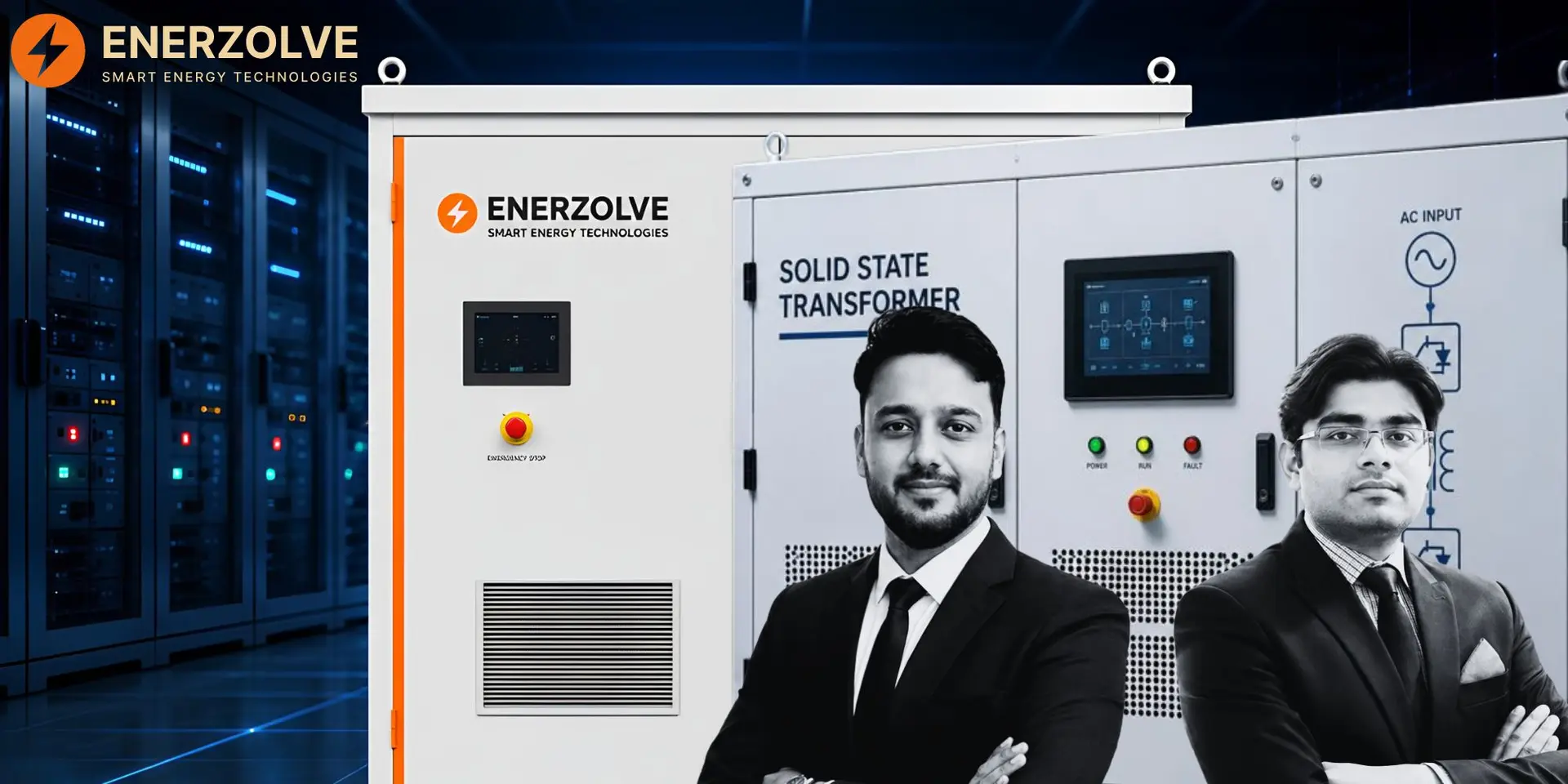

India is rebuilding its electricity grid. The country is rolling out hundreds of millions of smart meters, adding renewable capacity and installing battery storage at utility scale.
All of that runs on hardware. The relays that protect a substation, the meters that measure supply, the electronics that manage a battery system: each is a specialised piece of equipment, and much of it is imported.
Enerzolve, a Bengaluru-based startup, was set up to build that hardware in India. It was founded in 2025 by Abhay Adya, its CEO, and Anupam Kumar Bhatt.
Both come from the industry rather than from a lab. Adya has spent more than 15 years across the energy transition and large infrastructure, with roles at Zetwerk, Sterlite Power, Adani Energy Solutions and Larsen & Toubro. Bhatt worked in renewables and transmission at Zetwerk, and earlier as an electrical engineer in the Gulf region.
Between them, they have around three decades in power, infrastructure and manufacturing, which is the experience their investors have said they were backing.
That background shapes what the company is trying to do. Both founders have spent years on the buying and building side of grid infrastructure, which is where they encountered the gap the company now addresses.
Two segments, one engineering base
Enerzolve works across two areas. The first is smart grid systems, including protection relays, smart meters and analysers, the equipment that measures and safeguards electricity distribution.
The second is energy storage, covering batteries, battery management systems, power conversion systems, inverters and the software that manages them.
What links the two is the company's approach. Enerzolve is developing its own intellectual property across silicon, firmware and power electronics, rather than assembling systems from bought-in parts. It describes this as a full-stack approach, from the chip upward.
The products are designed for Indian conditions, meaning they are built to meet the country's regulatory, safety and cost requirements rather than adapted from equipment designed elsewhere.
That distinction matters in this market. Equipment built for other grids often needs modification to meet Indian standards, which adds cost and delay, and utilities are cautious about hardware that has not been certified locally.
Selling to the utilities
The company sells to utilities, private distribution companies, EPC contractors and storage developers. These are conservative, slow-moving buyers, and the certification requirements are demanding.
Getting through that process is the main barrier for a new entrant, and it is also the protection once cleared. A supplier whose equipment is certified and running on a utility network is difficult to replace.
In January 2026, Enerzolve raised $5.1 million in a seed round co-led by Jungle Ventures and Kae Capital. That is a substantial first round for a company incorporated only months earlier, and it reflects a bet on the founders' record rather than on a shipped product.
The money is going into developing the core technology, building engineering and product teams for the grid and storage lines, setting up pilot manufacturing with certification, and building a sales operation for utility customers.
Manufacturing is the harder half. Designing a relay or a battery management system is one problem; producing it reliably, at cost, and to certification standards is another, and it is where hardware companies most often stall.
The company is at the earliest stage. What it has is capital, industry experience and a market that is expanding quickly. What it has yet to show is products certified and running on the grid.
(This story has been researched and compiled using publicly available information.)