



Former ISRO chief S Somanath joins Agnikul board as startup prepares reusable rocket mission
Agnikul Cosmos said Mission 02 will attempt India’s first recovery of an orbital-class rocket booster while also demonstrating an upper stage that remains operational in orbit instead of being discarded after deploying a satellite.

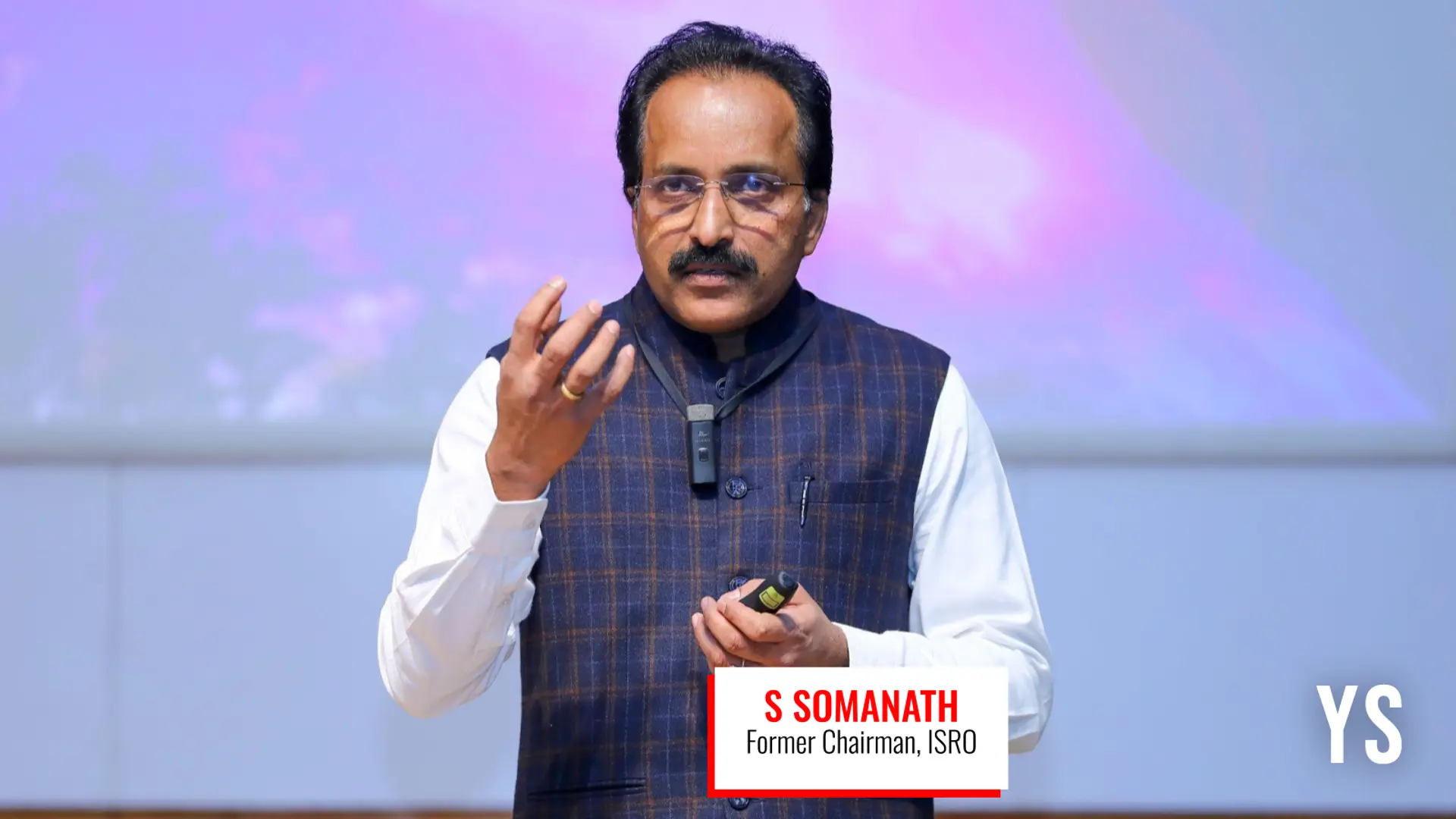

Chennai-based spacetech startup Agnikul Cosmos has appointed former Indian Space Research Organisation (ISRO) chairman Dr S Somanath as an observer on its board ahead of Mission 02, a flight that aims to test two technologies that could shape the future of Indian launch services.
The company said Mission 02 will attempt India’s first recovery of an orbital-class rocket booster while also demonstrating an upper stage that remains operational in orbit instead of being discarded after deploying a satellite.
Back in 2024, Agnikul co-founder and chief operating officer Moin SPM, had shared its rocket reusability and recovery plans with YourStory.
An upper stage is the section that carries payloads into their final orbit. Agnikul’s concept would allow that stage to continue functioning as an orbital platform after completing its primary mission.
Somanath described the programme as an important technical milestone, saying, “Mission 02 is a genuine technical frontier, for India and, in several respects, for the world. The convertible upper stage concept, combined with indigenous semi-cryogenic propulsion and a 3D-printed engine that can be produced in days, is a coherent and defensible technical strategy.”
The appointment of Somanath, who led ISRO during the Chandrayaan-3 Moon landing and the Aditya-L1 solar mission, comes as India’s commercial space sector expands following policy reforms that opened more opportunities for private companies.
The Indian National Space Promotion and Authorisation Centre (IN-SPACe) has been encouraging greater private participation, while the government has introduced measures to support space startups and private launch services.
Explaining the significance of the appointment, Agnikul co-founder and chief executive officer Srinath Ravichandran said, “Dr Somanath’s career is, in many ways, the story of Indian rocketry.”
“He led ISRO through some of its most defining missions... Having him as an observer on our board as we attempt Mission 02 means we have, at the table, someone who has personally navigated the complexity of booster design, stage recovery, and on-orbit operations at the highest level,” Ravichandran added.
Globally, reusable launch systems have become central to the economics of spaceflight. SpaceX has demonstrated the commercial value of recovering and reusing Falcon 9 boosters, substantially lowering launch costs through repeated flights. Other companies, including Blue Origin with New Glenn and Rocket Lab with its planned Neutron rocket, are also pursuing reusable launch vehicles.
“Now we understand why they (SpaceX) did reusability—because it takes a lot of heart to build something and throw it in the ocean,” Moin had remarked.
Agnikul believes that reusable systems are increasingly becoming an industry requirement rather than a technological advantage.
The startup plans to use a two-stage version of its Agnibaan launch vehicle powered by a 3D-printed semi-cryogenic engine, which use a combination of liquid oxygen and refined kerosene, offering higher efficiency than many conventional propulsion systems while remaining relatively practical to manufacture.
Moin said recovering a booster requires “precision at every layer” of engineering, spanning propulsion, guidance, structures and avionics, adding that Somanath’s experience with integrating complex launch systems would be valuable as the company attempts the mission.
The announcement follows Agnikul’s participation in Bharat Innovates 2026 in France, where it signed agreements with Finnish Earth observation company ICEYE and French aerospace group Safran. According to the company, the partnerships are intended to strengthen its international commercial and technology collaborations.
Founded at IIT Madras, Agnikul carried out its first controlled suborbital launch from India’s first privately developed launchpad at Sriharikota in 2024.