



How an Ericsson Castoff Became the Backbone of India’s Fibre Internet: The GX Group Story
GX Group grew from an acquired Ericsson business into a global telecom equipment manufacturer and is now investing Rs 500 crore to produce photonics chips in India.

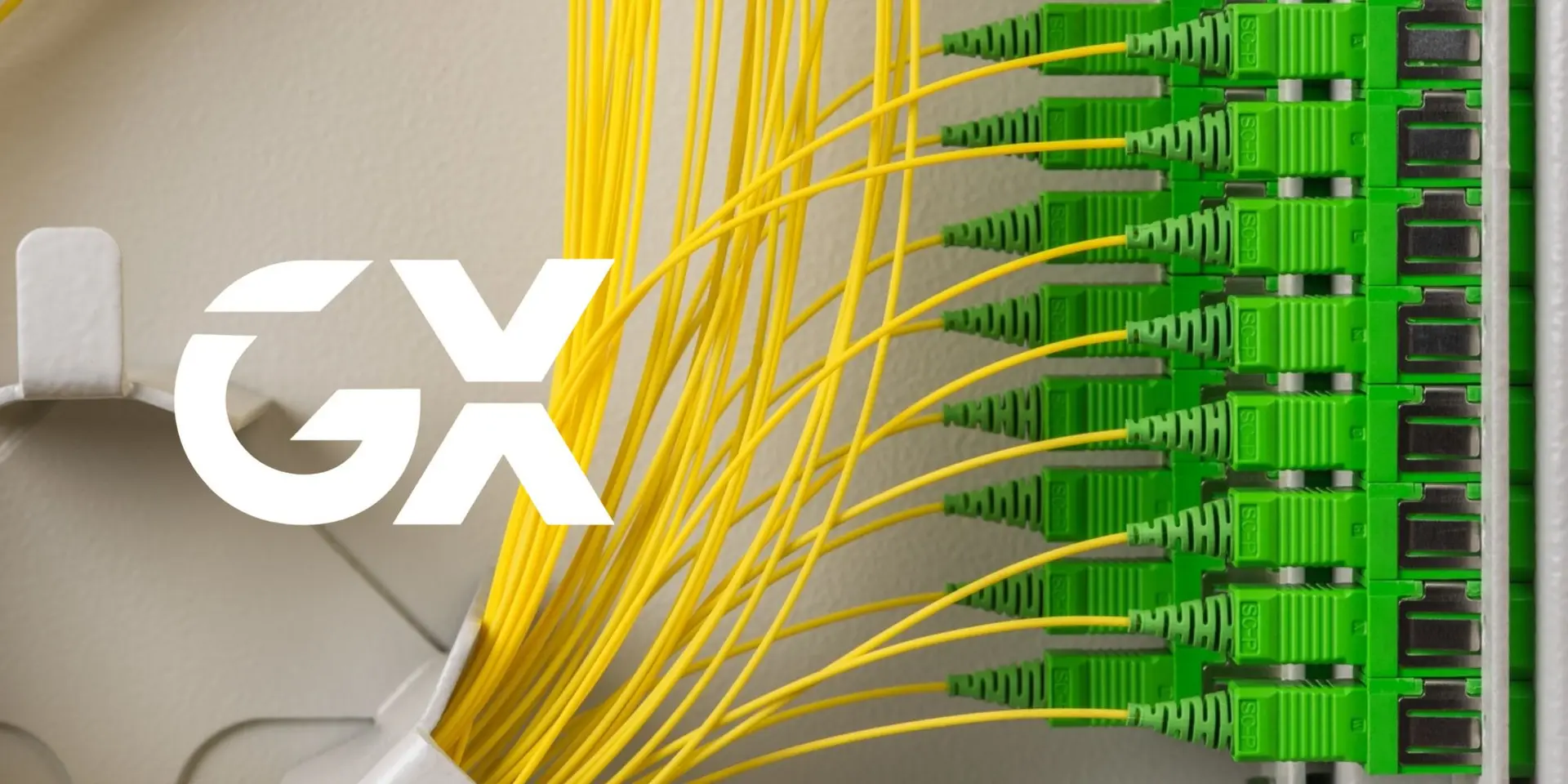

Every time a fibre broadband connection reaches an Indian home, there's a good chance the equipment routing that signal was built by GX Group, a company most Indians have never heard of, despite its gear sitting inside networks run by Bharti Airtel, Vodafone Idea's You Broadband, and state-owned BSNL.
The company built from an Ericsson castoff
GX Group's origin story explains its unusual DNA. It started in 2002 as Genexis, a European broadband equipment maker; its India inflection point came in 2013, when it acquired Ericsson's end-user equipment business from Sweden and expanded pan-India on the back of it. Rebranded GX Group in 2018, it is now a strange hybrid: a Netherlands-headquartered multinational whose CEO, Paritosh Prajapati, has spent a decade turning India from a market it sells into, into the global hub it designs and manufactures from.
The product line is about as far from consumer glamour as manufacturing gets: Gigabit Passive Optical Network (GPON) gear that runs fibre broadband networks, plus Wi-Fi routers, enterprise switches, and IoT devices supplied across Asia, Europe, and Africa. Nobody buys a GPON gateway because they love the brand. They buy it because it has to work, reliably, inside infrastructure millions depend on without thinking about it.
That unglamorous positioning paid off when India's telecom production-linked incentive (PLI) scheme launched. In February 2023, GX became the first telecom gear manufacturer to meet its PLI targets and actually receive the incentives, with the Department of Telecommunications confirming its India arm was the first shortlisted entity to get a cheque, ahead of VVDN Technologies and Commscope India.
From domestic supplier to acquirer of European firms
The growth numbers tell one part of the story. In mid-2024, Prajapati said the company had posted 40% year-on-year growth in consecutive years and projected revenue rising from Rs 300 crore to Rs 500 crore by FY26, with capacity up nearly fivefold since its facility opened. He committed roughly Rs 100 crore to a new manufacturing site, invested in a Chennai R&D centre, and anticipated a 120% export jump to telcos across Africa, Europe, and Southeast Asia by shifting from exporting software to hardware.
The more telling move came in March 2025, when GX did something Indian telecom manufacturers almost never do: it acquired a European company. Ping Communication, a Swiss broadband CPE maker owned by Norway's Heimgard Group, brought a 20-year legacy, roughly $30 million in revenue, and entrenched supplier relationships with Telmex and America Movil, two of Latin America's largest operators. Prajapati called it a milestone in the "Make in India for the World" journey, targeting $50 million in LATAM revenue by 2026 in a region heading toward 134 million home broadband passes by 2027. Distribution deals followed: Ingram Micro India in June 2025, Calculus Networks for Latin America in December, alongside Oman's Al Jassar Group for the Middle East.
The Rs 500 crore photonics bet
The clearest sign of ambitions beyond assembly came in October 2025, when GX launched GX Quantum Photonics Pvt Ltd to build India's first photonics chip development, manufacturing, and R&D hub. The Rs 500 crore Phase 1 is backed by Invest International of the Netherlands and a partnership with SMART Photonics BV, a Dutch leader in indium phosphide photonic integrated circuits, the components that move light through optical networks, LiDAR, and quantum devices.
The plan is unusually concrete: a Manesar headquarters, a manufacturing facility in Bhiwadi, Rajasthan, Chennai R&D expansion, and over 300 direct jobs at a company employing around 250 people in India. Operations commence by Q1 FY27, with locally made chips reaching the market by October 2026, targeting a $50 billion opportunity spanning AI data centres, 5G/6G, EV LiDAR, and quantum communication. If that rollout lands on schedule, GX would produce photonics chips in India months before most headline semiconductor fabs produce anything at all.
Why this story matters
GX Group runs against the familiar Indian manufacturing narrative of cheap labour, thin margins, and assembly for someone else's brand. It began by buying a business Ericsson no longer wanted, used the PLI scheme better than anyone, and now reverses the usual technology flow: acquiring European firms and pushing India-made hardware into Latin America through Swiss channels. Nobody sees a GPON gateway and wonders where it came from. But behind fibre connections from Bengaluru to Mexico City, there's a reasonable chance GX built the box, and by this October, the chips inside may be Indian too.