



ePlane signs five suppliers as India's electric air taxi takes shape
Days after revealing the full-scale PT-01 prototype in Chennai, the IIT Madras-incubated startup signed five supplier partnerships covering wiring, fasteners, avionics, composites and interiors for its e200X electric aircraft

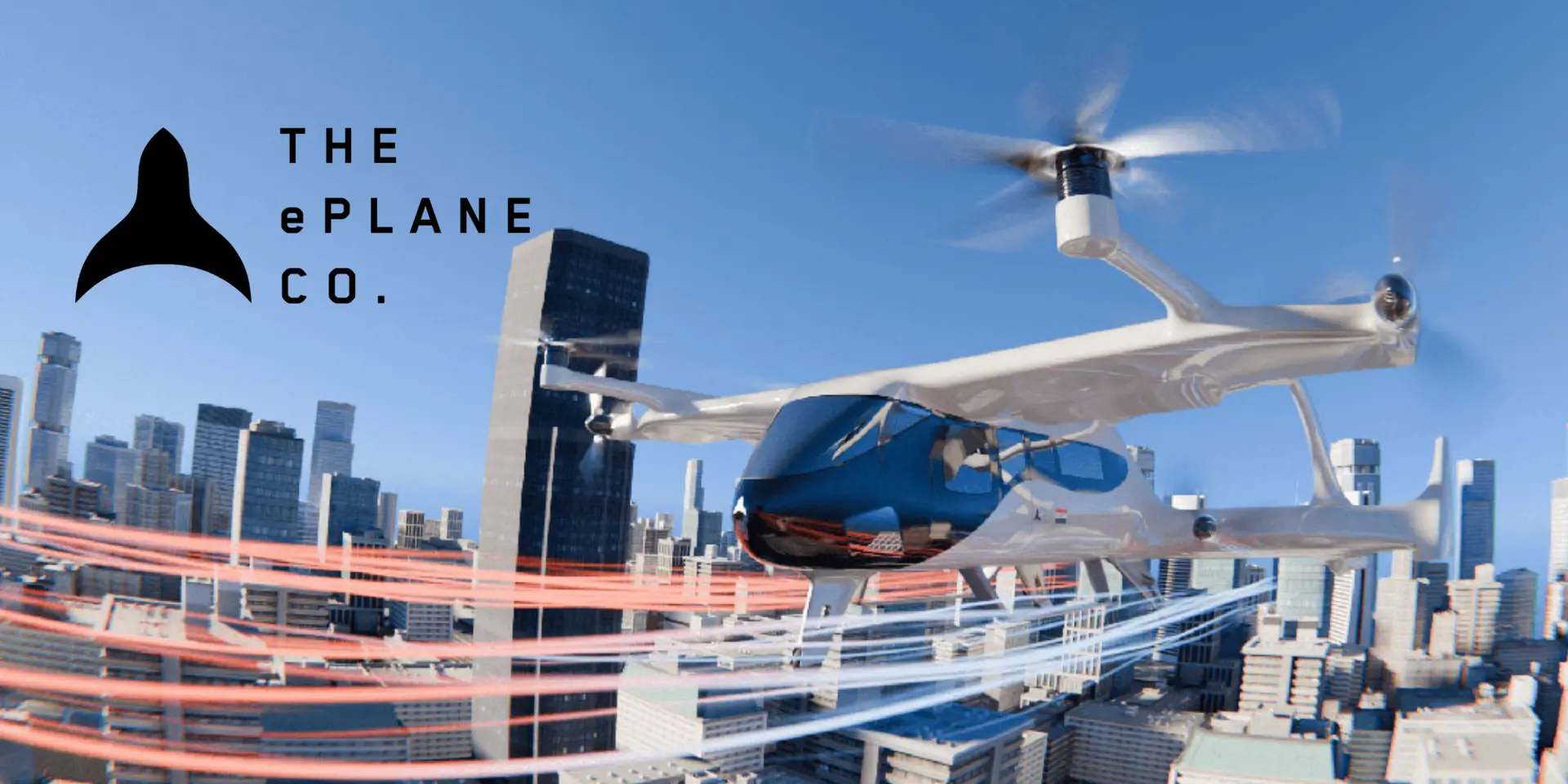

The future of urban transport may not stay on the roads for much longer. India has taken a significant step towards an indigenous electric air taxi as IIT Madras-incubated startup The ePlane Company unveiled its full-scale prototype, the e200X, and followed it up with five supply chain partnerships aimed at building the aircraft largely within the country.
The prototype, designated PT-01, was revealed at the company's new 60,000 sq ft manufacturing facility on the IIT Madras Discovery Campus in Chennai. The partnerships were announced at the Farnborough International Airshow in the United Kingdom, held from 20 to 24 July 2026, where the aircraft was also showcased.
A new approach to city travel
The e200X is an electric vertical take-off and landing aircraft, better known as an eVTOL. Unlike conventional aircraft, it can take off and land vertically like a helicopter before transitioning into forward flight. Since it does not require a runway, the aircraft is designed for cities where land is scarce, and traffic congestion is a daily challenge.
The prototype is expected to support passenger transport, cargo deliveries and emergency medical services. It measures 8 metres by 11 metres, weighs 2.2 tonnes, and is designed to carry a pilot plus 200 kg of payload, either two passengers or cargo, over an operational range of about 110 km. The airframe is built from carbon-fibre composites, and the compact footprint is intended to allow operations from existing helipads and open spaces rather than purpose-built vertiports.
Developed through IIT Madras innovation
Founded in 2019 and incubated at IIT Madras, The ePlane Company operates as Ubifly Technologies Private Limited and is led by Prof. Satya Chakravarthy, its Founder and CTO. The Chennai-based startup has raised $21.5 million from investors including Speciale Invest, Antares Ventures, Micelio Mobility and Naval Ravikant.
The company's vision centres on improving what is known as mid-mile mobility, which refers to travel between important locations within a city over moderate distances. Its Synergistic Lift wing architecture, which uses separate propulsion systems for vertical lift and forward flight, is patented across multiple jurisdictions.
Five partners for a Made-in-India electric air taxi
Alongside the prototype unveiling, the company signed five strategic partnerships and memoranda of understanding with Ankit Aerospace, SASMOS HET Technologies, Azista Aerospace Composites, HENSOLDT and AMS Heli Design to support the manufacturing and supply chain ecosystem for the e200X programme.
The agreement with SASMOS HET Technologies covers the Electrical Wiring Interconnection System for the e200X, spanning wiring architecture, engineering, manufacturing and certification readiness, with scope to extend into high-voltage power distribution units, motor controllers and electronic speed controllers. Ankit Aerospace will supply aerospace-grade fasteners, and already supplies fastening components to ISRO, HAL, NAL and DRDO. Azista becomes a strategic supplier of composite materials including carbon fibre and glass prepregs for airframe and radome applications, while AMS Heli Design will work on modular interiors and seating. The partnership with HENSOLDT Avionics, first announced in February 2026, was reaffirmed, with the company continuing to supply the avionics suite and flight radar.
What a supply chain partnership actually means for an aircraft programme
An aircraft is not a single invention. It is thousands of certified parts, and every one of them has to be traceable to a supplier that a regulator will accept.
For a startup, this is often the harder half of the problem. Building a prototype proves the physics works. Building the same aircraft repeatably, with fasteners, wiring and composites that meet aviation-grade standards and come with the paperwork to prove it, is what converts a prototype into a certifiable product.
That is why these five agreements matter more than they might appear. They are not funding announcements or order books. They are the beginning of a vendor base that the Directorate General of Civil Aviation will eventually audit.
The air ambulance comes first
The ePlane Company also signed a memorandum of understanding with Apollo Hospitals to integrate electric air ambulances and medical delivery drones into India's emergency healthcare system, with Apollo indicating its intent to examine possible orders for e200X aircraft and for drones built by ePlane subsidiary Amber Wings. The memorandum also leaves open the possibility of a future strategic investment by Apollo, subject to further agreements.
The startup had earlier signed a memorandum of understanding in February 2025 with air ambulance operator ICATT for 788 e200X aircraft. The company says it has secured commitments for more than 800 aircraft in total. These are intent-stage agreements rather than firm orders, and neither aircraft quantities nor contract values have been confirmed as binding.
Flight tests still ahead
Although the unveiling marks an important milestone, the aircraft is still under development. PT-01 is currently undergoing ground testing, and a second prototype is being built for flight testing. Certified flight trials are targeted for mid-2027, and commercial services will only begin after extensive testing, certification and regulatory approvals are completed.
The startup has already achieved an important regulatory milestone by becoming the first private Indian company to receive Design Organisation Approval from the Directorate General of Civil Aviation for an electric aircraft. The type certification process for the e200X has been underway since December 2024.
What it means for India
India's major cities continue to face rising traffic congestion, pollution and long commuting times. While electric flying taxis are unlikely to replace buses, metro systems or conventional taxis, they could provide an efficient alternative for emergency medical transport, time-sensitive cargo deliveries and premium urban travel.
The next twelve months will be more telling than the unveiling was. Ground testing has to clear without structural surprises, the second prototype has to fly, and five supplier relationships have to harden into certified, audited sources. If The ePlane Company gets through that sequence on schedule, India will have moved from having an eVTOL design to having an eVTOL industry, which is a considerably harder thing to build.