



Did you know Wimbledon’s iconic towels are made in Gujarat?
Made in Gujarat and carried home by tennis champions, Wimbledon’s official towels reveal how Indian manufacturing quietly powers a global sporting tradition.

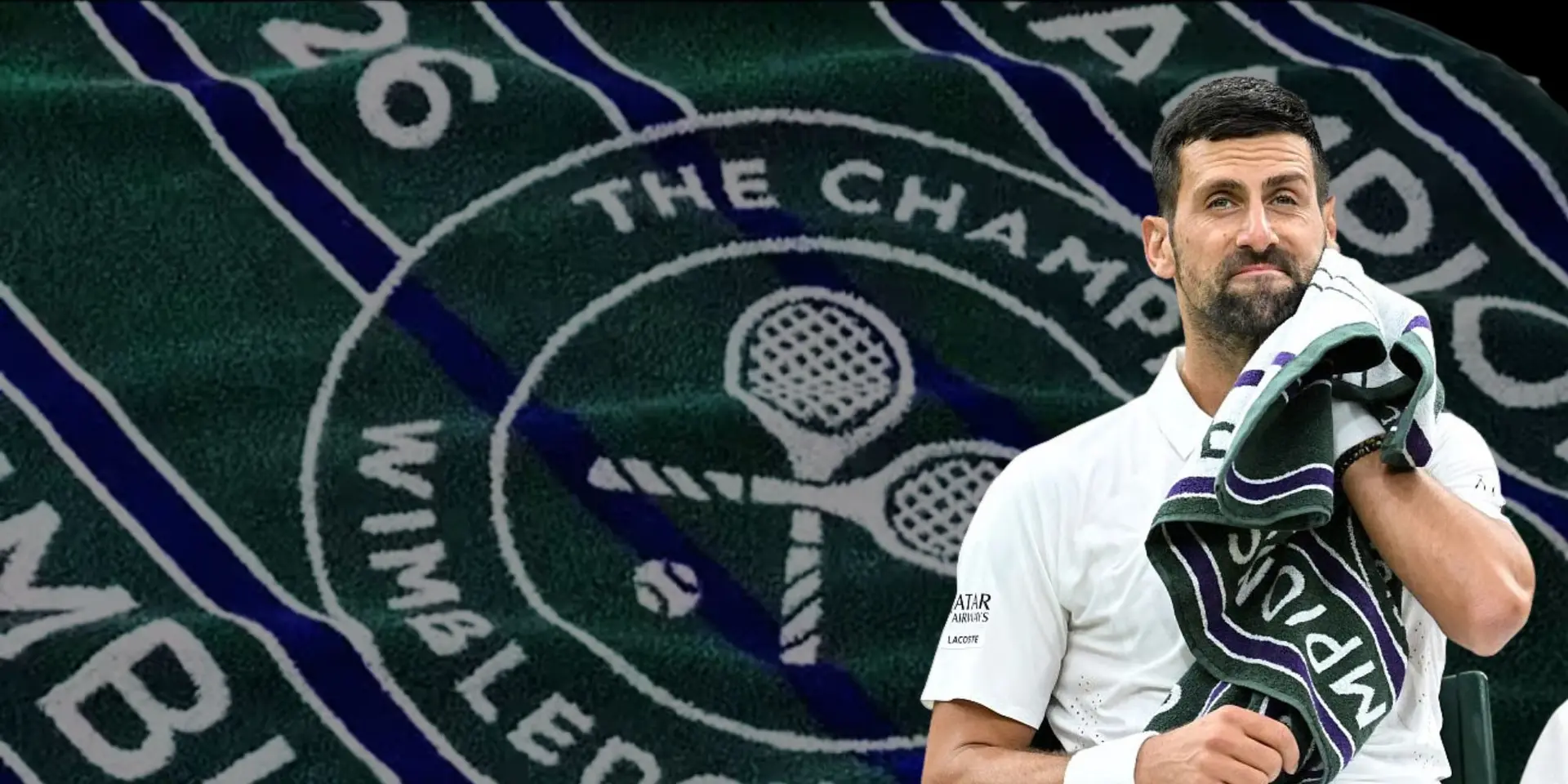

The story starts in 1850, when a Manchester cotton mill named Christy began weaving what would become some of the most famous towels in the world, reportedly crafting one of its earliest pieces for the Queen of England. Christy became Wimbledon's official towel supplier in 1987, and for the next two decades the towels were designed, woven and finished in Britain, a genuinely British object serving a genuinely British sporting institution.
That changed quietly in 2006, when Welspun, the Indian home textiles company, acquired Christy. Manufacturing didn't move overnight. The brand's design heritage stayed rooted in Christy's Manchester studio, but production gradually relocated to Welspun Living's facilities in Gujarat, with the shift completed by 2010. Since then, every official Wimbledon towel, the ones players wipe their faces with, drape over their shoulders and famously carry home in their luggage, has been woven in India.
What it actually takes to make one
This is not a quick, cheap production line. Each year's towel design is finalised roughly 18 months before the tournament begins, with Christy's designers working through colour palettes and patterns that need to read clearly on television under stadium lighting. The men's towels stick to Wimbledon's signature green, purple and gold. The women's towels get a refreshed seasonal palette every year. This year's edition came in red and white, and fans promptly nicknamed it the "strawberry towel."
Each towel takes about seven days to produce, using a technique called yarn-dyed jacquard weaving, where coloured yarn is woven directly into the fabric rather than printed on top of it. That is what gives the towels their reversible, richly textured design, and it's why a pulled thread won't unravel the pattern.
The towels are made at Welspun Living's facilities in Vapi, in Gujarat's Valsad district, and Anjar, in Kutch. The parent Welspun group counts among the largest home textile manufacturers in the world, and its Anjar plant has eliminated freshwater consumption entirely, running on treated sewage water instead.
The souvenir the club stopped fighting
For years, players were expected to return their towels after matches. That rule barely survived contact with reality, and Wimbledon has since given up the pretence. Players are no longer routinely expected to hand their towels back, and Christy estimates only around 15% of official towels come back each year. During the 2025 Championships, an estimated 500 towels went missing every single day.
The players are unapologetic about it. Novak Djokovic revealed back in 2016 that he carries an extra suitcase to Wimbledon just for towels, admitting he fulfils plenty of requests from people back home and joking that he pretends to sweat more to get extra ones. Roger Federer collected them as gifts for family and friends. When Iga Swiatek's towel-collecting habit went viral, her response was simply: "So I guess I should steal even more."
The club, for its part, has decided this is a feature rather than a bug. All England Club chief executive Sally Bolton has said she is delighted the towel is such a sought-after item, pointing to shop sales as proof that fans want to own one as badly as the players do. The retail version sells for around 40 pounds, and people queue for it.
Why this is bigger than a towel
It would be easy to read this as a quirky trivia fact, and it is genuinely a good one. But it is also a clean illustration of something much bigger happening quietly across global manufacturing: the most visible, most nationally coded objects at the world's most traditional institutions are increasingly made somewhere else entirely, and almost nobody watching notices.
India's textile industry didn't win this business by being loud. It won it by being good enough, reliable enough and cost-efficient enough that a 176-year-old British heritage brand was willing to hand over the one part of the process, the actual making of the thing, that customers assumed was non-negotiable.
Sometimes the most convincing proof of a country's manufacturing strength isn't a headline. It's a towel draped over a champion's shoulders on Centre Court, and the fact that nobody thought to ask where it came from.