



How meaning helps us endure life's toughest challenges
Discover how purpose and meaning can build resilience, transform adversity, and help you navigate life's challenges with greater strength.

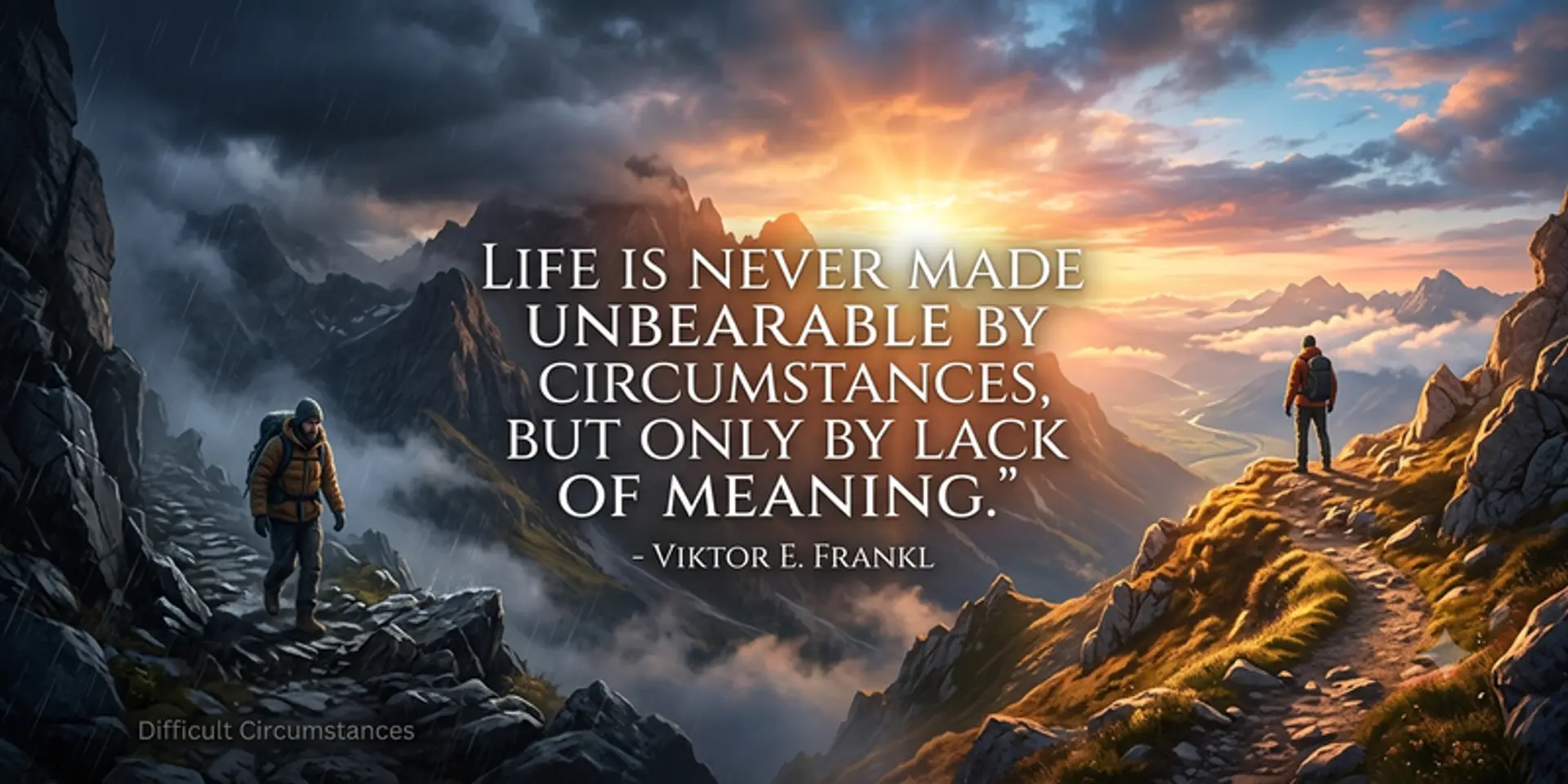

“Life is never made unbearable by circumstances, but only by lack of meaning.” This insight, often associated with psychiatrist Viktor Frankl, proposes that while external events can be harsh, what most determines our capacity to endure is the sense of purpose we attach to our experiences. In a world that can feel unpredictable, that claim is neither a denial of pain nor a promise of easy fixes; it is a practical lens for understanding how people persist, adapt, and sometimes even grow through adversity.
What the quotation really suggests
The statement contrasts two forces that shape human experience: circumstances (which we often cannot fully control) and meaning (which we can influence). Meaning does not remove difficulty; it changes the way difficulty is interpreted and faced. A demanding job, a health setback, or a family challenge may remain objectively hard. Yet when these are linked to values such as responsibility, love, learning, or service, the same facts can feel more manageable and more worth enduring.
- Circumstances describe what is happening; meaning explains why it matters.
- Circumstances can limit options; meaning can expand motivation within those limits.
- Circumstances change over time; meaning can provide continuity and direction.
Evidence from psychology and beyond
Research in psychology has repeatedly linked a sense of meaning or purpose in life to resilience, lower stress responses, and better mental and physical health indicators. Purpose helps organise attention (what to focus on), sustains effort (why to keep going), and integrates setbacks into a larger story (how this fits). In healthcare, patients who connect treatment to personally significant goals often adhere more consistently. In workplaces, employees who see how their tasks contribute to valued outcomes report higher engagement and persistence. These findings do not imply that meaning is a cure all. Rather, they show that interpretation is an active ingredient in coping. People draw from values, relationships, faith traditions, community roles, and creative pursuits to build frameworks that make effort and sacrifice intelligible.
Practical ways to cultivate meaning
- Clarify values: List the qualities you want your actions to express (e.g., learning, compassion, reliability). Use these as guides when choosing among difficult options.
- Define small, purpose-linked goals: Break challenges into steps that clearly serve something you care about. Progress toward valued aims is energising even when outcomes are uncertain.
- Tell a coherent story: Write a brief narrative about what you are facing, what it asks of you, and who you aim to become through it. Coherence reduces mental noise.
- Invest in relationships: Support and contribution are powerful sources of meaning. Schedule regular check-ins, shared projects, or acts of service.
- Create rituals: Simple, repeated actions, journaling, walks, and gratitude reviews anchor attention to purpose amid changing conditions.
- Match skills to service: Identify strengths and find one concrete way to use them for someone else’s benefit each week.
Important nuances and limits
- Meaning does not minimise hardship. Structural barriers, trauma, and material constraints are real and often require collective solutions.
- Choice is not equal for everyone. Access to resources, safety, and time affect how flexibly people can pursue purpose.
- Seek support when needed. Persistent distress, numbness, or hopelessness may signal that professional help could be valuable alongside meaning-making efforts.
Applying the idea in daily life
Consider one current challenge. Name the value it can express if approached deliberately. Identify the next small, observable step that enacts that value today. Then, note how taking that step changes your sense of control or direction. Repeating this cycle value, step, and reflection builds a habit of linking action to purpose, even when circumstances remain difficult.
Why it matters
We cannot always choose our circumstances, but we can cultivate the meanings that guide our response. When effort serves a value we endorse, burdens become bearable not because they shrink, but because they are carried in service of something larger. Meaning, in this sense, is not a luxury; it is the framework that turns endurance into direction and adversity into a chapter of a coherent life.