



Misfortunes that never happened: the hidden cost of fears on
Explore how anticipatory fear makes us suffer over events that never occur, and learn practical ways to break the cycle of worry and anxiety.

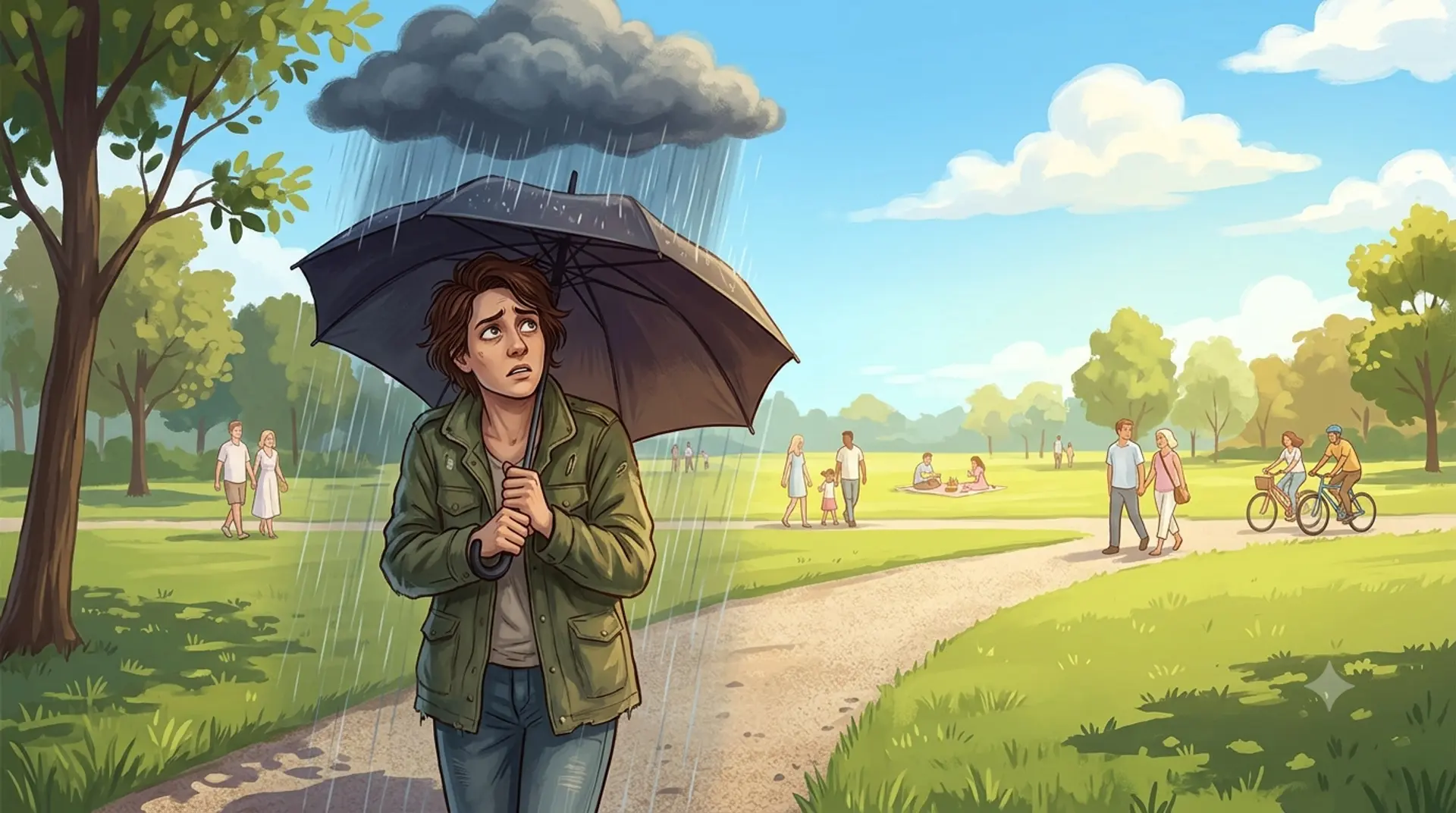

“My life has been full of misfortunes, most of which never happened” captures a paradox of human cognition: we spend vast energy anticipating problems that do not materialize. The line is commonly attributed to Michel de Montaigne, and regardless of exact wording across translations, its point stands. Anticipatory fear frames the future as a sequence of threats, nudging us to overinvest in imagined disasters while underinvesting in opportunities and present well-being. The statement is not an argument against planning; it is a caution against mistaking anxious prediction for certain reality.
Why do our minds expect misfortune
From an evolutionary perspective, false alarms were cheaper than missed dangers. That bias lingers. Modern life is safer than the past, yet our threat-detection systems remain sensitive. News cycles highlight rare catastrophes, social media amplifies worst-case anecdotes, and work cultures may reward vigilance. The result is a mental environment where potential losses feel vivid and imminent. This tilt toward caution helps in true emergencies but distorts everyday judgment when applied indiscriminately to uncertain, low-probability outcomes.
The psychology behind imagined disasters
Several well-studied mechanisms fuel worries that rarely come to pass. Negativity bias makes losses loom larger than equivalent gains. The availability heuristic leads us to overestimate the likelihood of events that are easy to recall or dramatise. Intolerance of uncertainty turns open questions into perceived threats, and catastrophizing chains small risks into sweeping consequences. Probability neglect shifts attention from how likely something is to how awful it would be. Together, these tendencies nudge us to confuse emotional intensity with objective likelihood.

The hidden costs of expecting the worst
Persistent worry carries opportunity costs. It consumes attention that could be used for learning, creativity, or relationships. Physiologically, chronic stress worsens sleep and impairs immune and cardiovascular function. Decision quality can degrade as we avoid healthy risks, overinsure against trivial threats, or endlessly delay. At the organisational level, teams that preoccupy themselves with remote contingencies may miss timely execution. The irony is stark: in trying to prevent misfortune, we can create a different kind of loss—time and vitality we cannot reclaim.
Separating real risk from rumination
A practical approach is to treat worry as a hypothesis, then test it. First, clarify control: what is within your influence versus merely of concern. Second, estimate both likelihood and impact using rough ranges rather than a single guess; low-likelihood and high-impact is not the same as likely and mild. Third, seek disconfirming evidence and base rates, not just vivid stories. Fourth, time-box planning: define a brief window to identify actions and contingencies, then return attention to execution. Finally, convert insight into small, scheduled steps to reduce the risk you can control.
Habits that make worry work for you
Create a daily worry window to contain rumination, writing down concerns and next actions. Use if-then plans to predefine responses to plausible triggers. Externalise fears by summarising them in one or two sentences; concise wording often shrinks vague dread. Calibrate with data where possible, such as historical frequencies or expert checklists. Practice exposure to uncertainty by making small decisions with incomplete information and observing outcomes. Brief mindfulness or breathing exercises can reduce physiological arousal, while consistent sleep, movement, and social connection improve baseline resilience. If anxiety is persistent and impairing, consult a qualified clinician.
When imagining problems is useful
Constructive anticipation differs from anxious looping. Scenario analysis, pre-mortems, and risk registers translate worry into plans with owners, triggers, and thresholds. The key is proportionality and closure: define in advance what evidence would change your stance, and avoid revisiting decisions without new information. By pairing foresight with criteria for action, you keep the benefits of preparation without the tax of chronic rumination.
Bottom line
The quote reminds us that attention is a finite resource. Much of what feels threatening never occurs, but the costs of rehearsing it are immediate. Use your mind’s protective instincts as a tool—quantify, test, and plan where it counts—while declining to pay ongoing interest on unlikely debts. In doing so, you preserve energy for real risks, genuine opportunities, and the present moments from which a good life is actually built.