


Hostinger
View Brand PublisherNo code, no developer, no waiting: How AI is rewriting the rules for India's MSMEs
For small business owners across India, getting online used to mean months of effort and money they didn't have. AI has changed the math entirely.


Until recently, getting a business online meant hiring a developer, waiting weeks for a website, and spending money many MSMEs couldn't afford. Today, a business owner can describe their idea in plain language and have a live website before the day ends.
That's not a small shift. India's MSME sector contributes over 31% of the country's GDP, nearly 49% of its exports, and supports more than 32 crore livelihoods. For a segment this large, the question of who gets to have a digital presence and on what terms has real economic consequences.
And yet, the majority of Indian MSMEs still rely on social media pages or third-party marketplace listings rather than owning their web presence. The reasons aren't hard to understand. A professional website used to mean hiring a developer, navigating unfamiliar platforms, configuring plugins, and waiting weeks for something functional. For a small business owner already stretched thin, that was often a cost in time and money that didn't make sense. A social media page was free, immediate, and good enough.
The problem is that good enough comes with conditions. A business that exists only on Instagram or a marketplace doesn't own its presence. It can't control how its work is presented or how customers experience it. One algorithm update, one policy change, and visibility disappears overnight.
The evolution of the website builder
The tools available to small businesses have been improving for years. Platforms such as Wix, Squarespace, Shopify, and WordPress gradually lowered the barrier, templates replaced custom code, drag-and-drop editors replaced developers, and monthly subscriptions replaced high upfront costs. These platforms genuinely helped millions of small businesses get online, and they continue to do so.
The latest generation of AI-native tools is taking this a step further. Rather than asking a business owner to choose a template, configure a layout, or connect a payment gateway manually, they generate a complete, working website from a plain-language description. According to a 2026 study by Vi Business, 57% of Indian MSMEs now see AI as an important driver of business growth, while around one in four have already integrated AI into their operations. The infrastructure is arriving at a moment when small businesses are ready for it.
When building a website became a business decision, not a technical one
Hostinger's AI Builder is one example of how this category is developing. A business owner describes what they do, in plain language, or in over 80 languages, including Hindi, Bengali, Tamil, and Telugu, and the tool generates a complete site from that description, including code, file structure, and backend. No templates to configure, no plugins to install, no developer to brief. Plans start at Rs 609 per month.
What gets built from there expands quickly. Within the first 30 days, most first-time users move beyond a basic site: payment integrations go live, Razorpay and UPI support mean Indian businesses can accept payments immediately, and backend features like user logins and data storage are added all through prompts. The range of what MSMEs are building reflects how much the definition of a website has changed. Booking and appointment systems, product catalogues with checkout, client portals, inventory trackers, tools that previously required a developer and a meaningful budget are now within reach of a first-time user on day one.
It is worth being clear about what AI website builders are and aren't suited for. Businesses with highly customized applications, complex integrations, or enterprise-scale requirements will likely still need developers or specialist agencies. AI-generated content, particularly for legal documents, SEO, and accessibility, benefits from human review before being relied upon. But for the many MSMEs whose primary need is a credible, functional digital presence, these tools have changed what's possible.
Building in the language you think in
For business owners in Tier II and Tier III cities, the barrier to getting online was never just technical. It was also linguistic. Research consistently points to regional-language and voice-based channels as the primary routes through which many Indian MSMEs engage with digital tools, reflecting the reality that a large share of business owners think, operate and communicate in Hindi, Tamil, Telugu or Bengali rather than English.
Hostinger's AI Builder supports prompts in more than 80 languages, and the full interface, pricing, and support content are available in Hindi at hostinger.com/in-hi, developed through rounds of usability testing with Hindi-speaking participants. A business owner in Kanpur or Coimbatore can describe their entire website in the language they work in. The AI handles the rest. Hostinger also operates a dedicated data center in Mumbai, meaning Indian customers benefit from local server performance and data that stays within the country.
AI's role increasingly extends beyond website creation
Getting a site live is only part of the equation. For an MSME owner with no dedicated marketing or operations team, what happens after launch matters just as much. Hostinger's AI agent, Kodee, handles over 500 admin-level tasks on demand, backups, DNS configuration, store management, and billing support, and according to the company, was managing 86% of all customer support interactions on the platform by early 2026.
Five specialist AI agents are also accessible directly from the dashboard: an SEO consultant, a content writer, a marketing planner, a legal advisor, and a business advisor. Keyword research, blog posts, email campaigns, privacy policies, and pricing strategy tasks that would previously have meant hiring a freelancer or consultant can now be handled through a prompt. For a business owner running operations alone, that represents a meaningful reduction in what needs to be outsourced.
From stability to growth: The Technofet case
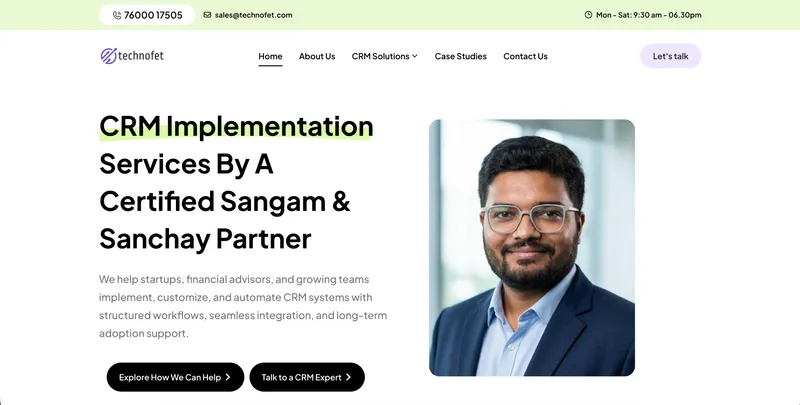
For Technofet, a digital services firm managing websites for multiple clients, the move to Hostinger wasn't about new features. It was about reclaiming time that was being lost.
Before the migration, the team was regularly dealing with malware infections and security breach problems that hit multiple client sites at once. Cleaning infections, fixing compromised files, and managing the fallout consumed hours that should have gone toward client work. After switching to Hostinger, the security issues stopped. The outcome was straightforward: 10 to 15 hours saved every week, redirected from troubleshooting toward growth. For a small team, that reallocation is significant.
The type foundry that runs on two people and one dashboard
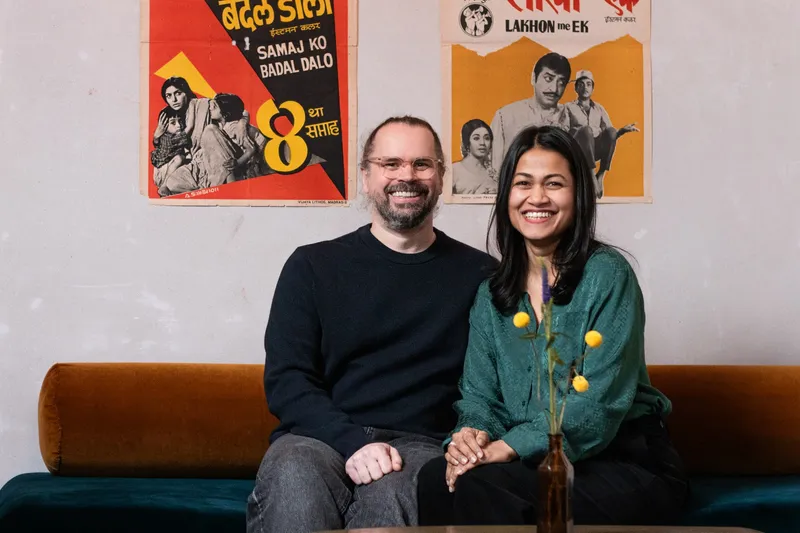
Mota Italic, the type foundry co-founded by Rob Keller and Kimya Gandhi, has been operating as a two-person studio for nearly two decades. In that time, they've built a retail library of 17 type families and 609 individual fonts, and completed 43 custom projects, managing all of it, including multiple websites, from a single Hostinger dashboard.
Before the move, the website was a recurring source of stress. Downtime, manual fixes, things breaking unexpectedly. After it, the dynamic shifted. "Now I don't have to worry about the website. It's just working," Keller said. For Gandhi, who had long delayed building her own personal site because it felt too technical, the availability of visual tools changed her relationship with the process entirely. "I'm glad that it's not like something that you have to sit and write code," she said.
The shift that's already under way
India's MSMEs no longer face the same question they did a decade ago. Getting online is no longer the hard part. The question now is how quickly a business can turn an idea into a digital presence it owns, controls, and can build on without needing a developer, a large budget, or a technical team to make it happen.
The tools are here. The language barrier is shrinking. The cost barrier has largely collapsed. What remains is the decision to go.