



Paar Autonomy is building the eyes for India's drones, ground robots and boats
Founded by a former Asteria Aerospace product lead, the Bengaluru startup makes multi-sensor perception hardware and agentic AI for unmanned vehicles across air, land and sea.

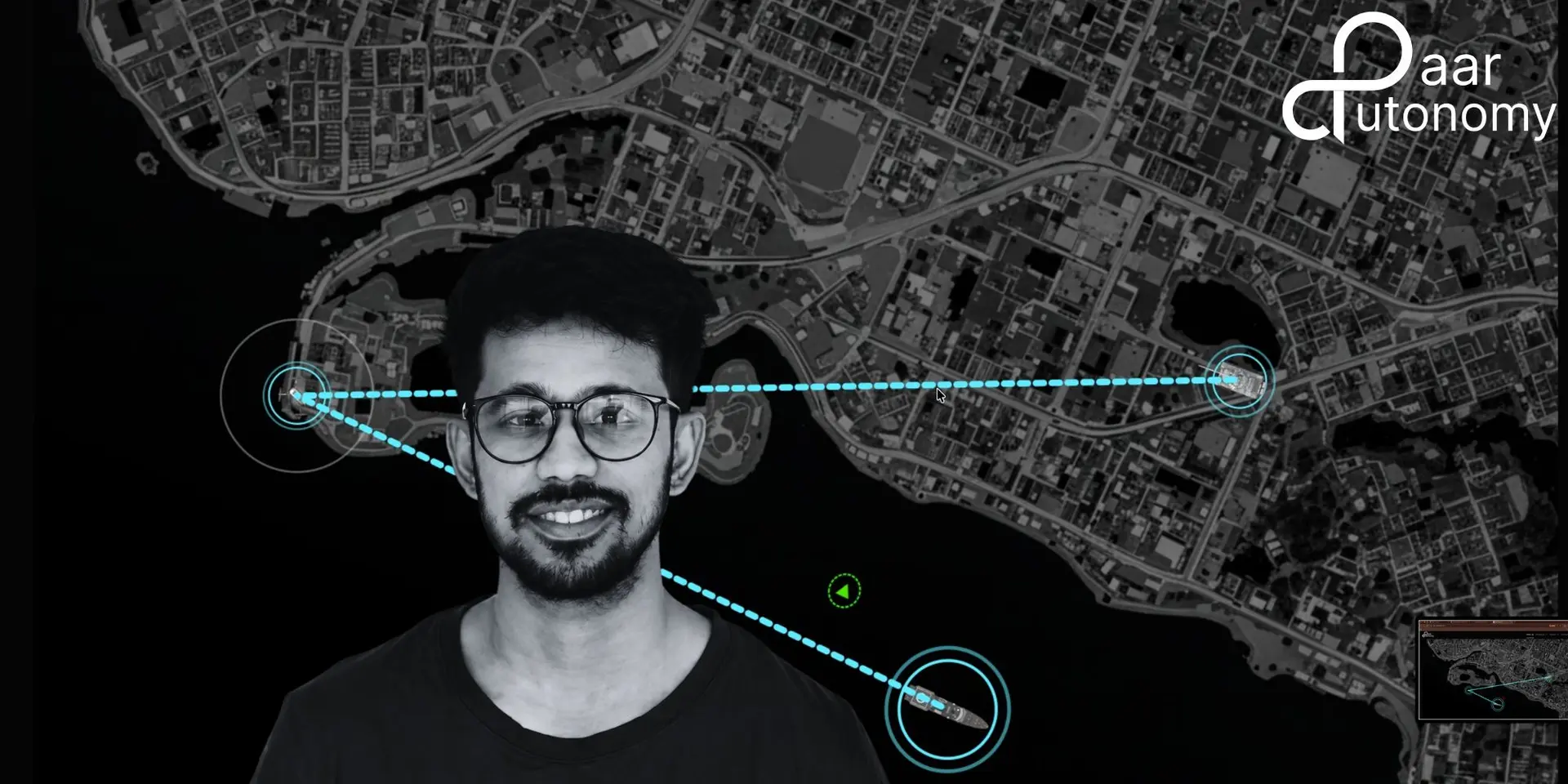

An autonomous machine is only as good as what it can see. A drone that cannot reliably perceive its surroundings cannot navigate a contested border, inspect a pipeline or track a target, and perception, the combination of sensors and the intelligence to interpret them, is one of the harder problems in robotics.
Paar Autonomy, a Bengaluru startup founded in 2024, is building that perception layer for unmanned vehicles operating in the air, on the ground and at sea. Founder Vignesh Jayaraman is a robotics engineer who studied at Washington University in St. Louis and previously led product development at Asteria Aerospace, one of India's known drone makers.
That closeness to the industry, watching what Indian drone-makers relied on and where they fell short, convinced him a homegrown alternative could actually work. He is running the company as the sole founder, with a small team of perception, computer-vision and mechatronics engineers with him.
One perception stack for air, land and sea
Paar's core product is a multi-sensor, gyro-stabilised gimbal camera system, hardware meant to give an unmanned vehicle what the company calls superhuman perception: stable, high-quality vision across difficult conditions.
Paired with agentic AI, the system is designed to let drones, ground robots and surface vessels detect threats, navigate on their own and respond without a human steering every step. Most competitors only build for one domain. Paar's stack works across all three.
In defence and policing, the systems are pitched for surveillance, border monitoring and target tracking on drones, ground vehicles and boats. For industry use, the same technology can inspect pipelines, power grids and construction sites, keeping people out of hazardous places and reducing the cost of routine monitoring.
Selling into both defence and industry also means Paar isn't dependent on any single procurement cycle.
Early, and building its first line
Paar is still pre-revenue. Its near-term focus is to set up a manufacturing line to produce its perception systems at scale, then deliver units for testing with defence clients and public-sector undertakings, pilots that would validate the technology in real conditions before any larger orders.
Revenue is negligible so far, which is normal at this stage. The market is sizeable: by the company's estimate, the global defence market for unmanned aerial systems could reach $6 billion by 2030, with ground and maritime systems adding another $4 to $5 billion. The same perception problem recurs in industrial inspection.
In September 2025, Paar raised Rs 3.5 crore in a pre-seed round led by Venture Catalysts, taking its total to about $397,000 across two rounds. The money goes toward that first manufacturing line and toward hiring across engineering, AI, robotics and business development. The founder's stated ambition is for India to be a supplier of autonomous systems rather than only a buyer, with export-ready products further out.
(This story has been researched and compiled using publicly available information.)