



Nostalgia is identity: how Avinash Mudaliar built Carvaan, and why AI needs its own Carvaan moment
Avinash Mudaliar, inventor of Saregama Carvaan, on why he bet on a physical music player in the streaming era, how nostalgia became identity, and why India's next big product opportunity lies in making AI feel invisible.

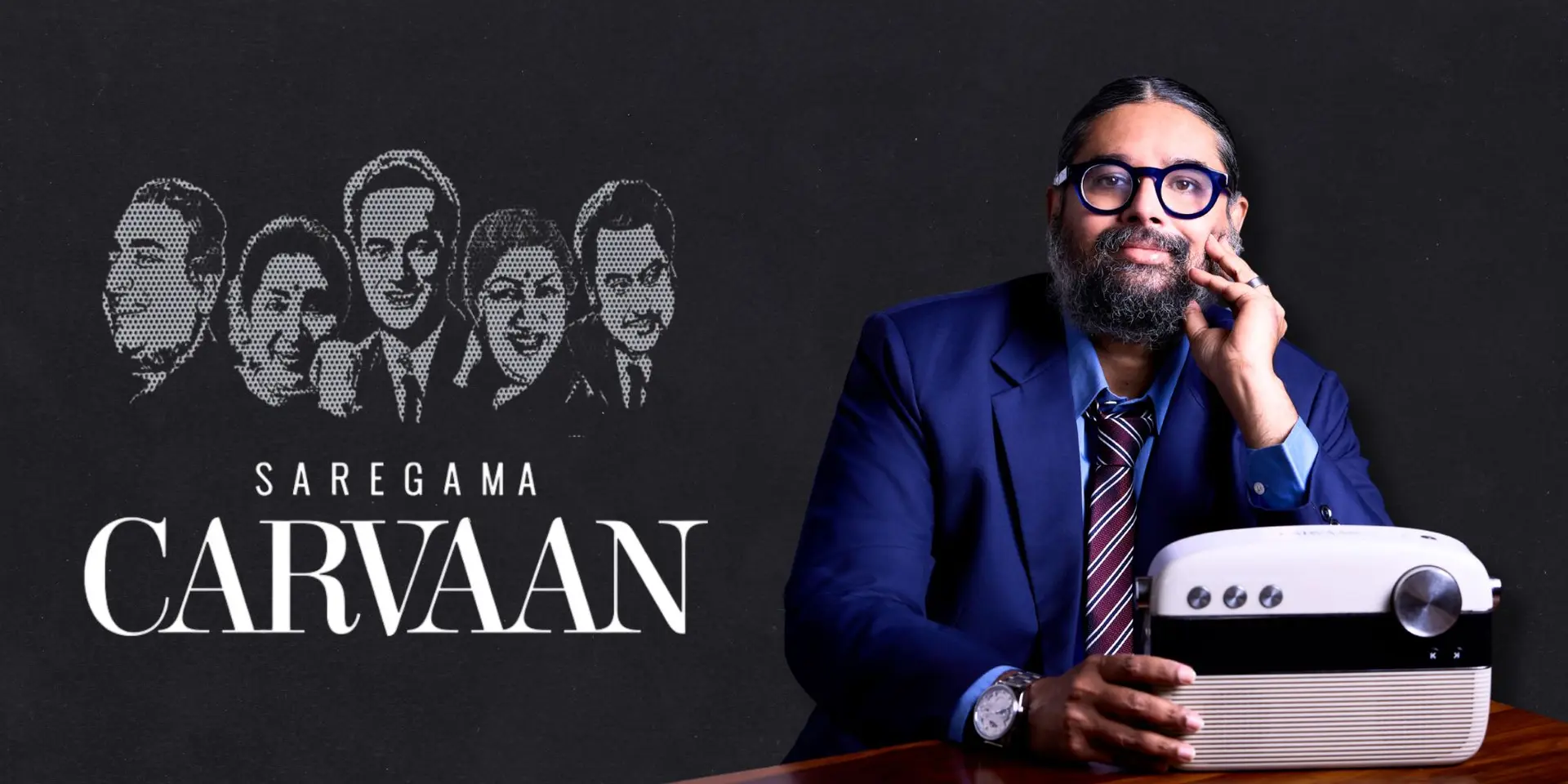

In 2017, when much of India's music industry was chasing the young, app-native streaming user, one product went firmly the other way. Saregama Carvaan, a retro-styled digital music player pre-loaded with 5,000 songs, was built for the listener the digital shift had quietly left behind. The man behind it, Avinash Mudaliar, Co-Founder and CEO of HT Labs and the inventor of Saregama Carvaan, says the idea did not come from a gap in music. It came from a gap in comfort.
"The problem was not music availability. India had more music than ever before. The real problem was access without anxiety," Mudaliar recalls. For a large part of the country, especially listeners above 40 and 50, playing a song had become a task involving an app, a login, a search bar, a data connection and a subscription. "The industry was solving for abundance. We solved for comfort."
Carvaan came from Saregama India, the country's oldest music label, and Mudaliar built it while heading product there. He had earlier co-founded the streaming app Gaana, and today runs the OTT aggregator OTTplay under HT Labs. That arc, from streaming to a physical device and back to digital discovery, shapes how he reads the Indian consumer.
The contrarian call was to bet on hardware in the age of streaming. "In digital media, everything feels rented. Carvaan felt owned," he says. A physical object could be gifted, displayed and switched on by anyone, which suited a product often bought by children for parents, or by NRIs for family homes back in India.
Getting the content right was the hard part. "Saregama's music library consisted of more than 160,000 songs across 23+ languages, from which we had to create a collection that was just perfect for the Carvaan," Mudaliar says. The final 5,000 songs were handpicked and grouped by singer, composer and mood, with Ameen Sayani's Geetmala collection built in to deepen the sense of memory.
Why Saregama Carvaan sold an emotion, not a speaker
Asked what the buyer was really paying for, Mudaliar reframes the entire product. "The consumer was not buying a speaker. They were buying time travel," he says. Nostalgia, in his telling, is not a soft add-on. "Nostalgia is not backwards-looking. Nostalgia is identity. It reminds people who they were, who they loved, where they lived."
That is why he insisted the device feel familiar before it was even used. "The best technology disappears. In Carvaan, the technology had to be invisible, and the memory had to be visible," he explains. The result was a product people described not as a gadget but as a companion, which he calls the moment a product crosses from function into affection.
The future of music, and India's AI Carvaan moment
Mudaliar believes artificial intelligence sits today where streaming sat a decade ago. "AI products today are where streaming was then, powerful, abundant, but often intimidating," he says. The winning products, in his view, will not be the ones with the best model but the ones that "package intelligence into simple, trusted, repeatable use cases."
That leads him to a line he returns to often. "India does not need AI demos. India needs AI Carvaans," he says, meaning technology turned into everyday usefulness for the hesitant user.
If he were starting again today, he says he would build "an AI-led trusted decision engine for Indian consumers in one high-intent category," rather than a broad horizontal product. For a founder who once made a music player feel like a living-room heirloom, the next bridge to build is already clear: taking something powerful and making it feel, once again, invisible.