



Satlabs is building relay satellites to shorten the waiting period for Earth observation data
The Bengaluru-based company is developing a constellation of low-cost relay satellites that pass data between imaging satellites and users without waiting for a ground station pass.


An imaging satellite in low Earth orbit (LEO) can photograph a flood, a crop field or a border in seconds. Getting the picture to someone on the ground takes considerably longer. The satellite has to wait until it passes over a ground station before it can transmit. Those passes are short; they come round only when the orbit lines up, and ground stations are scarce and expensive to build.
The result is a delay of hours between capture and delivery. For a farmer, that is tolerable. For a disaster response team, a defence user or an offshore operator, it can be the difference between the data being useful and not.
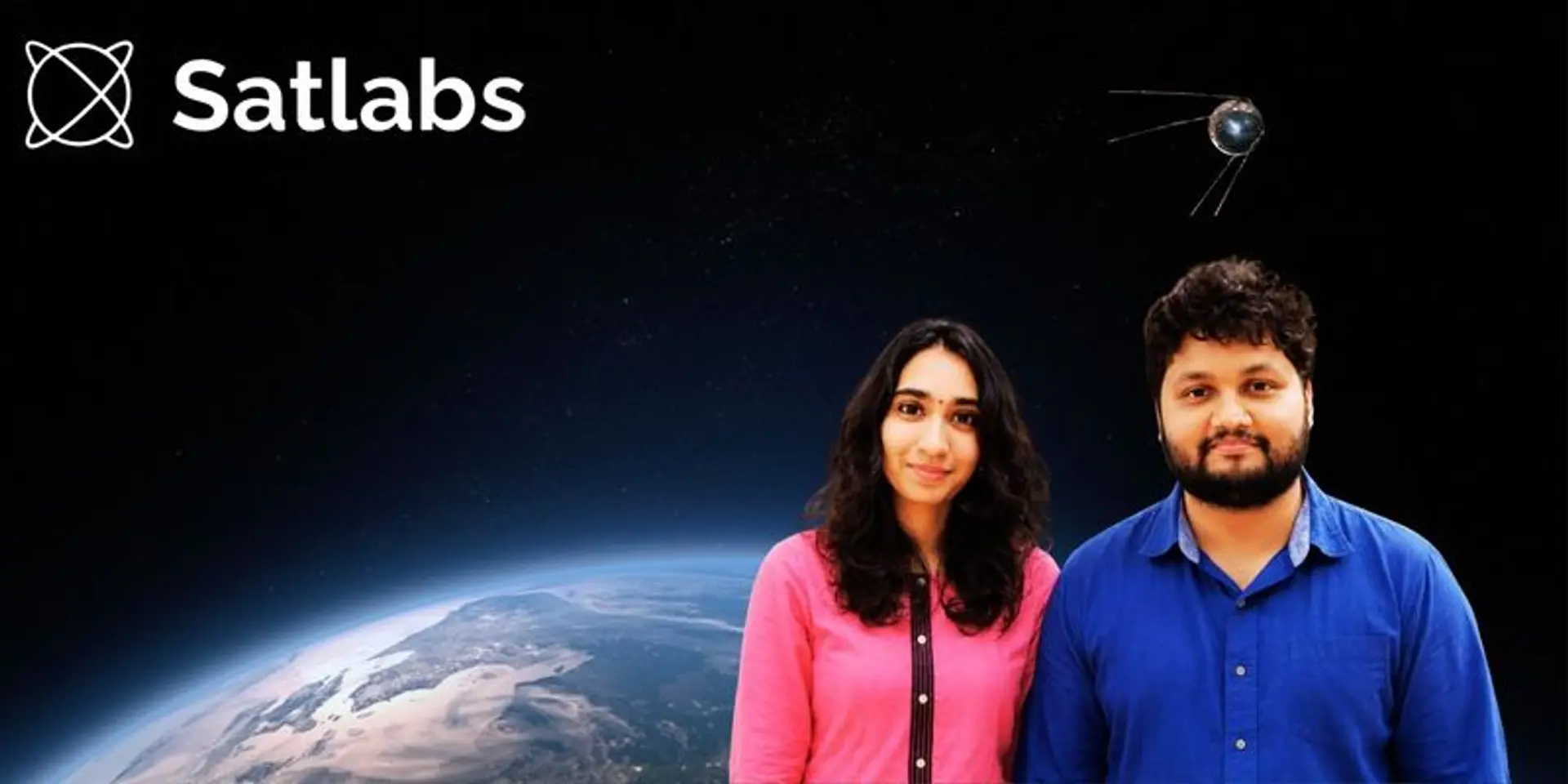
To shorten that delay, Saisree Eega and Sooraj Gopakumar founded in February 2023. Eega is co-founder and CEO of the Bengaluru-based spacetech startup.
The idea itself is established. Space agencies have run relay satellites for decades, NASA and the European Space Agency among them, precisely so their spacecraft do not have to wait for a ground pass. What those systems have not been is affordable, which has kept relay out of reach for the commercial operators now filling LEO.
Ground stations that stay in orbit
The company is developing a constellation of low-cost data relay satellites, which it describes as floating ground stations. Instead of an imaging satellite waiting for a station to come over the horizon, it hands its data to a relay satellite overhead, which passes it on. The imaging satellite stops being the bottleneck, because something is always in view to take its data.
The intended effect is to turn intermittent contact into something closer to continuous communication between satellites and the people using their data. Satlabs has said the approach can bring latency down from several hours to a few minutes, and in time towards near real time.
The applications it points to run across defence, agriculture, disaster response, offshore energy and industrial connected devices. What links them is that the value of the data falls sharply as it ages.
Building more ground stations is the alternative, and it is an expensive one. Each needs land, hardware, licensing and staff, and coverage still has gaps over oceans and remote terrain. A relay satellite covers a wide area from orbit instead.
The full system the company describes is a constellation of around 150 relay satellites in LEO, linked to each other and reached through a single interface. Customers would connect their own satellites to the network and pull data through an API, without needing a dedicated transponder on board. The service is listed on the company's site as still to come.

Rs 9 crore, and a satellite to launch
Satlabs raised Rs 9 crore, about $1 million, in a seed round announced in February 2026. The round came from Finvolve and India Accelerator, which invests in early-stage companies alongside running its accelerator programmes.
The company has said the money will go towards research and development, advancing its satellite deployment plans, and scaling the relay network. Its investors have described the round as bringing sector expertise, go-to-market support and ecosystem access alongside the capital. India Accelerator runs accelerator programmes and invests through several funds, including a vehicle in GIFT City.
The intended business is a subscription, priced against how much of the network a customer uses, sold to satellite operators and research institutions. Eega has said the goal is to make real-time satellite data accessible and reliable at scale.
The company has not yet put a satellite in orbit, and is working towards a proof-of-concept relay spacecraft before any phased constellation. The latency figures, the cost claims and the network itself all rest on hardware that has still to fly.
(This story has been researched and compiled using publicly available information.)