



Scarcity in the age of AI: Why human value is rising
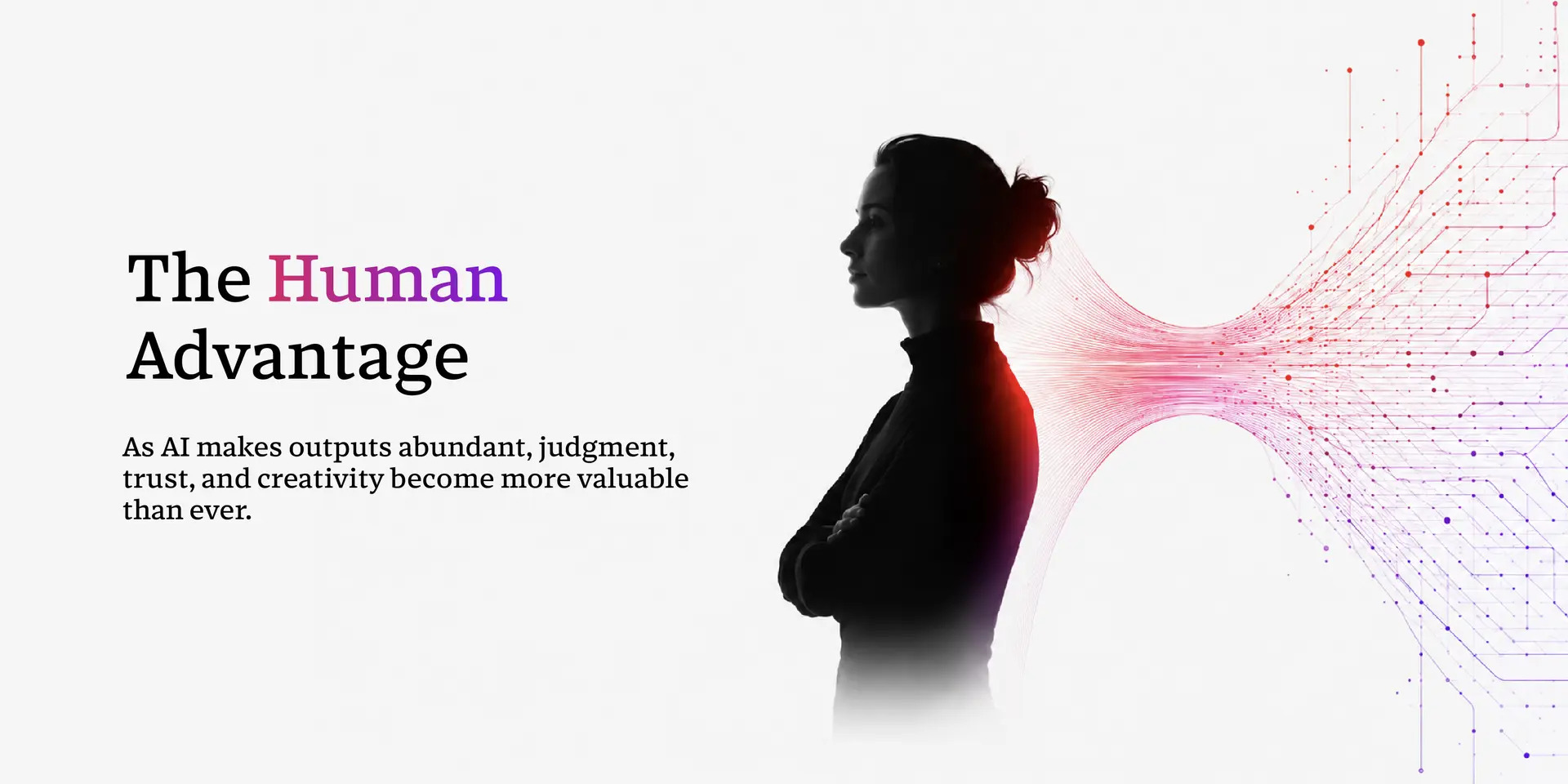
As machines make outputs abundant, human judgment, trust, and creativity become rare — and rarity always commands a premium.


The last 24 months have been interesting across the globe. Everyone is talking about AI transformation eliminating jobs, and many people are genuinely worried. Even executives at some of the frontier AI Labs have warned about large-scale job displacement. I have a different perspective.
When AI makes everything abundant, the human workforce becomes rare — and rarity always commands a premium. Think of diamonds, gold, and other precious metals. Their value comes from scarcity, not from utility alone.
This wave is different, and that is exactly the point
Unlike many technology inventions of the past three decades — the internet, mobile, IoT, blockchain — the advancements in AI are disrupting the very methods we use to build software. This disruption will go further when AGI and physical AI (robots) move from research labs into production. The growth will be exponential, not linear.
Today, we worry that software engineering jobs are shrinking due to automation. That may be true for the current type of roles. But history tells us something important: technology eliminates tasks faster than it eliminates people. New roles always evolve to absorb the talent. Content creators, AI trainers, agent orchestrators, and forward-deployed engineers barely existed as job titles a decade ago. The people filling those roles today came from the roles we thought were disappearing.
The painting lesson
Look at what happened to painting. Digital art made beautiful images accessible to every class of society because it is cheaper to produce and distribute. Did that kill hand painting? Quite the opposite. Hand paintings became more expensive. There are more painters today than ever before, and original works command higher prices precisely because a human made them.
Chess tells the same story. Computers have beaten world champions since 1997, and today a free app on your phone plays better than any human alive. Did chess die? It is more popular than ever. More people play, watch, and earn a living from chess today than at any point in history — because we value the human contest, not just the best move.
The same pattern repeats everywhere. Machine-made furniture made handcrafted furniture a luxury item. Recorded music made live concerts the most valuable part of the music industry. Fast fashion made tailored clothing a premium product. When machines make something abundant, the human version becomes the scarce version — and scarcity raises the price.
What becomes scarce becomes valuable
When AI can generate code, reports, designs, and analysis in seconds, those outputs become cheap. What stays scarce? Human judgment about which problem is worth solving. Accountability when things go wrong. Taste. Trust. The ability to sit with a customer, understand what they actually need, and take responsibility for the outcome.
AI produces answers in abundance. Humans who can ask the right questions, verify the answers, and stand behind the results will be rare. The cost of human labor will increase over time, as long as we evolve to meet this new demand. That last clause is the key: as long as we evolve.
The real risk is standing still
The premium will not flow to everyone automatically. The painter who refused to learn about galleries, patrons, and new materials did not benefit from the digital art boom. The painters who adapted, who used digital tools for drafts and reserved their hands for the final canvas, thrived.
The same applies to us. If your value today is typing code that an AI can type faster, your job is genuinely at risk. If your value is understanding customers, architecting solutions, making judgment calls, and using AI as your leverage, your value is rising every single day. The engineers who learn to direct 10 AI agents will out-earn the engineers who compete with one.
Change, not panic
The headlines about AI layoffs describe a transition, not an ending. Every major technology shift has followed the same arc: fear first, displacement second, and then a larger, different, and often better-paid workforce on the other side.
Panic freezes people. Change moves them. Learn the tools. Move your skills up the value chain, closer to judgment, trust, and the customer. Treat AI as the abundant resource it is, and make yourself the scarce one.
Rarity always has demand. So do you — if you choose to become rare.
Durga Prasad Kakaraparthi is the Founder of Attoforce, an AI consulting startup. He has 26 years of experience in technology, including a decade at Amazon Web Services and another decade in Microsoft working directly with governments, enterprises and startups across ASEAN, India, and the US.
(Disclaimer: The views and opinions expressed in this article are those of the author and do not necessarily reflect the views of YourStory.)