


Your brain treats winning and almost winning alike. Game designers know it
Slot machines, Candy Crush and loot boxes use near-misses to turn frustrating losses into motivation. Brain scans and behavioural studies reveal why almost winning can make players want to continue.

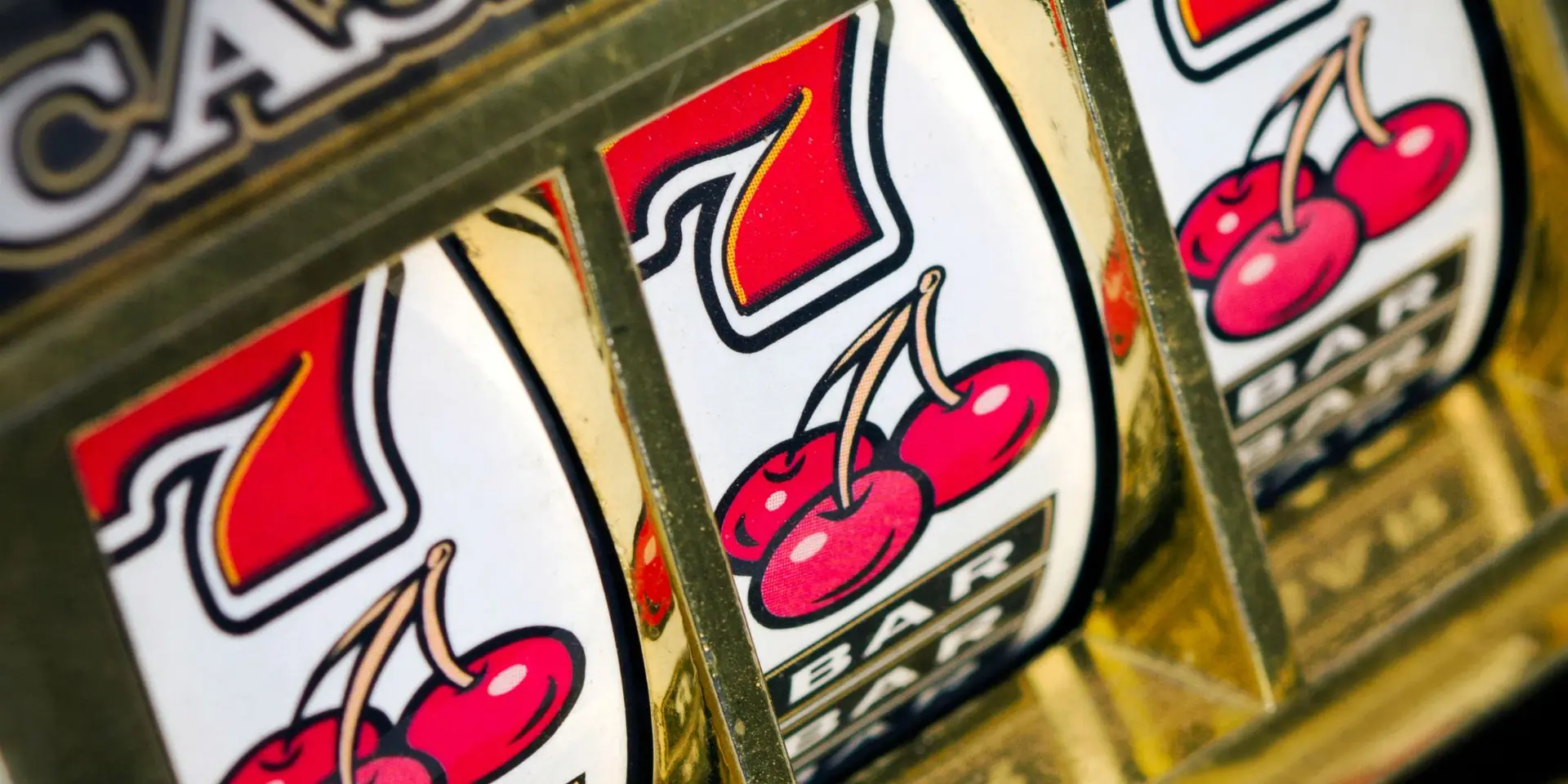

Every slot machine is built around a failure engineered to feel like an achievement. Two cherries and a lemon. The reel that stops one position short. It is a loss, and yet it does something to a player that a clean loss does not.
B.F. Skinner was the first to take this seriously, arguing in Science and Human Behavior (1953) that near-misses work through conditional reinforcement. But that was an argument, not an experiment. He ran no gambling task and measured no physiological response.
What the brain scan showed
In 2009, Luke Clark and colleagues at Cambridge put participants in an fMRI scanner with a simplified two-reel slot machine. Compared to clean losses, near-misses were experienced as less pleasant but increased the desire to keep playing, and they recruited the same circuitry that responded to genuine wins.
Two things it is routinely misreported as showing, and does not. It does not show your brain cannot tell a win from a near-win: participants rated near-misses as less pleasant than clean losses. What is strange is that the unpleasant outcome is the one driving continuation. It also does not show a dopamine release, because fMRI measures blood oxygenation, not neurotransmitters. The behavioural claim is also less settled than most write-ups admit: a 2019 review failed to reproduce the effect on persistence in humans or pigeons.
The mechanism makes sense once you drop the framing of dopamine as a pleasure chemical. It tracks wanting more closely than enjoyment, which is why the slowing reels can feel more charged than the outcome.
How casinos actually engineer it
Since 1983, North American slot machines have used computers and virtual reels to set the odds, and since at least 1988 a technique called clustering has produced a high number of near-misses. The consequence, documented by Kevin Harrigan at Waterloo, is that what the player sees does not represent the machine's underlying probabilities.
Regulators noticed. A 1988 Nevada Gaming Commission case produced a 1989 ruling that one manufacturer's algorithms for creating near-misses on the payline were unacceptable. Virtual reel mapping producing near-misses above and below the payline stayed legal, and is still standard. The damning detail in Harrigan's reading of the hearing transcripts: the people advocating for the technology understood at the time it might harm players psychologically.
Outside the casino
This has been tested on a mobile game. Chanel Larche, Natalia Musielak and Mike Dixon at Waterloo recruited sixty avid Candy Crush Saga players and had them play for thirty minutes while heart rate, skin conductance, subjective arousal, frustration and urge to play were recorded across three outcomes: levelling up, losing without coming close, and falling one or two moves short. The game flags that last case explicitly, telling players how narrowly they missed.
Near-misses were more arousing than clean losses on heart rate and subjective arousal. They were rated the most frustrating of the three. And of any outcome measured, near-misses triggered the strongest urge to keep playing, stronger than winning.
Loot boxes
The same design language runs under loot boxes. A 2021 report by James Close and Joanne Lloyd, commissioned by GambleAware, found robust evidence that loot boxes are structurally and psychologically akin to gambling, with associations strongest among younger players. Twelve of thirteen surveys reviewed found positive correlations with problem gambling scores, and around 5% of purchasers generated roughly half of loot box revenue.
Regulation is patchy rather than absent: Belgium and the Netherlands have acted, and the UK declined to bring loot boxes under the Gambling Act. In most jurisdictions, paying real money for a randomised digital item still is not legally gambling.
Why it matters
The uncomfortable part is not that slot machines are manipulative. Everyone assumes that. It is that a design vocabulary developed for gambling floors, litigated in front of regulators in the 1980s, now appears in products marketed as harmless entertainment for children and commuters, with none of the same scrutiny.
A match-three puzzle game and a Las Vegas slot machine look nothing alike. Underneath, at least one mechanic is measurably the same: engineer the almost-win, and the player keeps swiping longer than they meant to.