



Get busy living: Why standing still is more dangerous than you think
Stephen King’s famous line is more than motivation. It reveals how stagnation affects our bodies, careers, relationships and the choices we keep postponing.

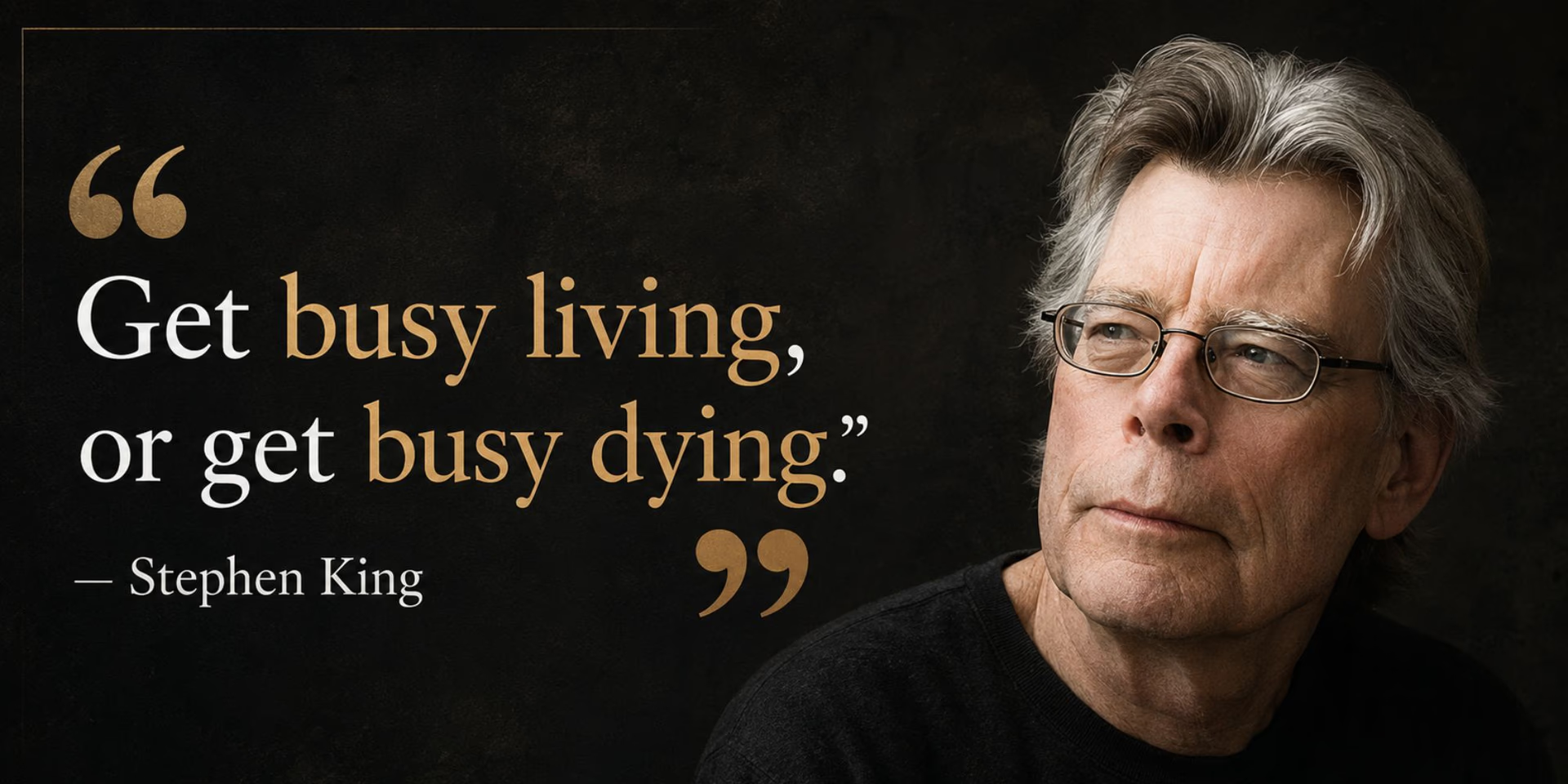

"Get busy living, or get busy dying." - Stephen King
It's one of those lines that outgrew its source material. Stephen King wrote it in 1982 for a story about a wrongfully imprisoned banker named Andy Dufresne, and by the time the 1994 film adaptation put it in Andy's mouth on screen, it had become something closer to a personal mantra for anyone who's ever felt stuck - which is to say, almost everyone.
The genius of the line is its refusal to offer a third option. It doesn't say rest, or wait, or figure it out later. It says you are always doing one of two things: moving toward something, or slowly, quietly, giving up. There's no neutral gear.
The comfort of standing still
Stagnation rarely announces itself. Nobody wakes up and decides to stop living. It happens in small surrenders - the job you tolerate instead of leave, the habit you keep because changing it is harder than keeping it, the version of yourself you settled for around age 25 and never revisited. Standing still feels safe because it asks nothing of you. Movement asks for risk, discomfort, and the possibility of failing at something you actually tried to do.
That's precisely why the line cuts. It doesn't let you call stillness "safety." It calls it what it often is: a slower way of dying.
What stagnation actually does to the body
This isn't just a metaphor, It holds up biologically. Prolonged inactivity measurably changes the body, and the research on this has gotten a lot more specific in recent years.
People who sit for more than eight hours a day with little physical activity carry a risk of death comparable to the risk posed by obesity or smoking, and globally, insufficiently active people face a 20–30% higher risk of death than those who are active. The effects aren't only cardiovascular. Muscle tissue that goes unused for even short periods begins to lose mass and develop oxidative stress at the cellular level, the body genuinely starts to deteriorate faster the less it's asked to do.
Sedentary time also disrupts how muscles process glucose and fat, which is part of why inactivity is so tightly linked to type 2 diabetes and metabolic disease, independent of whether someone exercises separately. And it's not just physical: research has connected sedentary behavior to higher rates of anxiety, depression, and over the long term, accelerated cognitive decline.
In other words: "get busy dying" isn't just poetic. A body that stops moving genuinely starts shutting down, piece by piece. King's metaphor and human physiology are, unsettlingly, describing the same process.
How this plays out in public life
You see the "living vs. dying" split everywhere once you look for it, in companies that keep doing what worked five years ago instead of adapting, in institutions that mistake caution for stability, in leaders who choose the comfort of the familiar over the risk of the necessary. Organizations don't collapse all at once. They stagnate first, and the collapse just becomes visible later.
How this plays out in private life
Personally, it shows up as the relationship you've outgrown but haven't left, the degree or career path you chose at 19 and never questioned at 30, the health check-up you keep postponing. None of these are dramatic moments. They're just quiet defaults and the quote's real challenge is asking you to notice you're making a choice at all, even when it doesn't feel like one.
Choosing to live
The practical read of King's line isn't "do something extreme." It's smaller and harder than that: stop mistaking inertia for peace. Pick one place where you've been coasting, physically, professionally, personally and make one deliberate move this week, not a resolution, an actual action.
Because the body keeps score even when you're not paying attention. So does everything else.