


Inside Suminter's 20-year bet: 100,000 farmers, 3 continents, one platform
Sameer Mehra returned to India in 1998 to build organic contract farming before the market existed. Two decades on, Suminter India Organics works with over 100,000 smallholder farmers and has raised Rs 25 crore in debt from BlackSoil Capital.

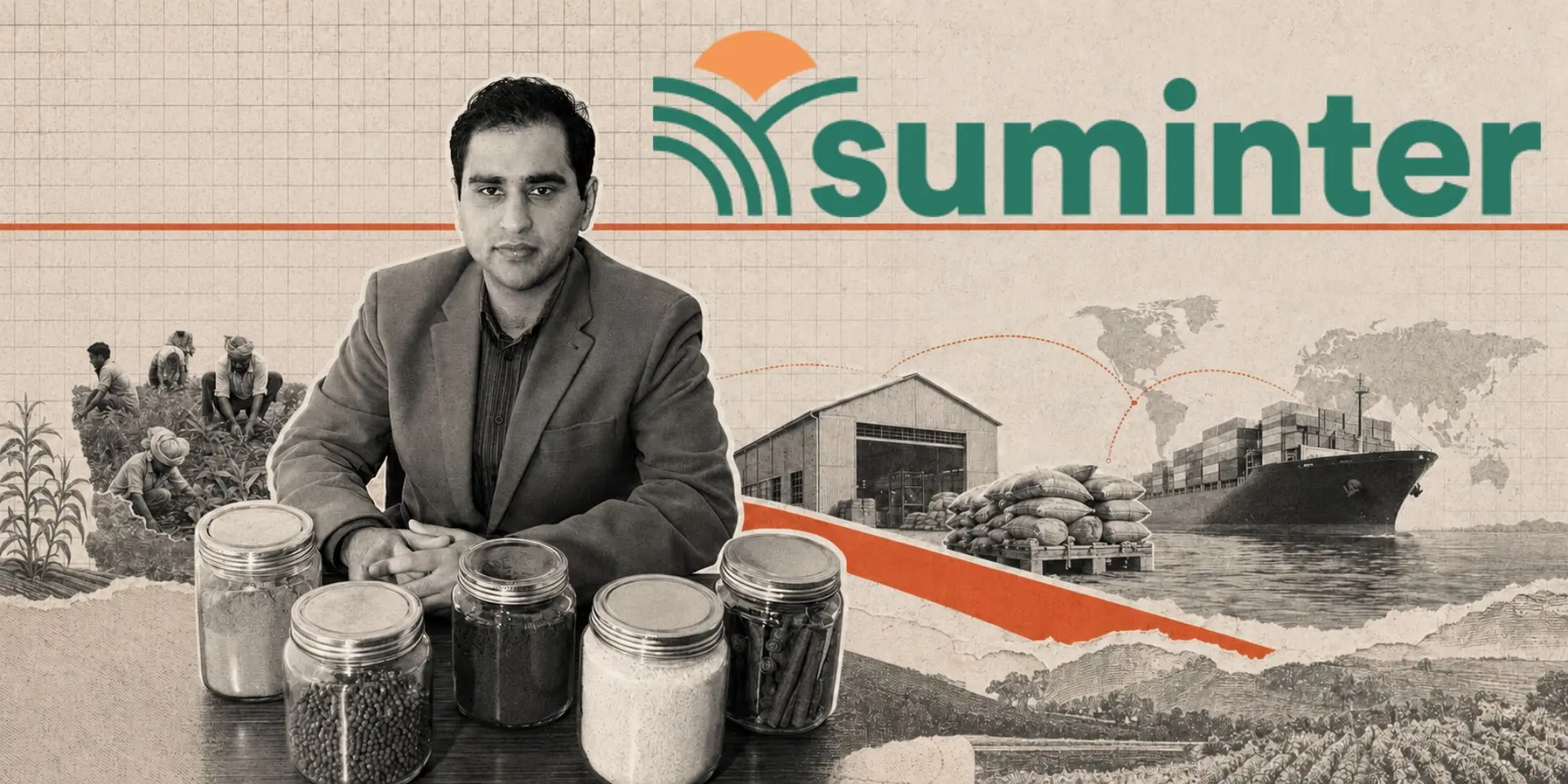

In 1998, Sameer Mehra came back to India after studying overseas with an idea that made very little commercial sense at the time: organic contract farming, in a country where "organic" wasn't yet a category consumers cared about, chemical fertilisers and pesticides were the default, and no national certification system existed to verify organic produce for export. India's own National Programme for Organic Production wouldn't launch until 2001. He built for it anyway.
Betting on India's accidental advantage
The insight behind Suminter India Organics wasn't really agricultural, it was structural. India's tropical climate and varied terrain meant a wide spread of crops could be grown across the calendar, in more agro-climatic zones than most competing origins could offer. Just as importantly, a combination of high input costs and long-standing local farming traditions meant chemical fertilisers and pesticides had never penetrated large parts of Indian farmland the way they had in developed agricultural markets. That land was closer to organic-ready by accident of economics than by design. Meanwhile, the global organic food market was already worth around $23 billion in 2002 and growing quickly, with international demand running well ahead of what certified organic supply could meet.
Mehra, who studied at Emory University in the US, founded Suminter in Mumbai in 2003 to bridge exactly that gap: bringing Indian smallholder farmers into certified organic supply chains built for international buyers, at a point when very few Indian companies were building that infrastructure at export scale.
Building the plumbing nobody else wanted to build
Organic certification isn't a marketing sticker, it's a slow, document-heavy, farm-level process, and doing it credibly at scale required Suminter to build something most food companies never touch directly: a fully integrated farm-to-market platform covering farmer engagement, certification, sourcing, processing, quality assurance, and international distribution, all under one roof. By 2016, the company was working with over 20,000 farmers across Gujarat, Maharashtra, Kerala, Uttarakhand, and Rajasthan, covering 110,000 acres under organic cultivation.
The recognition followed the infrastructure. Suminter has been named India's largest exporter of organic spices by the Spices Board for four consecutive years, and Mehra was picked as Endeavor India's first high-impact entrepreneur in 2008 and later won the Economic Times 40 Under 40 award.
Today the network has grown to more than 100,000 smallholder farmers across India, the Philippines, and Africa, feeding into a product line spanning spices, coconut products, oilseeds, cocoa, natural sweeteners, and plant fibres, sold to food and ingredient brands across the US and Europe.
Betting fresh capital on the hardest part of the business
In July 2026, Suminter raised Rs 25 crore (about $2.6 million) in debt funding from BlackSoil Capital, earmarked for one of the most operationally punishing parts of the agricultural business: peak harvest season procurement, when the company needs to move fast and pay farmers on time to secure high-quality organic produce before it's gone.
Mehra was direct about what the money actually enables, saying the capital lets Suminter act decisively during the procurement season and secure high-quality organic ingredients at scale. He framed the longer goal as building a resilient, transparent, climate-conscious supply chain that creates value for farmers and global brands alike.
Ankur Bansal, Managing Director at BlackSoil, pointed to Suminter's differentiated farm-to-market platform and its meaningful impact on smallholder livelihoods as the reason for backing the company at this stage.
Why this story matters
Suminter's two-decade build is a reminder that some of the most consequential businesses aren't built around a clever app or a viral product, they're built around unglamorous, patient infrastructure work that almost nobody wants to do first. Mehra didn't wait for India's organic market to exist before building for it. He built the sourcing, certification, and distribution scaffolding years ahead of the demand curve, and let 100,000 farmers, and a growing list of global food brands, catch up to what he'd already built.