



Vir Sanghvi: The Man I Thought I Knew
To mark Vir Sanghvi's 70th birthday, Papa CJ reflects on a conversation that began as an interview with one of India's most influential journalists but became an exploration of the people, values and moments that shaped the man behind the byline.

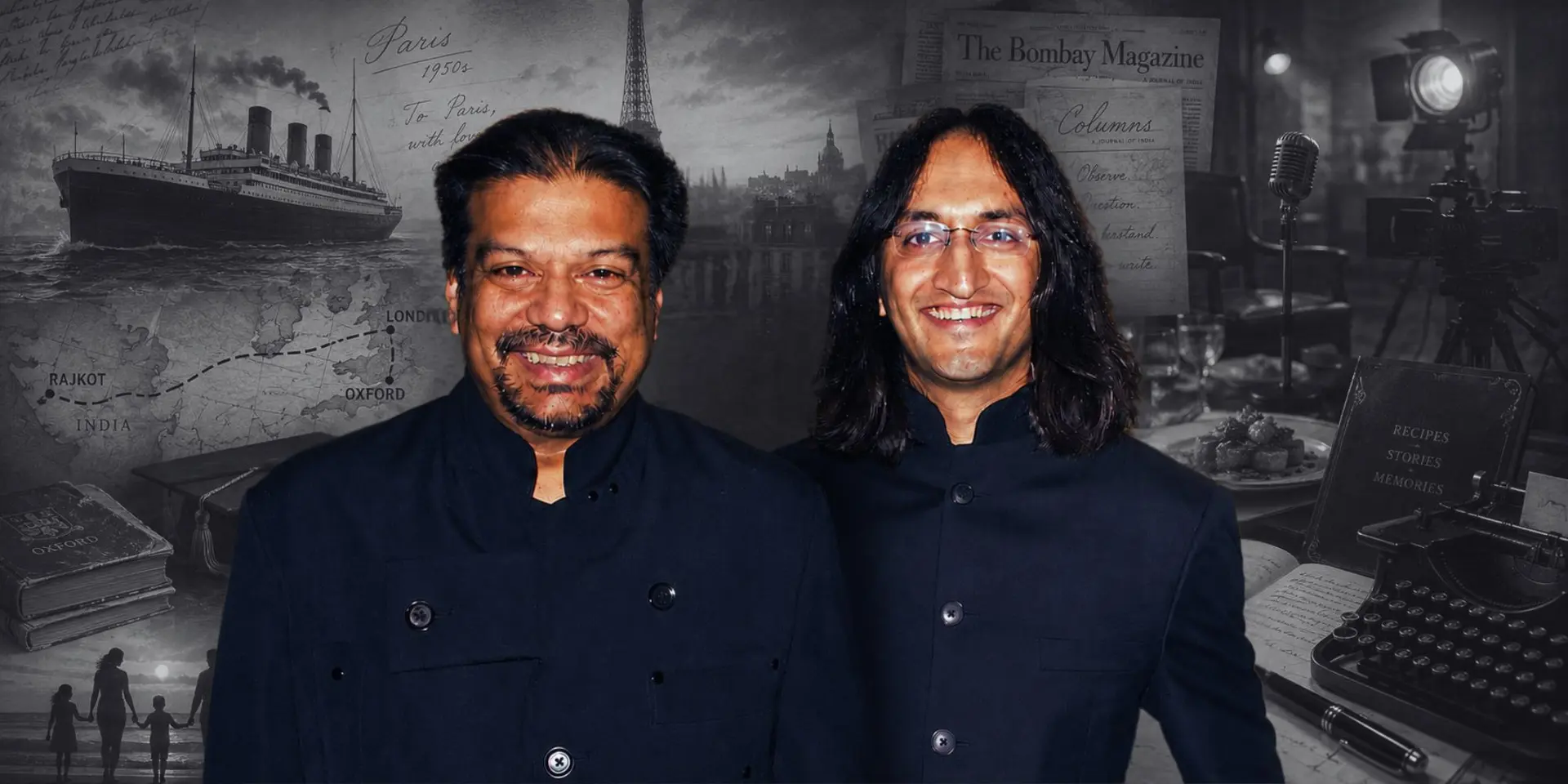

When I sat down with Vir Sanghvi, I had done what all interviewers do. I had read about the youngest editor, the columnist who shaped Indian journalism, the television interviewer who made politicians uncomfortable and celebrities surprisingly honest, the food writer who could tell the story of a city through its kitchens, and the entrepreneur who built something entirely new when most people would have happily rested on a lifetime of accomplishments. I had my questions ready. What I wasn't prepared for was that almost every answer would quietly dismantle the premise behind the question.
"So tell me about your childhood," I began.
Most people, especially those who have lived extraordinary lives, instinctively begin with themselves. Vir did something else entirely. He began with his parents.
For the next several minutes, I barely existed. So did he.
Instead, I found myself listening to the story of a young man from Rajkot who found communism before he found love. A woman from a wealthy Gujarati family who crossed continents, defied convention and quite literally sailed to Paris to marry the man her family had forbidden her to marry. A wedding in Paris organised by fellow Indians because two people decided that conviction mattered more than approval. It sounded less like the opening chapter of one of India's most celebrated journalists and more like the plot of a film someone would reject for being too implausible.
When he finished telling me the story, he smiled almost apologetically. "That's actually a much more exciting story than anything I have managed in my life."
I remember laughing.
Not because it was funny, but because only Vir Sanghvi could spend ten uninterrupted minutes narrating one of the greatest love stories I've heard and then casually dismiss the life that followed as though becoming one of India's defining editors was a footnote.
I looked down at my notebook. I'd prepared pages of questions about journalism. Almost every one of them suddenly felt irrelevant. They belonged to the man I thought I was meeting. The man sitting opposite me seemed far more interested in talking about the people who had shaped him than the career they had made possible.
Later in our conversation, when I asked him about milestones, he shrugged off the kind of accomplishment that most people spend a lifetime introducing themselves with.
"I don't like looking back," he told me. "I always look forward."
Thereon, every time I tried to steer the conversation towards achievement, Vir gently steered it back towards people. And not the people who had opened doors for him but the people who had shaped him.
Somewhere during our conversation, I stopped trying to understand Vir Sanghvi the editor.
I became curious about something else entirely. What makes a person who has spent five decades asking questions answer them this way? What makes someone who has interviewed presidents, prime ministers, movie stars, industrialists and icons remain almost suspicious of his own achievements? And why does a man who has every reason to celebrate the life he has lived seem far more interested in the people who shaped it than the legacy he created?
The answer, I suspect, begins long before the editorials. Long before Oxford. Long before Bombay magazine. Long before television studios, restaurant reviews or newspaper front pages. It begins with a fifteen-year-old boy who lost his father. Everything else is, in some ways, a consequence.
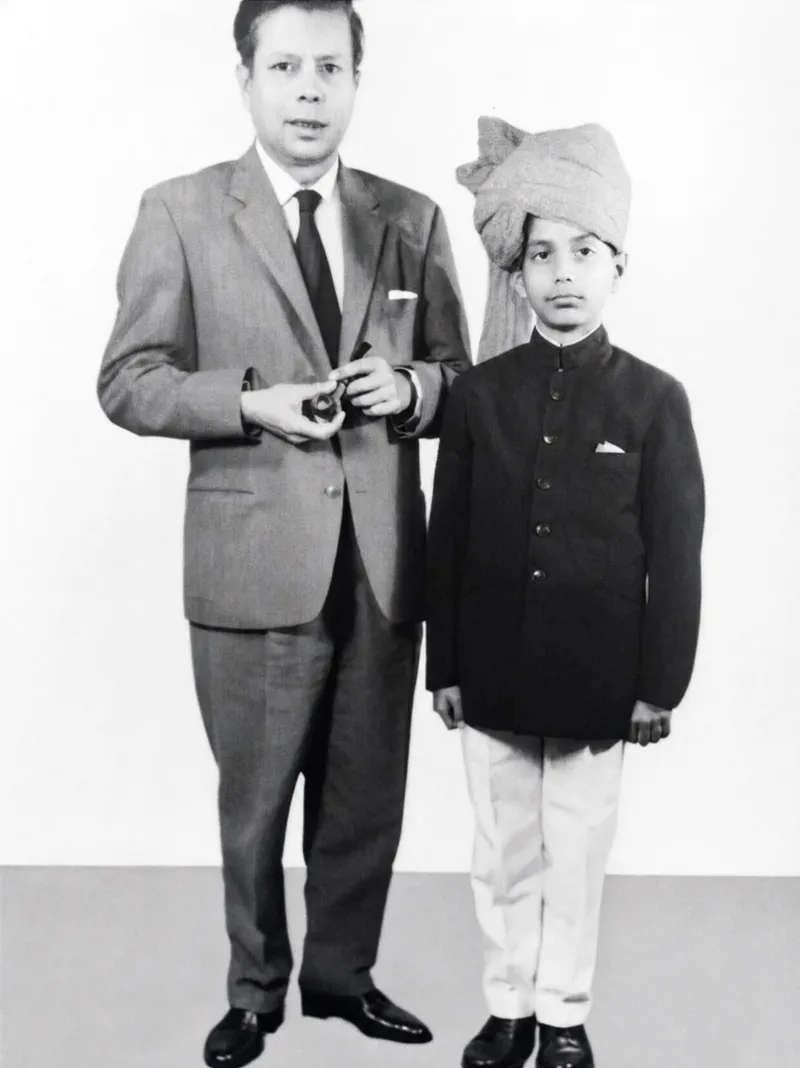
There is a temptation, when someone tells you about a loss like that, to see it as one chapter in a much larger story. To treat it as the hardship that appears in the middle of a successful life before everything works out. But the more Vir spoke, the more I realised I had that completely backwards. His father's death wasn't a chapter. It was the book.
Until then, life had unfolded with the quiet confidence that children often mistake for permanence. His father had plans. England. School. A career. The future had already been sketched. Then, almost overnight, the sketch disappeared. The income vanished, the certainty vanished and the man who had made every important decision was suddenly no longer there to make the next one. Vir found himself doing something most fifteen-year- olds should never have to do. Growing up in one afternoon.
He spoke about those years without self-pity. In fact, if you weren't paying attention, you might miss how extraordinary they were. He chose his own schools, he picked up the phone, he wrote the cheques, he found his own way through England and built a life that, until then, someone else had imagined for him.
There is something revealing about the way he tells that story. He doesn't present it as resilience. He presents it as necessity. As though there was never another option. Later, when I asked him what that period had taught him, he didn't offer a grand life lesson. He simply said that life had taught him never to assume that anything lasts forever, and that if you cannot rely on yourself, you cannot really rely on anyone else.
That single belief, I think, explains why he never depended on one career for long, and why he never seemed frightened of walking away from a title that other people would have held onto with both hands.
I had assumed I was looking at reinvention. Now I wasn't so sure. Maybe it was simply a man who had learnt, at fifteen, that life has a habit of changing the script without asking for your permission. And perhaps that is why success never became the most interesting thing about him, because long before success arrived, life had already taught him what really mattered.
That thought stayed with me for the rest of our conversation because, once you hear it, you begin to notice it everywhere. Take the number of lives Vir has lived. Most people would call it reinvention. Journalist. Editor. Television host. Food writer. Entrepreneur. It almost reads like the careers of five different people stitched together into one résumé.
I asked him about it.
There was no grand theory behind it, no carefully constructed philosophy about staying relevant or constantly evolving. If anything, he spoke about them almost as a practical way of looking at life. Never depend on one thing. Never assume that what you have today will still be there tomorrow. It wasn't career advice. It was the philosophy of someone who had learnt, much earlier than most of us do, that certainty is borrowed, never owned.
That philosophy surfaced again when I asked him about the people who had shaped him. I expected him to mention editors or writers. Instead, he spoke at length about Amitabh Bachchan. Not the phenomenon the rest of us know, but the friend he had spoken to almost every day for years, the man with whom he had shared dinners, conversations and countless ordinary moments. What Vir admired wasn't the scale of Amitabh's success. It was the way he carried it. Naturally, I asked him what he had learnt from one of the most recognisable people in the country. His answer had nothing to do with cinema. "It was the way he treated people," he said.
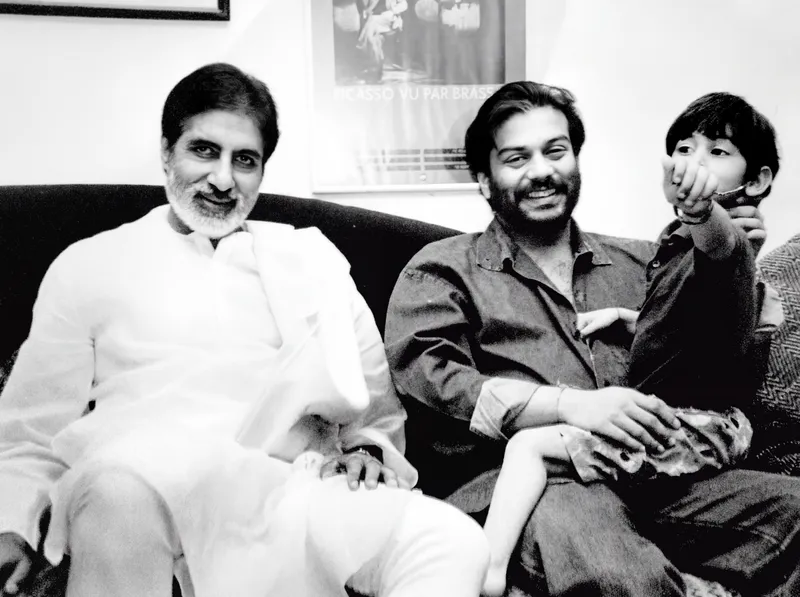
He told me about watching complete strangers walk up to Amitabh for a photograph or an autograph. Most public figures, he said, acknowledge them politely and move on. Amitabh did something different. He gave each person those few moments as though they mattered. He would ask where they had come from, exchange a few words, look them in the eye and make them feel seen. It wasn't about the autograph. It was about the person carrying it home.
Vir paused for a moment before adding something I immediately wrote down.
"When you're a public figure, you have an unwritten social contract with the people who admire you." I loved that expression, an unwritten social contract, because it said something about Vir as much as it did about Amitabh. It explained why, despite having occupied some of the most influential positions in Indian journalism, he never seemed especially interested in status. He was always more interested in conduct than in accomplishment, in how people behaved once they had succeeded rather than how they got there. That distinction would come back again and again over the course of our conversation, until I realised I was no longer collecting stories from his life. I was collecting clues to the values that had quietly shaped it.
The more we spoke, the clearer it became that nothing sounded like it needed proving anymore. Not his success, or his reputation, or even his legacy. By now, I had almost forgotten that I had come to interview one of India's best-known journalists. Listening to Vir, it felt as though he had spent his life peeling things away until only the essentials remained.
As our conversation drew to a close, I asked Vir the one question that every interview eventually arrives at. "How would you like to be remembered?"
It's a dangerous question. It invites grand answers. People speak about impact, about changing industries, about leaving the world better than they found it. Some talk about records, others talk about legacy. Vir didn't. He answered almost immediately.
"As a man who did no wrong to anyone else."
There was no explanation afterwards. None was needed. As I walked away, I realised I could barely remember the questions I'd spent days preparing. I remembered his parents. The fifteen-year-old who had his childhood taken away from him. The unwritten social contract. I remembered a man who didn’t feel the need to prove anything anymore. A man who had spent seventy years quietly building a life around the things that couldn't be taken away.
And when I had asked him what happiness meant to him, he hadn't spoken about achievement or influence. He had simply said, "Having a happy family." Somehow, by then, it was exactly the answer I expected.
We spend so much of our lives trying to become successful that we rarely stop to ask ourselves what success is quietly turning us into. Somewhere between Rajkot and London, between newspapers and television, between public recognition and private contentment, Vir Sanghvi seems to have found his answer. It has very little to do with success. It has everything to do with ‘a man who did no wrong to anyone else’.
Author Bio:
Papa CJ is an award-winning international stand-up comedian, leadership coach & published author. He holds an MBA degree from the University of Oxford & was conferred the India’s Top Mind Award for Leadership Development and Executive Coaching. He has been invited to speak at Harvard Business School & Oxford University and has written for Harvard Business Review.