


This 21-year-old entrepreneur is building a deepfake audio detection startup that alerts users during live calls
Founded in 2025, San-Francisco and Bengaluru based DetectifAI is building technology to help verify humans and detect AI-generated and manipulated audio, particularly synthetic voices and audio deepfakes.

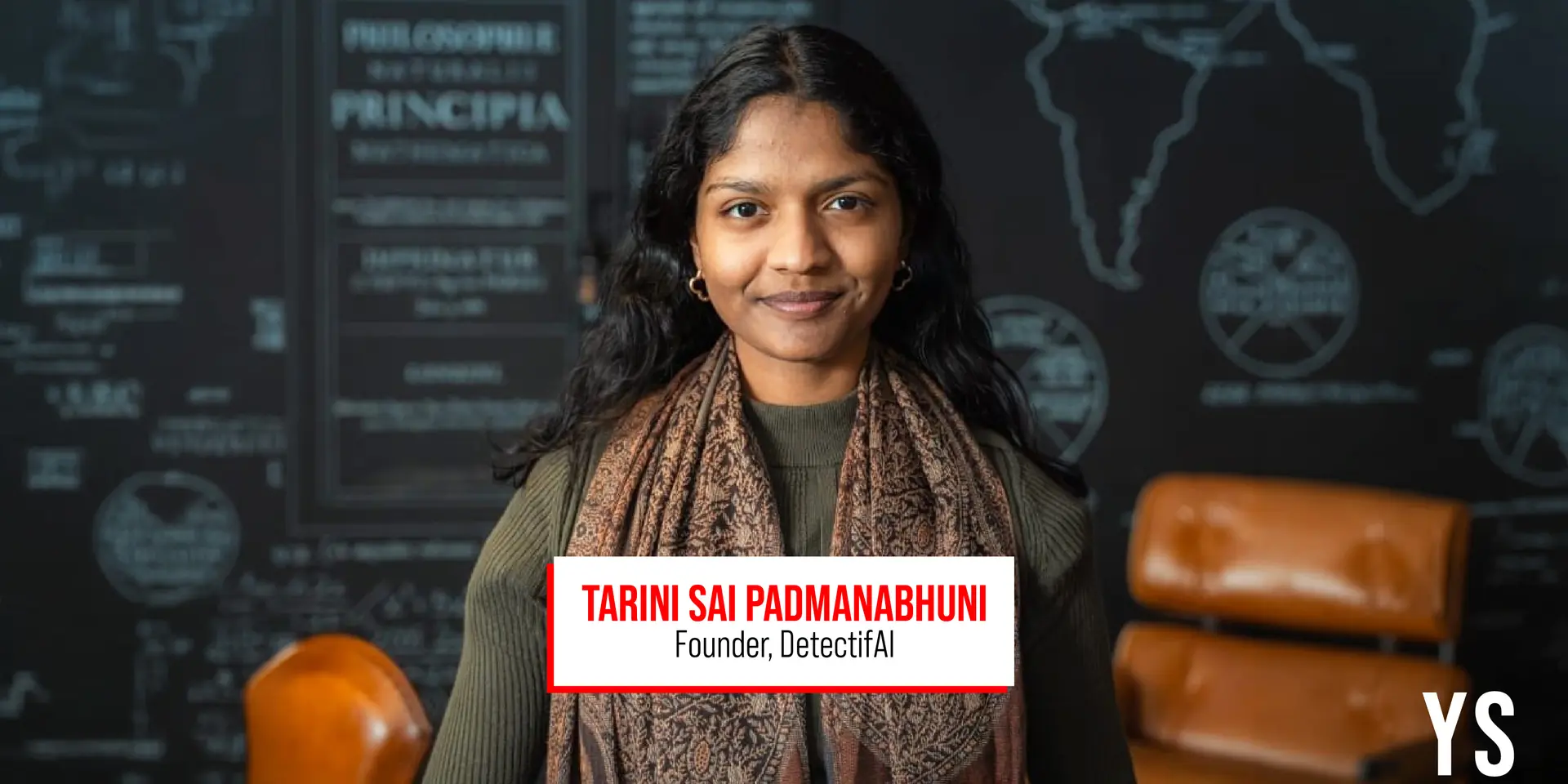

Tarini Padmanabhuni began studying machine learning in class 6, but it was a deepfake scam targeting her grandfather that gave a direction to her passion: building a platform that could prevent such incidents.
“It became clear that this was not just a technical problem. AI-generated voices and synthetic media can affect families, financial institutions, customer support systems, identity verification and the entire idea of digital trust. That realisation eventually led me to build DetectifAI,” the 21-year-old entrepreneur tells YourStory.
Founded in 2025, San-Francisco and Bengaluru based DetectifAI is building technology to help verify humans and detect AI-generated and manipulated audio, particularly synthetic voices and audio deepfakes. As cybercriminals use AI audio, and synthetic images to fuel phishing attacks, financial fraud, and disinformation, the company aims to strike at the heart of this system by identifying manipulated speech patterns and videos.
Today, Padmanabhuni is a computer Science graduate, specialising in Cyber-Physical Systems from MIT Manipal.
“My work focuses on artificial intelligence, cybersecurity and deepfake detection. Currently, I have five patents pending in the field of deepfake detection, and over the past two years, also working on developing practical AI-based technologies to identify synthetic and manipulated media, particularly deepfake audio," she says.
On the backend
DetectifAI’s fraud detection models are designed to run on-device and at the network edge, allowing fake callers to be flagged in real time without a cloud round trip. The company’s real-time fraud detection is its USP as it provides live detection unlike other models which mostly work after an event.
The platform particularly focuses on BFSI and healthcare, where voice-based verification systems play a critical role in customer authentication, patient validation, fraud prevention, and identity security.
The company currently has a 10-member team.
The long-term vision is to make digital interactions more trustworthy by building a layer of trust all over the digital ecosystem.
DetectifAI has raised a seed round from marquee investors including Josh Constine (former TechCrunch Editor-at-Large) and Silicon Valley-based investor Manohar Kamath.
Sharing her fundraising journey Padmanabhuni said that the initial funding helped her build a network but more importantly, her participation in the founder program ‘The Residency’ in San Francisco, backed by Sam Altman, helped her to develop a network and create meaningful connections. The company declined to disclose the funding amount.
Padmanabhuni has also developed technology that can spot deepfakes directly on phones and computers, making detection quicker and more practical. She plans to make DetectifAI's technology work across financial institutions, KYC companies, telecom and mobile players. “Ideally, anyone with a mobile phone should have access to some level of protection against AI-generated deception.
Adding to this, she said, “In the long term, we want DetectifAI to become for audio trust what Dolby became for audio quality, a recognisable layer that helps people and organisations understand if the content or interaction they are engaging with can be trusted.”
The global deepfake market is expected to be valued at $7.44 billion in 2026, and reach $32.58 billion by 2033, according to Coherent Market Insights.