



AgMove Robotics builds small farm rovers to spray between crop rows
The Pune-based company makes sub-20 horsepower robotic equipment for vineyards and horticulture farms, aimed at progressive farmers and shared cultivators.


Spraying a vineyard is among the least pleasant jobs in Indian agriculture. It means walking narrow rows with a tank on your back, in heat, breathing whatever drifts back. Farms across the country are short of people willing to do it, and the growers who need it done are often working holdings too small to justify a tractor. A full-sized machine cannot fit between the rows in any case.
was set up in Pune in 2023 to build equipment for that gap. It was founded by Bhushan Darekar, and its stated focus is farm machinery under 20 horsepower: small enough to work between rows, cheap enough for a mid-sized holding, and light enough to be operated by anyone.
The company frames its product design around who is doing the work. It describes its equipment as designed for gender-neutral operation, since a machine which does not require physical strength widens the pool of people who can run it.
The Farm Guardian Rover
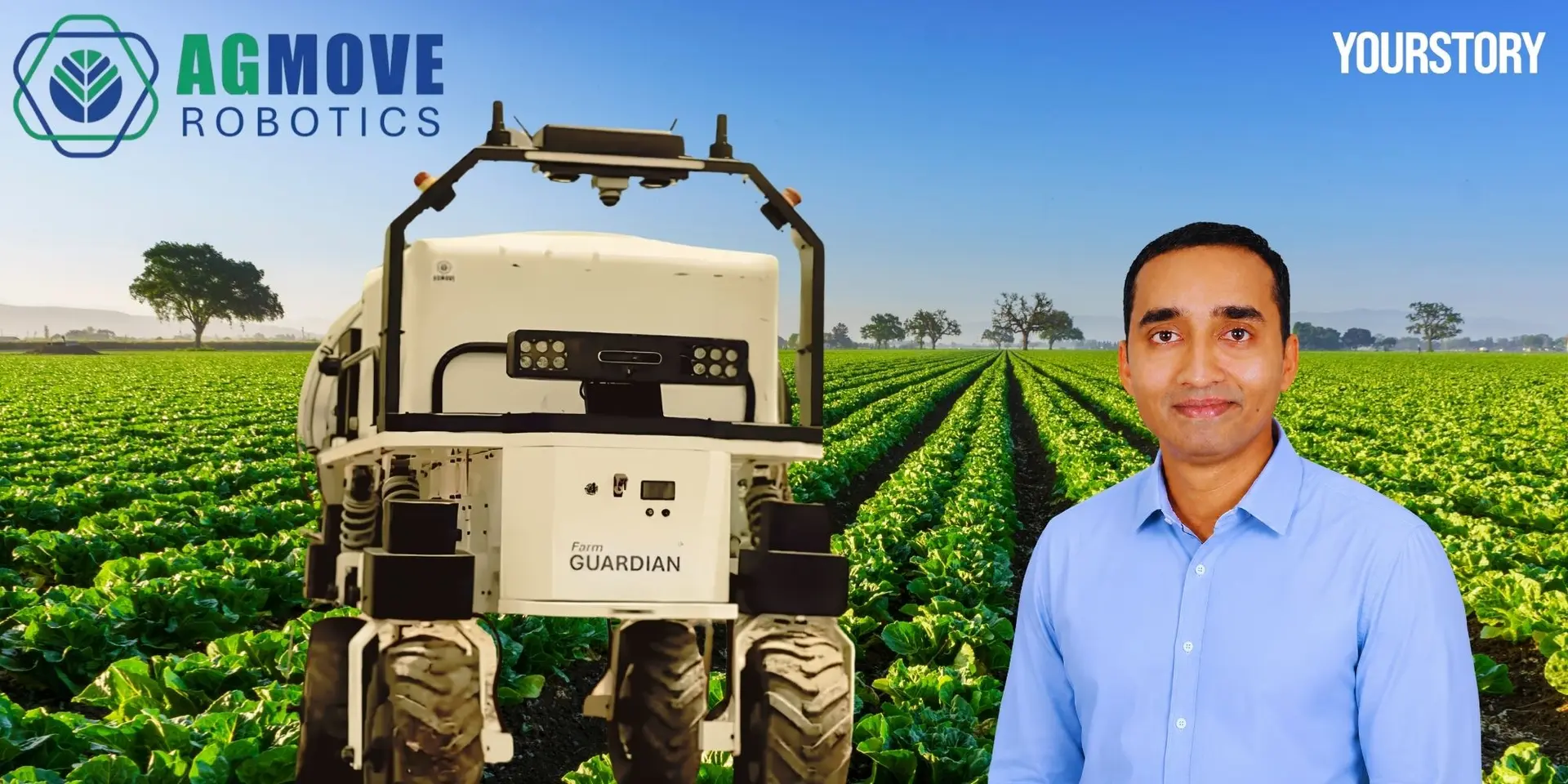
The main product is the Farm Guardian Rover. It is a rover that can be operated by remote control or run autonomously, and is deployed in vineyards and horticulture farms for spraying, intercultural operations and crop management.
Navigation uses real-time kinematic positioning, a satellite technique that resolves position to within centimetres rather than metres, which is what allows a machine to hold its line down a narrow row. AI-based perception sits alongside it.
For spraying, outside of an air-blast sprayer, the rover uses electrostatic application, where droplets are given an electrical charge so they are attracted to the leaf surface. The company says this gives more uniform coverage and reduces pesticide wastage. The operator is not in the field while it happens, which addresses the chemical exposure that comes with a backpack sprayer.
The company describes the rover as multi-utility, meaning it is meant to take different implements rather than do one job. That matters on a small holding, where a machine bought for a single task sits idle most of the year.
The design intent, in the company's description, is timeliness. Its argument is that farm losses come less from wrong operations than from right operations happening too late, when labour cannot be found in the window that matters.

Bootstrapped, and still early
AgMove has largely funded itself. Company databases record a grant of about Rs 8 lakh in November 2023 with the source undisclosed, and no equity round has been announced since. Inc42 describes the company as bootstrapped.
Its intended customers are progressive farmers, shared cultivators and younger entrants to farming, and it has described rental models as a route to reaching growers who cannot buy outright. Equipment rental is already how much of India's mid-sized farm mechanisation works, through custom hiring centres and private operators who own a machine and hire it out by the acre.
The Farm Guardian Rover appears on AIKosh, the Indian government's AI use-case repository, as a deployed application in vineyards and horticulture.
The company's own site carries endorsements from farmers and an agriculture academic rather than deployment data. One, a retired agriculture professor, argues that farmers lose money mainly when operations are not completed on time. AgMove has built its product around that case. The company has a product in the field with a commercial record still to be built.
(This story has been researched and compiled using publicly available information.)